
What are the most popular bespoke engagement ring styles currently trending?
Popular bespoke engagement ring styles currently include classic solitaires, oval and pear-cut designs, hidden-halo settings, three-stone rings, vintage-inspired details and modern bezel or toi et moi designs. Coloured gemstones, mixed metals and personalised engraving are also being incorporated, allowing the proportions, setting and meaning of each ring to be tailored to the wearer.
The most popular bespoke engagement ring styles currently combine recognisable designs with individually chosen proportions, gemstones and details. Classic solitaire rings, oval and pear-cut stones, hidden halos, three-stone settings, vintage-inspired designs, bezel settings and toi et moi rings are particularly sought after. Coloured gemstones, mixed metals and personalised engraving are also being incorporated into custom designs, allowing the ring to reflect the wearer’s style rather than follow a fixed catalogue design.
Trends are useful starting points, but a bespoke ring should also suit the wearer’s hand, lifestyle and expectations for daily wear. A design that looks striking in a photograph may need different proportions, setting height or stone protection when made for regular use. During a consultation, each style can be adapted without losing the feature that attracted you to it.
Classic solitaire engagement rings
The solitaire remains one of the most enduring choices because it places all the attention on the central gemstone. Its simplicity also makes it highly adaptable. The band can be narrow and refined, softly rounded, knife-edged or shaped with a subtle taper towards the setting. The stone may be held with claws, a bezel or a more sculptural setting, depending on the desired appearance and level of protection.
Although a solitaire is traditionally associated with a round brilliant-cut diamond, bespoke versions increasingly use oval, emerald, cushion, pear and elongated radiant cuts. The setting can also be adjusted to leave space for a wedding ring, accommodate a particular hand shape or create a lower profile for practical comfort.
Oval and elongated stone designs
Oval-cut engagement rings continue to be popular because their elongated outline can create a graceful appearance while retaining the brilliance associated with a brilliant cut. Pear, marquise and elongated cushion stones offer a similar sense of length but have more distinctive silhouettes.
These shapes require careful attention to orientation and setting. A pear-shaped stone may be worn with its point facing towards or away from the hand, while a marquise or oval can be set vertically, horizontally or at an angle. The proportions of the gemstone should be assessed alongside the width of the band and the wearer’s preferred level of presence. A bespoke design also allows the claws and gallery to be shaped specifically for the stone, rather than relying on a standard setting.
Hidden-halo and halo settings
A hidden halo places smaller stones beneath the main gemstone, usually around the girdle or within the gallery. From above, the ring can retain the clean appearance of a solitaire; from the side, the additional stones provide detail and sparkle. This is a useful choice for someone who wants a distinctive feature without a prominent halo visible around the central stone.
Traditional halos remain relevant, particularly when used with cushion, oval, pear or emerald-cut centres. In bespoke work, the surrounding stones can be matched closely to the shape of the centre, or the halo can be deliberately softened with an irregular, floral or vintage-inspired outline. The setting must be proportionate, as an oversized halo can make the central stone appear less defined and may affect how the ring sits beside a wedding band.
Three-stone and toi et moi rings
Three-stone rings use a central gemstone with a complementary stone on either side. The stones may be identical, graduated in size or deliberately contrasting in shape or colour. This gives the design a clear structure while allowing personal meaning to influence the choice of gemstones.
Toi et moi rings feature two principal stones set together, often with different cuts or orientations. Current bespoke interpretations may combine a diamond with a coloured gemstone, or use two stones that differ in size and shape. The setting needs careful planning so that the stones remain secure without making the ring feel excessively wide or high on the finger. The angle between the stones is also important to both comfort and appearance.
Vintage-inspired engagement rings
Vintage-inspired designs draw on details such as milgrain edges, engraved shoulders, filigree, floral motifs, pierced galleries and symmetrical geometric patterns. Art Deco influences often appear through clean lines and contrasting shapes, while Edwardian and Victorian references may involve delicate openwork or botanical forms.
A bespoke interpretation does not need to copy an antique ring. Details can be simplified, enlarged or combined with a contemporary setting to create a ring that has character but remains practical. It is important to distinguish between genuine antique construction and a newly made ring influenced by historical design. This affects how the piece is made, how it can be maintained and whether its structure is suitable for everyday wear.
Bezel and contemporary low-profile settings
Bezel settings surround part or all of a gemstone with a rim of metal. They give a clean, modern appearance and can offer useful protection to exposed edges, particularly on stones with pointed corners. A full bezel produces a strong, minimal outline, while a partial bezel can retain more visible brilliance and a lighter appearance.
Low-profile settings are increasingly chosen by people who want an engagement ring that is less likely to catch on clothing or interfere with practical tasks. The setting still needs sufficient clearance for cleaning and for the wedding ring to sit comfortably beside it. A lower setting is not automatically stronger; the design must provide appropriate support beneath the gemstone and around the claws or bezel.
Coloured gemstones and alternative centre stones
Coloured gemstones are being used as central stones, accent stones or subtle details alongside diamonds. Sapphires, rubies and other gemstones can introduce colour without changing the overall structure of a classic design. Less traditional stones may also be considered, but their suitability depends on hardness, toughness, cleavage, porosity and sensitivity to heat or chemicals.
For a ring intended for daily wear, the gemstone should be selected with its maintenance requirements in mind. Some stones are more vulnerable to scratching or impact than others and may require a protective setting and more careful aftercare. The choice should therefore be based on both appearance and practical performance.
Mixed metals, asymmetry and personal details
Mixed-metal rings combine colours such as white, yellow and rose gold within the band, setting or shoulders. This can create contrast, coordinate with existing jewellery or make it easier to wear the engagement ring alongside pieces in different metals. Asymmetrical shoulders, offset stones and uneven clusters are also being used to give a ring a more individual outline without making it overly elaborate.
Personalisation may include engraving, birthstones, concealed messages, symbolic motifs or a detail taken from an existing family piece. These features are most effective when integrated into the construction of the ring rather than added as an afterthought. The available space, depth of engraving and long-term durability should be discussed before the design is finalised.
How to choose among the current styles
- Choose a solitaire or low-profile setting if clean lines, versatility and easy pairing with a wedding ring are priorities.
- Consider an oval, pear, marquise or elongated cushion if you prefer a distinctive outline and a sense of length on the finger.
- Look at a hidden halo or three-stone design if you want additional detail while retaining a defined central stone.
- Choose a vintage-inspired ring when engraved, pierced or milgrain details are central to the design, but check that the construction is suitable for daily use.
- Consider a bezel setting if protection, a smooth outline and a contemporary appearance are more important than exposed claws.
- Explore coloured gemstones, mixed metals or personalised details when the ring needs to express something specific about the wearer.
The strongest bespoke designs use a trend selectively. A popular style can provide the starting structure, while the gemstone shape, setting height, band profile, metal, finish and personal details are refined around the wearer. Steven Charles Quance can help assess how each option will look, feel and perform before the design is made, including how it will work with a future wedding ring and what aftercare it may require.
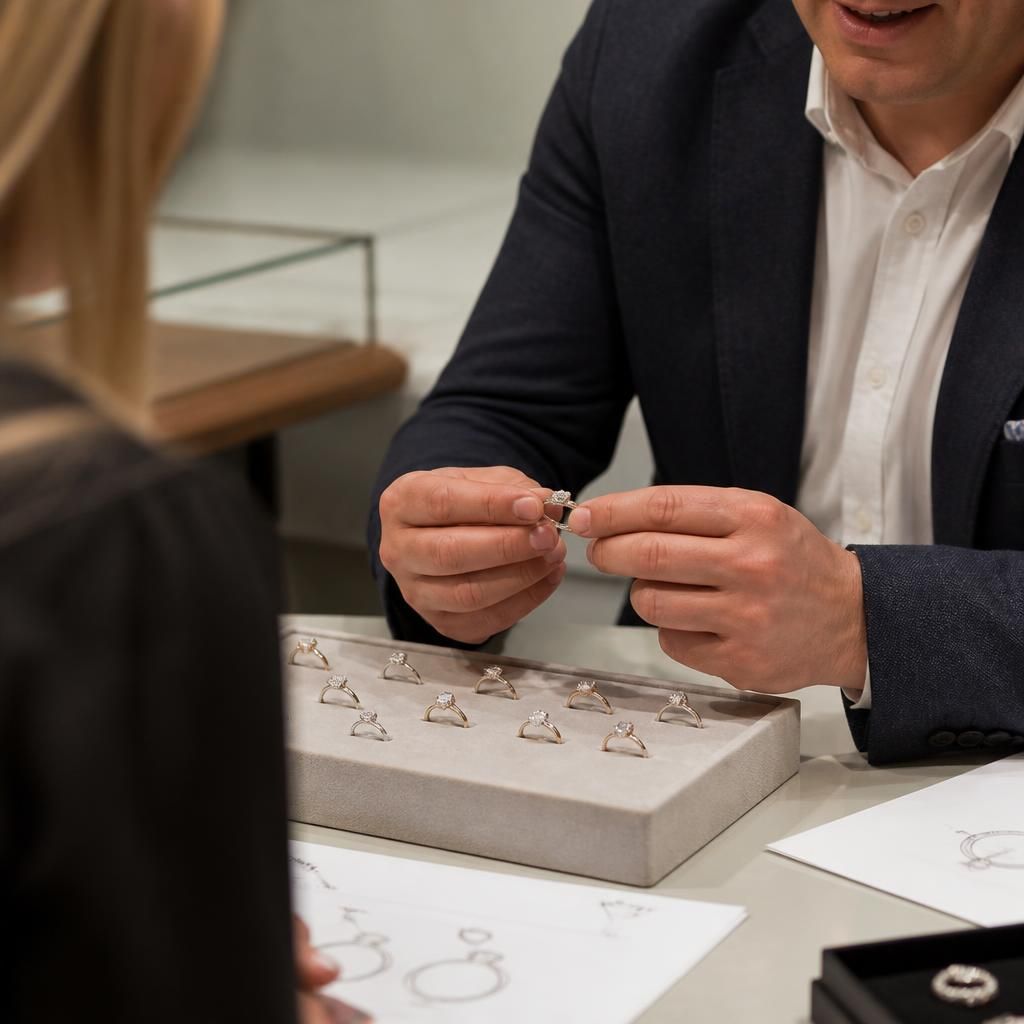
Trending bespoke engagement ring styles are best treated as starting points rather than fixed designs. The most suitable choice depends on the wearer’s hand, daily activities, preferred proportions and how the ring will sit beside a wedding band.
For example, a hidden halo can add detail without changing the clean appearance of a solitaire, while a bezel setting can provide a smooth, protective outline for someone who prefers a low-profile ring. Oval, pear and marquise stones create a more elongated look, but their orientation and setting need to be planned carefully to maintain comfort and security.
During the design process, consider:
- whether the setting may catch on clothing or interfere with practical tasks;
- how easily the ring can be cleaned and inspected;
- whether the chosen gemstone is suitable for regular wear;
- how the engagement ring will pair with a future wedding ring; and
- which personal details will remain meaningful beyond the current trend.
A bespoke design can incorporate a fashionable feature while retaining practical proportions, secure stone settings and a finish suited to everyday use.