
What carat weight is ideal for an engagement ring based on budget and finger size?
Determining the ideal carat weight for an engagement ring involves balancing budget and finger size. Generally, a lower carat weight offers more value if cost-effectiveness is a priority, while a more substantial carat weight aligns with a desire for a larger, more impactful appearance, depending on the ring wearer’s finger size. Tailoring the carat weight to meet both personal preferences and budget ensures the ring is both beautiful and financially sensible.
Choosing the ideal carat weight for an engagement ring involves considering both budget constraints and the finger size of the wearer. Typically, the carat refers to the weight of the diamond, and thus its size and cost. For those on a budget, a lower carat weight can provide suitable value while still retaining a beautiful appearance. Conversely, those unconstrained by budgetary limits may focus on higher carat weights, which traditionally offer a more dramatic visual impact, particularly on larger fingers where a more substantial stone can enhance the overall aesthetic.
Carat weight should be considered in the context of ring proportions. For instance, a 0.5 to 0.75 carat diamond can appear proportional on smaller hands and fingers, offering balance and elegance without overwhelming the hand. On the other hand, a diamond ring above 1 carat might be more suited to larger fingers, delivering a remarkable presence and ensuring that the gemstone stands out appropriately without appearing understated.
When selecting carat weight based on budget, it’s advisable to consider diamond shapes that maximise face-up size. Shapes like the elongated marquise, oval, or pear can make a diamond appear larger than its carat weight might suggest. This effect allows buyers to opt for lower carat weights while maintaining a significant visual impact, offering a savvier option that is both cost-effective and visually striking.
Additionally, it is essential to factor in the diamond’s cut quality, as it can influence how the stone sparkles and how large it appears. A high-quality cut will enhance the diamond’s light performance, potentially making a smaller carat diamond appear bright and full of life, thereby maximising the investment.
Providing bespoke and personalised consultation services, we at Steven Charles Quance are well-equipped to guide you through these considerations, ensuring the chosen carat weight harmonises beautifully with both your personal style and financial plans. The focus always remains on creating a timeless piece that reflects both personal significance and aesthetic satisfaction.
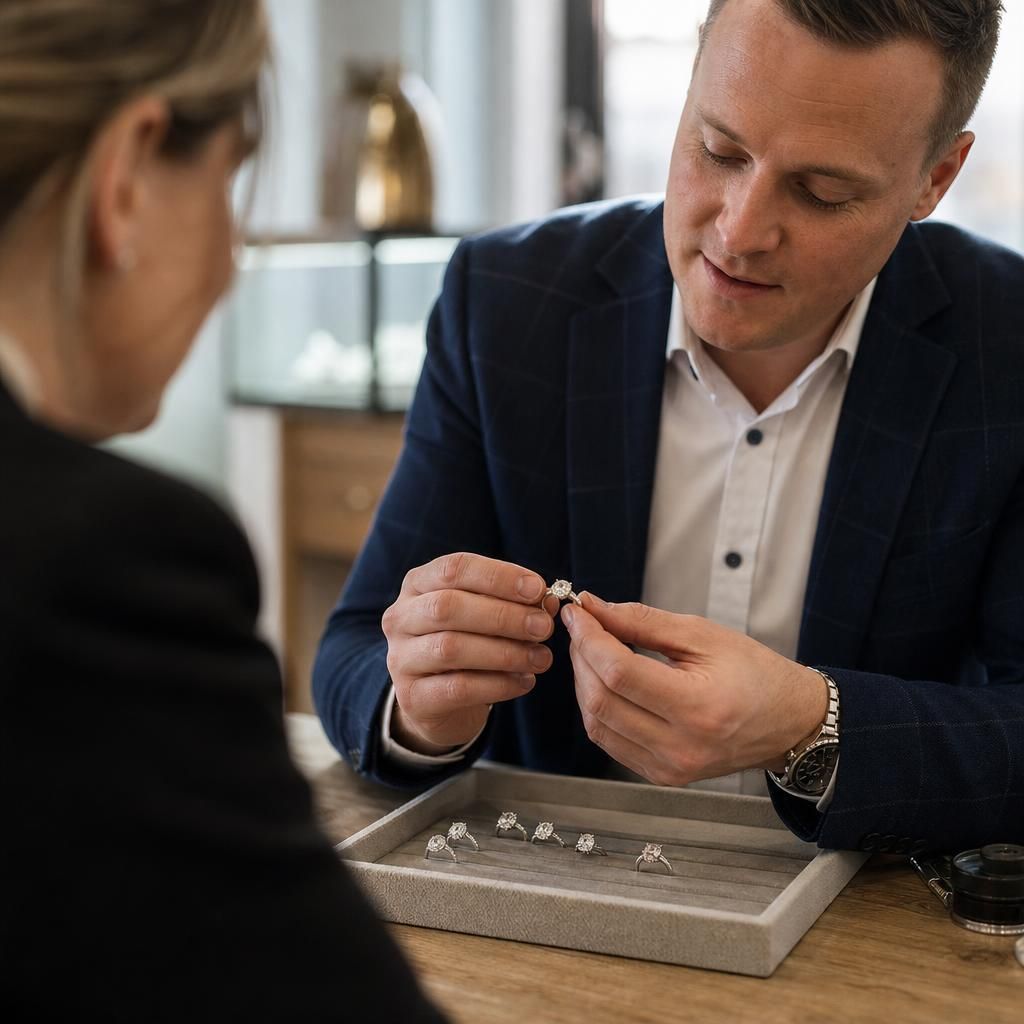
An essential aspect often overlooked when choosing the ideal carat weight for an engagement ring is the impact of diamond shape on perceived size and elegance. Different diamond shapes can significantly affect how the carat weight appears on the finger. For instance, shapes such as marquise, pear, and oval are renowned for their ability to maximise the visible size of the diamond—often giving the illusion of a larger stone without increasing carat weight. These shapes elongate the finger, creating a graceful and striking appearance that complements various finger sizes and styles. Opting for such diamond shapes can be a savvy choice for those looking to balance the desire for a larger-looking diamond with budget considerations. It enables the wearer to enjoy a visually significant presence without necessarily opting for a higher carat weight, which can be more costly.