What are the differences between lab-grown and natural diamonds in terms of performance and durability?
Lab-grown and natural diamonds both offer remarkable hardness and brilliance, but they differ in origin. While lab-grown diamonds are created in a controlled environment, natural diamonds form over billions of years beneath the Earth’s surface. These differences in formation do not significantly affect performance or durability; both types exhibit comparable characteristics in terms of hardness and resilience, making them equally suitable for everyday wear and bespoke jewellery creations. The choice between them often comes down to personal preference and ethical considerations rather than functional differences.
At the core of understanding the performance and durability of lab-grown versus natural diamonds is the recognition that both types of diamonds possess almost identical physical and chemical properties. This similarity arises because lab-grown diamonds are produced through methods that mimic the natural diamond-forming conditions within the Earth. The processes replicate the extreme pressure and temperature under which natural diamonds crystallise, resulting in products that are virtually indistinguishable in terms of hardness and refractive index—the key determinants of durability and brilliance.
Despite their similar compositions, the primary distinction between these diamonds lies in their provenance. Natural diamonds form over billions of years under geological processes unavailable to lab-created stones. Conversely, lab-grown diamonds are cultivated over weeks or months in a controlled setting. Nonetheless, for daily wear and use in cherished pieces of jewellery, both exhibit resistance to scratches due to their rating of 10 on the Mohs scale of mineral hardness.
In practical terms, one can expect both lab-grown and natural diamonds to withstand the rigours of everyday activities. This resilience owes to their structural properties, which ensure they do not readily chip or become dull over time. However, understanding variations in inclusions and trace elements, which might affect the diamond’s clarity or colour, is crucial. Lab-grown diamonds often exhibit fewer inclusions due to the consistency of production conditions, enhancing their appeal for those prioritising optical purity.
From an ethical perspective, lab-grown diamonds possess an appeal for environmentally conscious consumers. Their production often involves fewer ecological and human rights concerns compared to some mining operations, which can tarnish the reputation of natural diamonds. This factor might influence the choice of one over the other, especially when seeking bespoke or meaningful pieces.
In conclusion, the choice between a lab-grown and a natural diamond should not be solely about performance or durability, as both meet high standards on these fronts. It is prudent to consider individual preferences regarding origin, ethical considerations, and the aesthetic specifics of each diamond. Trust that at Steven Charles Quance, whether opting for a lab-grown or natural diamond, the guidance provided will ensure the selection of a piece that aligns with your values and desires, offering both beauty and longevity.
One key point to consider when comparing lab-grown and natural diamonds in terms of performance and durability is their composition and how it influences their behaviour in everyday settings. Both types possess the same chemical structure, formed primarily of carbon atoms arranged in a crystal lattice, granting them exceptional hardness. This composition ensures that both lab-grown and natural diamonds rank a 10 on the Mohs scale, confirming their suitability for high-impact activities and everyday wear.
However, the manufacturing environment can introduce differences. Lab-grown diamonds are cultivated under controlled conditions, reducing variability and often resulting in fewer inclusions. This can mean that lab-grown diamonds exhibit superior clarity compared to their natural counterparts, making them particularly appealing for those seeking optical purity in their jewellery. Nevertheless, this does not compromise the durability of natural diamonds, as they also offer robust performance even with minor inclusions.
Compare Diamond Performance and Durability with Our Experts
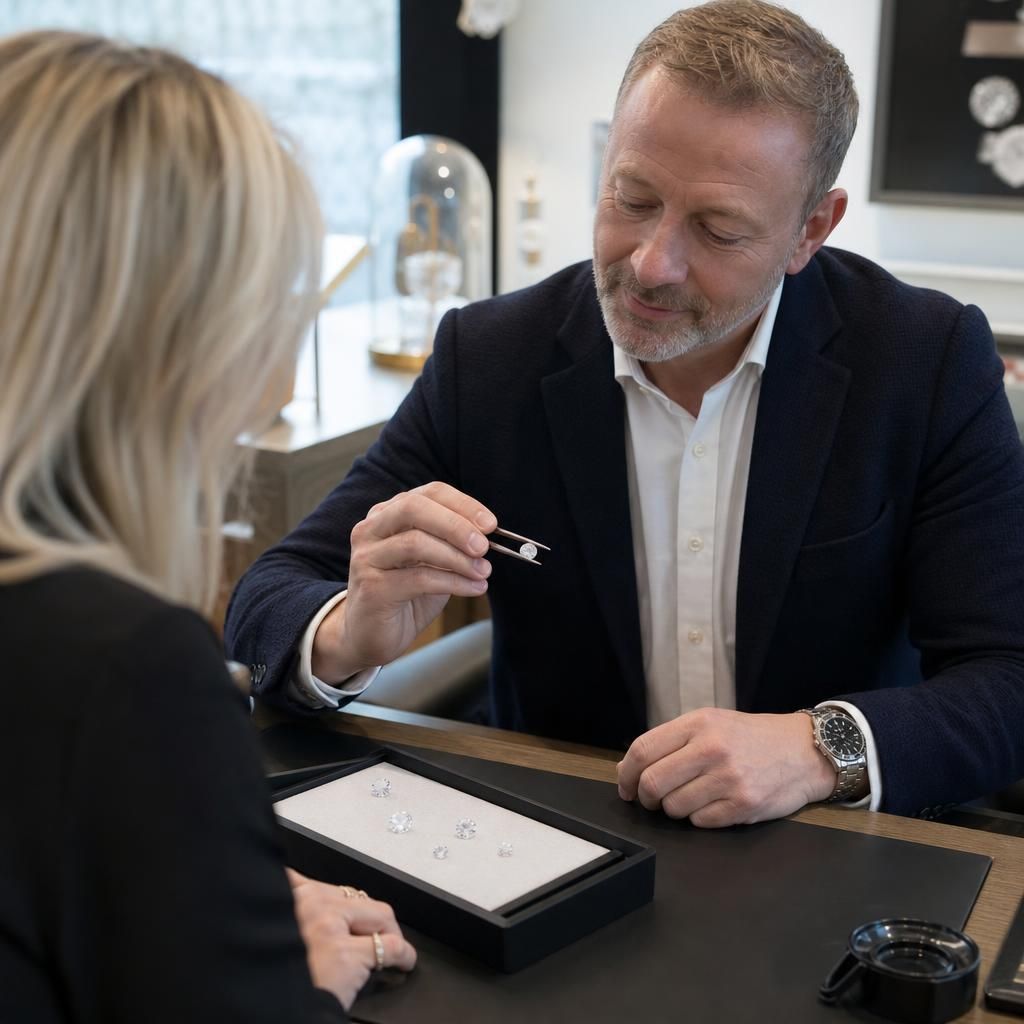
Speak to our experts for tailored guidance on the performance, durability and suitability of lab-grown and natural diamonds for your bespoke jewellery. We can help you compare your options and choose a diamond that meets your practical and design requirements.