
What distinguishes solitaire, three-stone, and side-stone engagement rings?
A solitaire ring features a single central stone, a three-stone ring combines a centre stone with two supporting stones, and a side-stone ring adds smaller stones alongside the main stone. The key differences are the number and arrangement of stones, the balance of symbolism and sparkle, and how each design suits the wearer’s style and daily life.
Solitaire, three-stone and side-stone engagement rings are distinguished mainly by the number, position and role of their diamonds or gemstones. A solitaire has one principal stone, a three-stone ring has a centre stone flanked by two others, and a side-stone ring has a central stone complemented by smaller stones set along the shoulders of the band. These arrangements create different proportions, symbolism, levels of sparkle and practical considerations.
Solitaire engagement rings place all visual emphasis on one central diamond or gemstone. The stone is usually held in a claw, bezel or other raised setting, allowing its shape, cut and proportions to be seen clearly. Because there are no additional stones competing for attention, the centre stone often appears especially prominent. The simplicity also makes a solitaire adaptable: the setting, band profile and metal can be selected to suit the stone and the wearer’s preferences.
A solitaire is often chosen for its clean, enduring appearance and the way it focuses attention on a single stone. It can be understated or distinctive depending on the diamond shape, setting height and band design. A raised solitaire may allow a wedding ring to sit closely beneath it, although this depends on the setting and should be checked rather than assumed. A lower, bezel-set or more protected solitaire may be preferable for someone whose work or lifestyle makes a raised setting less convenient.
Three-stone engagement rings feature a centre stone with a matching or contrasting stone on either side. The side stones may be similar in shape to the centre or selected to create contrast, such as tapered baguettes beside a round brilliant or pear-shaped stones beside an oval. The design gives greater presence across the finger than a traditional solitaire and creates a balanced, symmetrical outline.
The three stones are commonly associated with the past, present and future of a relationship, although the meaning is personal rather than fixed. The proportions matter particularly in this style. Side stones that are too large can compete with the centre stone, while side stones that are too small may not provide the intended balance. The cut, colour, clarity and shape of each stone should therefore be considered as a complete composition rather than assessed in isolation.
Three-stone rings can provide substantial sparkle and finger coverage, but they may have a wider profile than a solitaire. The side settings can also affect how easily the ring sits alongside a wedding band. A curved, contoured or fitted wedding ring may be appropriate, while a straight band may leave a visible gap depending on the design. The chosen setting should also protect the edges of any pointed or angular side stones, particularly if the ring will be worn every day.
Side-stone engagement rings combine a principal centre stone with smaller stones set into the shoulders or upper part of the band. The supporting stones may be pavé, channel, bead or claw set, and can run only a short distance beside the centre stone or extend further along the band. This gives the centre stone additional brightness without creating the same three-part emphasis as a three-stone design.
Side stones are useful when the wearer wants more sparkle than a solitaire provides but prefers the centre stone to remain the clear focal point. They can also add detail to a relatively simple band and may make the ring look more decorative from above. Since the small stones are set into the shoulders, the design can have a more continuous appearance across the top of the finger than a solitaire.
The main distinctions can be summarised as follows:
- Solitaire: one central stone, the clearest and most minimal arrangement, with emphasis on the centre stone and setting.
- Three-stone: one centre stone and two flanking stones, offering symmetry, broader finger coverage and a strong three-part design.
- Side-stone: one centre stone with smaller stones along the shoulders, adding surrounding sparkle while retaining a dominant centre.
Symbolism may help guide the choice, but it should not be treated as a rule. A solitaire can represent a single, focused commitment; a three-stone design is often selected for its past-present-future interpretation; and side stones can represent the additional detail and shared elements surrounding the central relationship. The most appropriate meaning is the one that reflects the couple’s own intentions.
Appearance on the hand is affected by more than the number of stones. Finger length and width, the scale of the setting, the diamond shape and the band width all influence the result. Elongated shapes such as oval, pear or emerald-cut stones can create a lengthening effect, while a wider three-stone design may appear more substantial across the finger. A try-on consultation is useful because the same carat weight can look markedly different according to its proportions and setting.
Daily wear and maintenance should also be considered. A solitaire has fewer stones and generally fewer settings to inspect, although a raised centre can be more exposed to knocks. Three-stone and side-stone rings contain more settings, so the claws, channels or beads should be checked periodically to ensure the stones remain secure. Fine pavé work can require particular care because small stones rely on small areas of metal for support. Regular professional inspections, careful storage and removal during activities that could damage the ring will help protect any design.
Metal choice changes the appearance and performance of all three styles. White metals create a bright, closely matched look with many diamonds, while yellow or rose gold provides contrast around white stones and can make the setting more visually defined. The hardness, finish and construction of the chosen metal affect how the ring wears, but the security of the setting and the quality of its workmanship are equally important.
Budget and stone selection should be considered as a whole. A solitaire concentrates the available budget on one centre stone. In a three-stone ring, the centre and two side stones must be balanced in size, quality and colour. A side-stone design distributes some of the budget across the smaller stones and the centre stone, with the total cost depending on the number, size, cut and quality of all the stones. A well-proportioned design is usually more important than simply selecting the largest available stones.
Choose a solitaire when the priority is a single focal stone, a clean outline and maximum flexibility around the centre diamond or gemstone. Consider a three-stone ring when symmetry, a broader design and personal symbolism are important. A side-stone ring is often suitable when you want additional sparkle and detail but still want the centre stone to lead the design. If none of the standard proportions feels right, the centre stone, side stones, setting height, band width and metal can be adjusted as part of a bespoke design.
When comparing the options, assess the ring from above and from the side, consider how it will sit with a wedding band, and think realistically about work, hobbies and daily wear. The right choice is the one that balances the centre stone, overall proportions, comfort, security and personal meaning rather than relying on the category name alone.
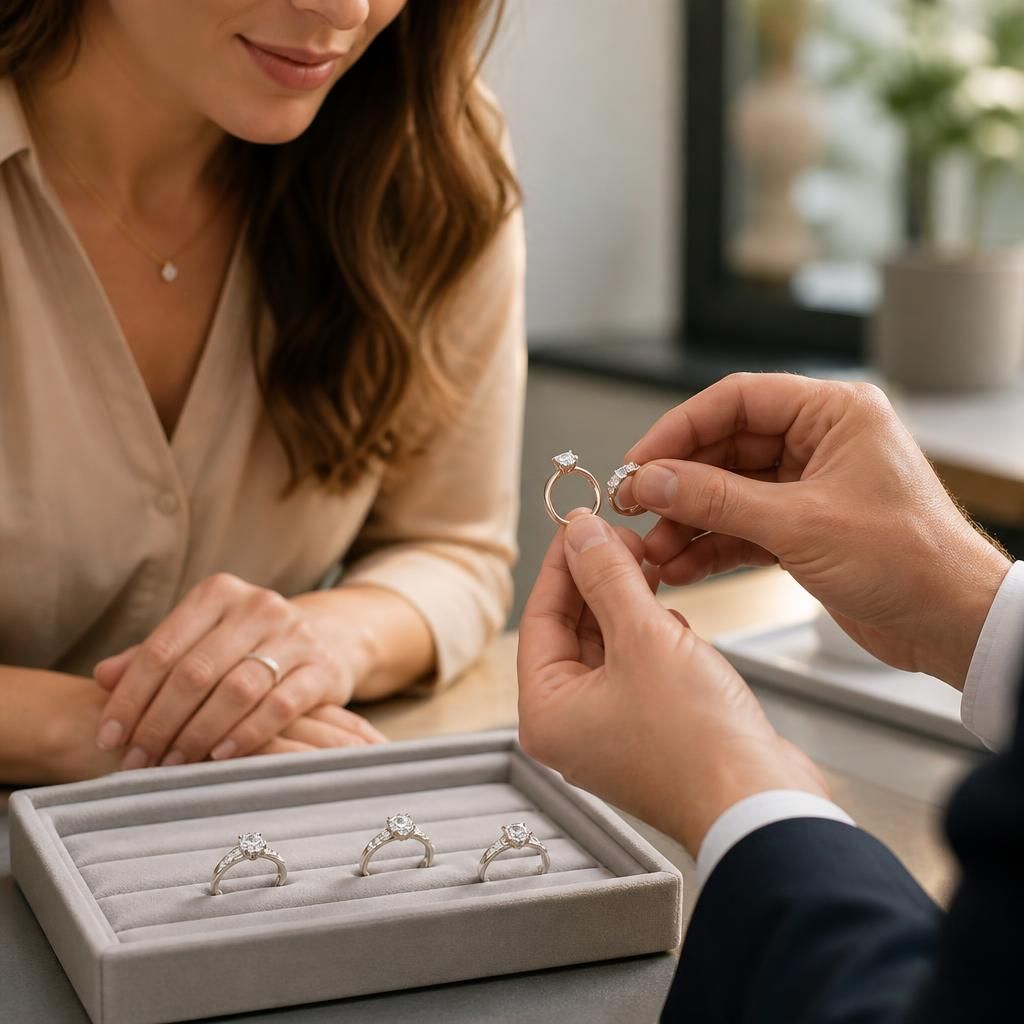
The principal practical distinction between solitaire, three-stone and side-stone engagement rings is how their settings affect wear, cleaning and the fit of a wedding band. A solitaire usually offers the simplest arrangement, while the additional stones and settings in three-stone and side-stone designs require closer attention to proportions and security.
A raised solitaire may allow a straight wedding band to sit closely beneath the centre stone, although the shape of the setting must be checked. Three-stone rings often need a curved, fitted or contoured band because the side stones can prevent a straight band from sitting flush. Side-stone rings may also require a shaped band, particularly when the shoulder stones extend towards the centre.
For everyday wear, consider the height of the centre setting, the protection around any pointed stones and the amount of exposed pavé or claw work. More stones mean more settings to inspect, but a well-made ring in any style should remain secure with sensible care and periodic professional checks. Comparing each design alongside the intended wedding band is one of the most reliable ways to judge comfort, appearance and practicality before making a decision.
Discuss your ideal engagement ring setting with an expert
Discuss your ideal engagement ring setting with an expert, including the centre stone, proportions, metal, wedding-band fit and practical requirements. We can help you compare solitaire, three-stone and side-stone designs and refine the details to suit your preferences.