
Are there specific indicators of wear to be aware of when purchasing a 2nd hand Rolex Daytona?
When purchasing a second-hand Rolex Daytona, key indicators of wear to be aware of include scratches on the bracelet and case, any stretching in the bracelet links, and signs of polishing. Additionally, inspect the bezel, lugs, and dial for evidence of refurbishment or damage, which may affect the watch’s authenticity and value. Ensuring these aspects are in acceptable condition supports a sound investment in your luxury timepiece.
When considering the purchase of a second-hand Rolex Daytona, being aware of specific indicators of wear is crucial to ensuring the value and authenticity of your investment. The most obvious signs of wear are surface scratches, particularly on the bracelet and case. While minor scratches are to be expected due to normal use, deep or excessive scratching may indicate neglect or heavy past use.
The condition of the bracelet is another key area to inspect. Bracelet links can sometimes stretch over time, resulting in a less taut and more ‘saggy’ feel. This stretching, often caused by the metal wearing down, can affect not only aesthetics but also the comfort and longevity of the bracelet.
Additionally, a polished case or bracelet can signal previous attempts to remove scratches, which may not always be performed to factory standards. An over-polished case could have softened edges and altered dimensions, potentially impacting the watch’s original design and value. Look for signs like inconsistent finishing or uneven surfaces as potential indicators of polishing.
The bezel and lugs should be inspected closely for any signs of refurbishment or noticeable damage. These features, when altered or damaged, could severely affect the watch’s overall authenticity and market value. Inspect for uniformity in the bezel markings and ensure that logos or engravings remain well-defined and crisp.
The dial of a Rolex Daytona should be examined carefully too. Refurbished or replaced dials can sometimes lack the detail and precision of an original Rolex dial. Check for consistency in indices, logos, and print sharpness. Changes here might suggest non-original parts, which could detract from the timepiece’s overall value and authenticity.
By carefully examining these aspects, you reassure yourself of the condition and worth of a second-hand Rolex Daytona. At Steven Charles Quance, we pride ourselves on guiding you expertly through your purchase, offering not just a transaction but a commitment to ongoing service and support for your luxury investment.
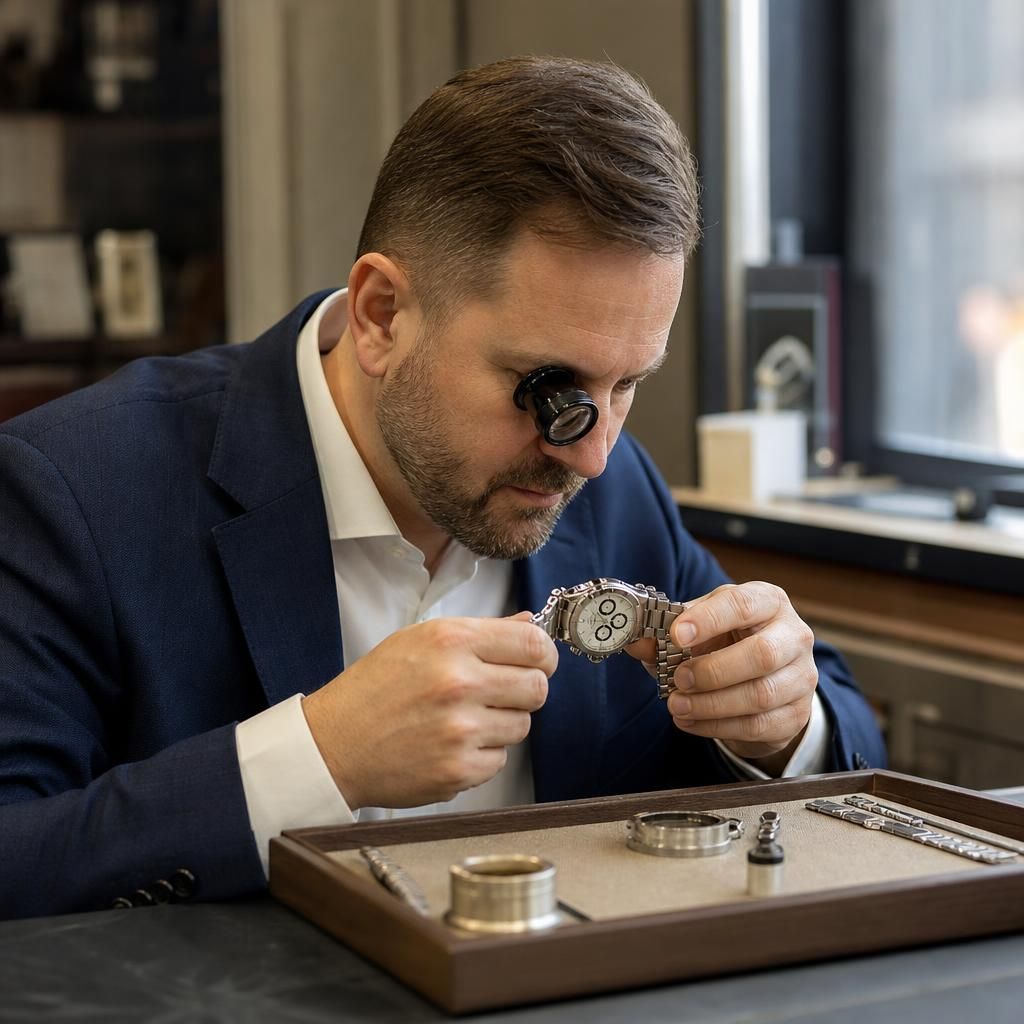
One of the critical areas to scrutinise when assessing the wear of a second-hand Rolex Daytona is the bracelet, particularly the potential for link stretching. Stretching occurs when the metal links wear down over time, often due to sustained heavy use or improper maintenance. This wear and tear lead to a loose and saggy bracelet, which can detract from both the aesthetic appeal and the functional integrity of the watch. Such stretching can impact the comfort of wearing the timepiece and inadvertently affect the longevity of the bracelet itself. While some wear is expected with age, excessive stretching might necessitate repairs or replacements to restore the original tautness. For those purchasing a Rolex Daytona from Steven Charles Quance, we offer expert evaluations and services to address such issues, ensuring your timepiece remains a valuable and cherished possession.