
What are the key features of the used Rolex Sea-Dweller and Deepsea models?
Used Rolex Sea-Dweller and Deepsea models are professional dive watches distinguished by robust Oyster cases, automatic movements, date displays, unidirectional Cerachrom bezels and helium escape valves. The Sea-Dweller is generally rated to 1,220 metres, while the Deepsea is engineered for 3,900 metres, with model-specific differences in case size, materials, dial design and movement.
Used Rolex Sea-Dweller and Deepsea watches are professional mechanical dive watches built around highly water-resistant Oyster cases, automatic movements, unidirectional timing bezels, luminous displays and helium escape valves. The principal technical distinction is depth rating: a Sea-Dweller is generally rated to 1,220 metres, while a Deepsea is engineered for 3,900 metres. Exact features vary according to the reference, production period, materials and condition of the individual watch.
Oyster case and water resistance
Both ranges use a robust Oyster case designed to protect the movement from water, dust and pressure. The case is manufactured from corrosion-resistant Oystersteel on many examples, although selected Sea-Dweller references are also available in Rolesor, combining Oystersteel with yellow gold. The Deepsea is typically distinguished by its larger and thicker case, engineered specifically for extreme pressure rather than everyday proportions.
The Deepsea uses Rolex’s Ringlock System, in which a high-performance nitrogen-alloy steel ring supports the sapphire crystal against significant external pressure. Its caseback is made from titanium, helping manage the considerable structural demands of a watch designed for exceptional depths. These construction features account for much of the Deepsea’s greater size and weight compared with most Sea-Dweller models.
Automatic mechanical movements
Sea-Dweller and Deepsea watches use self-winding mechanical Rolex movements. The precise calibre depends on the reference and year of manufacture, so a used watch may contain a different movement from a visually similar example. Common characteristics include a bidirectional rotor, a paramagnetic hairspring on newer movements, and a power reserve designed to keep the watch running for a substantial period when removed from the wrist.
When assessing a used example, the movement should be considered alongside its service history. Accurate timekeeping, reliable winding and a properly functioning date change are useful signs, but they do not replace a professional inspection. A documented service history can also help establish whether seals and other water-resistance components have been maintained correctly.
Unidirectional Cerachrom bezel
Most modern used examples feature a 60-minute unidirectional bezel with a black or blue Cerachrom insert. The bezel allows a diver to monitor elapsed time and is designed to turn only in the direction that would indicate less remaining time, reducing the risk of overestimating a dive. Cerachrom is Rolex’s ceramic material, valued for resistance to corrosion, fading and scratching.
Older Sea-Dweller references may instead have an aluminium bezel insert. This is an important reference-specific difference: an aluminium insert can show age-related fading or marks, whereas a ceramic insert normally retains a more consistent colour. The bezel should rotate with firm, even clicks and align correctly with the dial’s 12 o’clock marker.
Helium escape valve
The helium escape valve is a defining professional feature of both collections. It allows helium gas to leave the case during decompression after prolonged saturation diving, helping prevent pressure from forcing the crystal away from the case. It is not a general-purpose release valve and does not make a watch suitable for diving if its seals, crown or case have not been properly checked.
Date display and crystal
Sea-Dweller and Deepsea models generally include a date display, although the presentation differs from many other Rolex watches. The sapphire crystal is highly scratch resistant and includes a Cyclops lens on many Sea-Dweller references. Deepsea models are generally recognised by their flat sapphire crystal without a Cyclops magnifier, allowing the crystal and Ringlock construction to support the watch’s extreme depth rating.
The date should change cleanly and the crown should screw fully into the case without resistance or looseness. On a used watch, a scratched crystal, damaged crown threads or moisture under the crystal requires attention because these issues can affect both appearance and protection.
Luminous dial and hands
Professional legibility is central to both models. Large hour markers and hands use Rolex’s blue-glowing Chromalight material on many modern references, while older watches may use different luminous compounds. The seconds hand provides a clear indication that the movement is operating, and the high-contrast dial is designed to remain readable in poor light.
The Deepsea is particularly associated with the D-blue dial, which graduates from blue at the top to black at the bottom. This option is not present on every Deepsea, so the dial colour should be checked against the reference and original specification when evaluating a used example.
Bracelet, clasp and adjustment
Most examples are supplied on an Oyster bracelet with an Oysterlock safety clasp. Professional dive references commonly include Rolex extension systems, such as the Glidelock fine-adjustment mechanism and a fliplock extension for fitting over diving equipment. The precise arrangement depends on the model and production period.
For normal daily wear, these adjustment systems allow a more precise fit than removing permanent bracelet links alone. Inspect the clasp for excessive stretch, worn screws, damaged adjustment tracks and a secure safety catch. Bracelet wear can be significant on a heavily used watch and should be taken into account when comparing otherwise similar examples.
Differences in size and proportions
- Sea-Dweller: available in different case sizes according to reference, including traditional 40 mm examples and larger modern versions. It offers substantial dive-watch construction while generally being more versatile for everyday wear.
- Deepsea: commonly uses a 44 mm case with greater thickness, a prominent crystal and a deeper case profile. It is built for extreme pressure and has a more imposing presence on the wrist.
- Dial and bezel layout: both use clear dive-watch displays, but the Deepsea’s case architecture and dial options, including selected D-blue versions, make it visually distinct.
- Materials: Sea-Dweller availability includes particular steel and Rolesor references, whereas Deepsea models are principally associated with Oystersteel construction and specialist case engineering.
Reference and production-year variations
A used Rolex should be identified by its reference number rather than by appearance alone. Sea-Dweller references differ in case size, bezel material, movement, date magnification, bracelet design and dial details. Deepsea references also vary in movement, clasp adjustment, crystal treatment and dial configuration. Small changes introduced during production can affect originality and value, so the reference, serial information, dial, hands, bezel and bracelet should be assessed as a matching set.
Accessories and paperwork can provide useful supporting evidence, but they do not establish authenticity on their own. A professional examination should confirm that the watch contains the correct movement and components for its reference and that replacement parts have not altered its specification.
What the features mean for a used purchase
The technical specification is only part of the assessment. Check the condition of the case edges, bezel, crystal, crown, helium valve, clasp and bracelet, looking for polishing that may have softened the original lines or removed too much metal. Confirm that the dial and hands are consistent with the reference, and ask whether the watch has undergone servicing or water-resistance testing.
A Sea-Dweller is often the more practical choice where professional dive-watch capability is wanted in a comparatively wearable format. A Deepsea offers substantially greater pressure resistance and distinctive engineering, but its larger dimensions and weight should be considered for regular use. Neither model should be treated as water-ready solely because its original specification carries a high depth rating; water resistance depends on the present condition of the watch and the quality of any maintenance.
For a particular used Sea-Dweller or Deepsea, the most reliable approach is to compare its reference-specific specification with its physical condition, movement, documentation and service evidence. Steven Charles Quance can provide expert guidance when you want the features and history of an individual watch assessed before purchase.
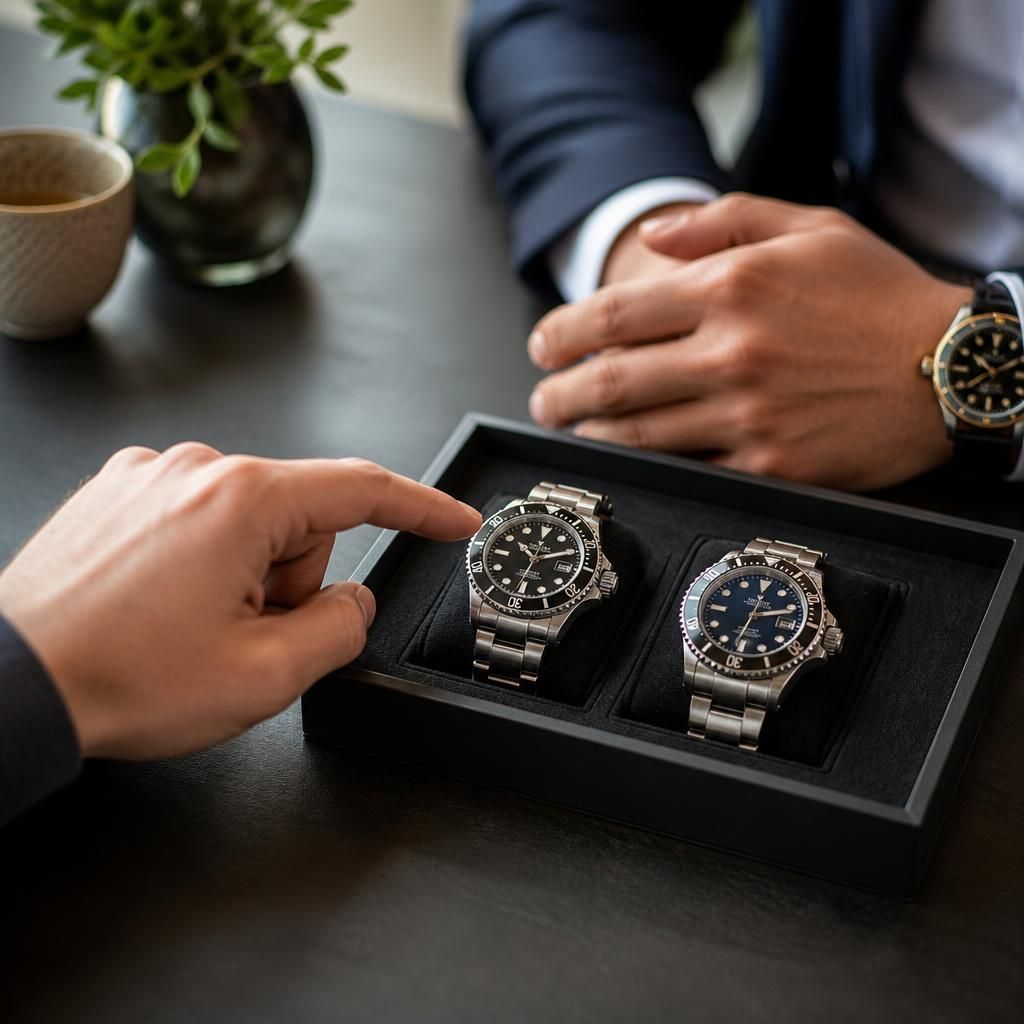
The defining feature of the Rolex Deepsea is its Ringlock System, which supports the sapphire crystal against extreme external pressure. Combined with a titanium caseback and helium escape valve, this construction gives the Deepsea its 3,900-metre depth rating, compared with the generally 1,220-metre rating of a Sea-Dweller.
On a used example, these specifications describe the original design rather than its current water resistance. The case, crystal, crown, seals and helium escape valve should be examined and tested by a qualified professional before the watch is used in water.
Discuss Your Used Rolex Sea-Dweller or Deepsea with Our Experts
Discuss the features, condition and reference-specific details of your used Rolex Sea-Dweller or Deepsea with the Steven Charles Quance team. We can provide expert guidance before purchase and help you assess its service history, authenticity and suitability for your needs.