
How do lab grown diamond prices compare across different carat weights?
Lab grown diamond prices vary significantly across different carat weights, primarily due to the increasing rarity and complexity involved in growing larger diamonds. As carat weight increases, the price generally rises, reflecting both the higher production costs and the enhanced appeal of larger stones. This trend mirrors the pricing structure found in natural diamonds, albeit with typically lower overall costs for lab grown variations. Understanding these price differences between carat weights aids in making more informed purchasing decisions for your bespoke engagement or wedding rings from Steven Charles Quance.
Lab grown diamond prices are primarily influenced by carat weight, with costs generally increasing as the carat size grows. This reflects the greater effort and resources needed for cultivating larger diamonds in a laboratory setting. It’s noteworthy that the growth process becomes more complex as the intended carat size increases, contributing significantly to the price variance across different weights. Despite this, lab grown diamonds still offer a more cost-effective alternative compared to their natural counterparts, particularly when considering larger stones.
When evaluating lab grown diamond prices by carat weight, it is crucial to acknowledge that the cost per carat does not increase linearly. Rather, the price of a one-carat diamond might be markedly lower than that of a two-carat diamond, but the cost difference does not simply double. Instead, the price increment might reflect a compounded value due to increased rarity and production intricacies associated with higher carat weights.
For customers of Steven Charles Quance, understanding these dynamics is beneficial when customizing pieces such as engagement or wedding rings. Clients interested in specific carat sizes may notice that, while smaller carat lab grown diamonds can be highly affordable, larger stones, such as those exceeding two carats, see a significant leap in price. This mirrors to some extent the market trends seen in natural diamonds but allows for the opportunity to secure a larger stone at a more accessible price point.
Practical considerations when selecting a lab grown diamond by carat weight should include the intended style and setting of the jewellery piece. The choice of carat not only influences the price but also the visual impact and personal value of the jewellery. Clients should weigh these factors against aesthetics preferences and budgetary constraints to make an informed decision. With Steven Charles Quance’s expert guidance, discerning clients can confidently navigate these choices to select the perfect lab grown diamond, bespoke to their needs and desires.
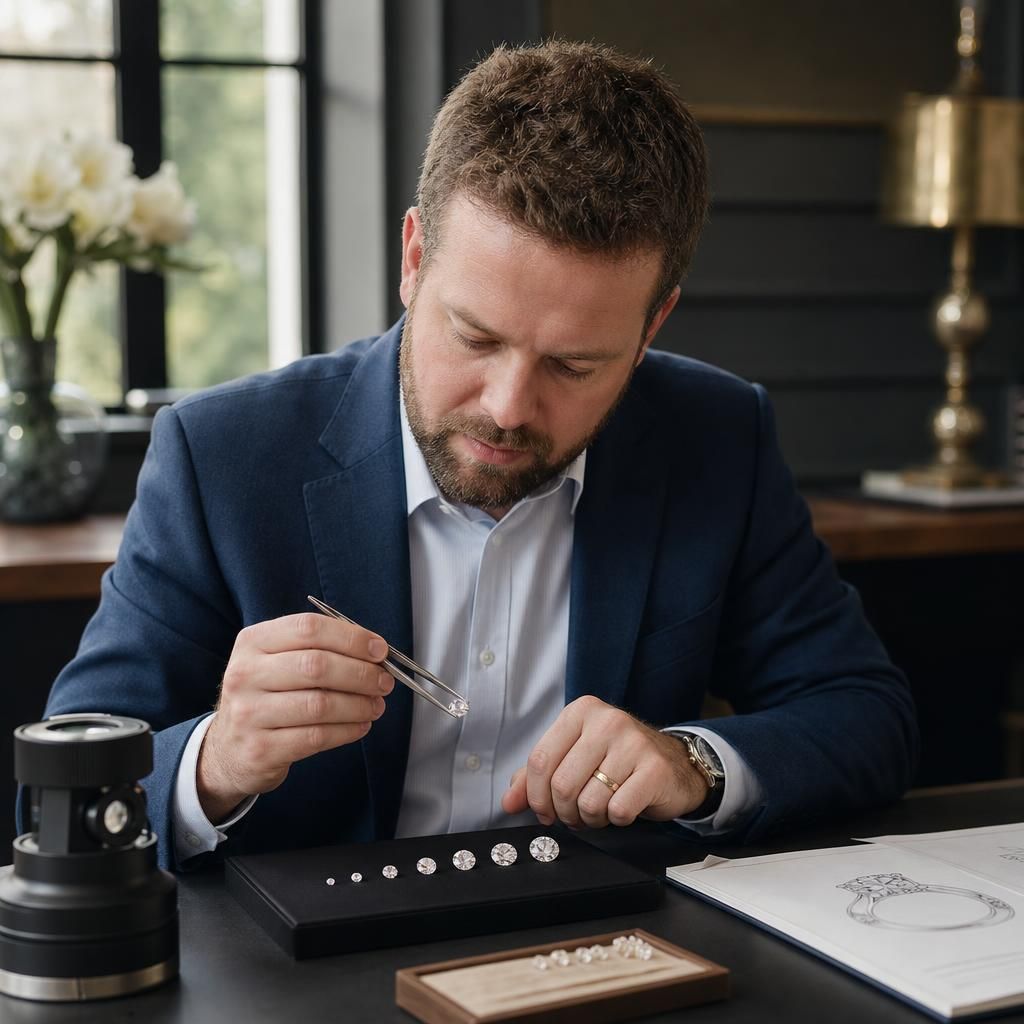
At Steven Charles Quance, understanding the progression of lab grown diamond prices across varying carat weights can significantly enhance your purchasing approach. As carat weight increases, lab grown diamond prices often exhibit a non-linear growth due to the complexities involved in creating larger stones. This complexity stems from the precision required to maintain quality as size increases, demanding more time and advanced techniques in the lab.
The principle of price progression with carat weight can be illustrated by comparing stones at different stages of carat measurement. For example, a 1.5-carat lab grown diamond may not merely cost 50% more than a 1-carat stone due to the compounded factors of rarity and manufacturing intricacies. Instead, buyers might encounter a notable yet proportionate step-up in pricing, reflecting these considerations. This is why it’s essential to prioritise personal preferences, intended jewellery design, and budgetary limits when selecting the ideal carat weight for your bespoke piece.