
What are the pros and cons of choosing non-traditional metals for men's wedding bands?
Choosing non-traditional metals for men’s wedding bands offers distinctive design opportunities and unique aesthetic choices, but it also requires consideration of factors like durability, weight, and maintenance needs. While metals such as titanium, tungsten, and palladium provide contemporary design possibilities and are often more affordable than traditional gold or platinum, they may present challenges in terms of resizing and scratch resistance. It’s essential for buyers to weigh these factors against their personal taste and practical needs, especially when prioritising a band that complements their lifestyle.
Choosing non-traditional metals for men’s wedding bands presents an excellent opportunity for those seeking a unique and modern aesthetic. These metals offer distinct advantages, such as innovative design possibilities and often greater affordability compared to traditional options like gold or platinum. Popular choices in this category include titanium, tungsten, and palladium, each bringing its own characteristics to the table.
Titanium is celebrated for its lightweight yet robust nature, making it ideal for those who desire a comfortable wear. This metal is highly resistant to corrosion and hypoallergenic, appealing to individuals with sensitive skin. However, it does pose a challenge when it comes to resizing, as its hardness makes adjustments difficult.
Tungsten provides exceptional durability and scratch resistance, ideal for those with an active lifestyle. Its density and weight may give it a more substantial feel, which some wearers appreciate while others may find cumbersome. Like titanium, tungsten rings are not easily resized, which can be a significant consideration for wearers who anticipate changes in finger size over time.
Palladium, a member of the platinum family, combines strength with a naturally white sheen, eliminating the need for rhodium plating. Its unique appeal is further enhanced by its hypoallergenic properties and ease of wear. Compared to other non-traditional metals, palladium is more flexible with resizing, offering a balance between luxury and practicality.
When considering non-traditional metals, it’s crucial to align your choice with both aesthetic preferences and lifestyle needs. The lower cost of these metals can be appealing, but weigh this against factors like maintenance requirements and long-term flexibility. Our bespoke service provides the ideal platform for personalising your choice, ensuring your wedding band not only reflects individual style but also fits seamlessly into daily life.
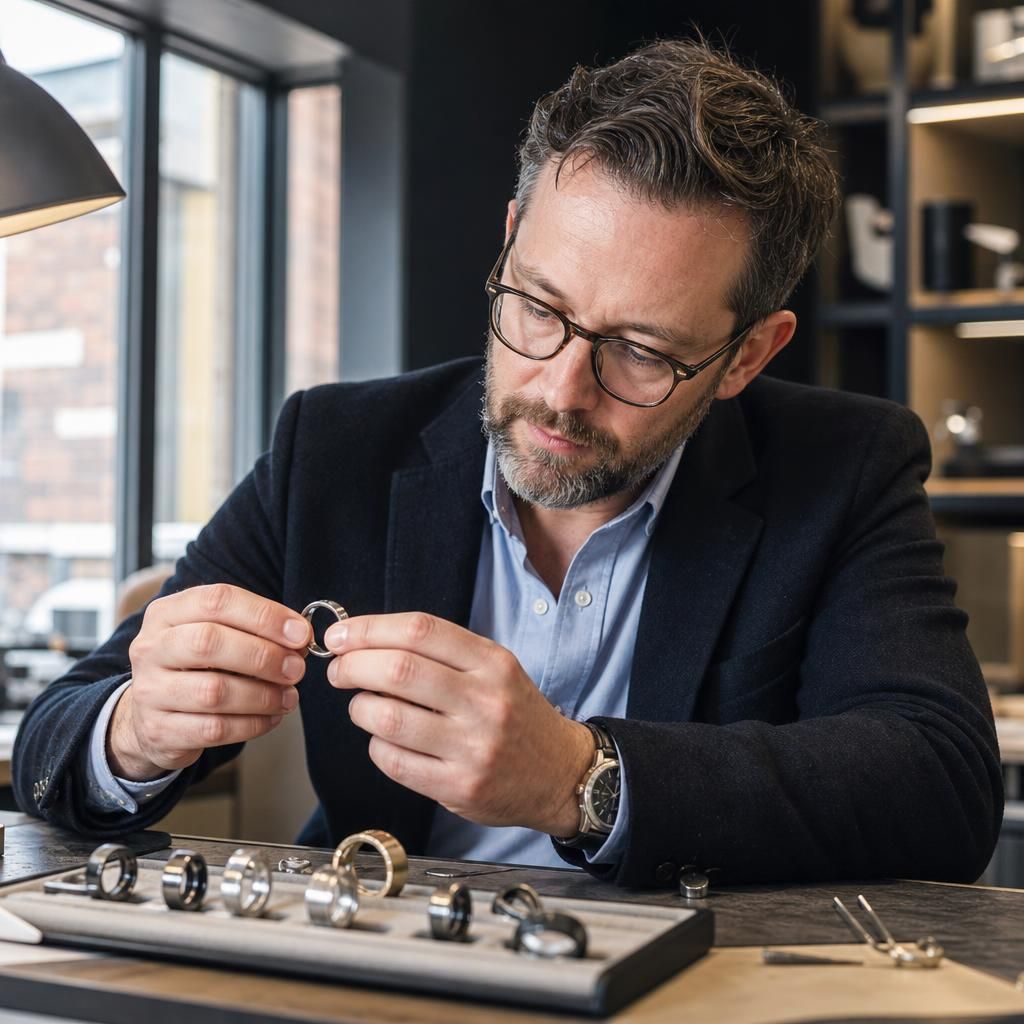
One of the key considerations when selecting non-traditional metals for men’s wedding bands is their varying levels of hardness. Metals like tungsten and titanium are known for their incredible durability, making them resistant to everyday wear and tear. However, their hardness can also mean that resizing these rings is challenging, as the material is not easily bent or shaped. This factor might concern individuals who anticipate size adjustments due to weight fluctuations or comfort preferences in the future. On the other hand, metals such as palladium, which retains a degree of malleability, may offer a more viable option for those seeking both robustness and the potential for resizing. Such characteristics exemplify the importance of understanding the properties of each metal before making a final choice, ensuring that the wedding band serves as a perfect, enduring fit for the wearer’s lifestyle and preferences.
Discuss Non-Traditional Metals for Your Men's Wedding Band
If you are considering a non-traditional metal for your men’s wedding band, speak to Steven Charles Quance for expert guidance on durability, comfort, appearance and aftercare, or arrange a bespoke jewellery consultation to compare suitable options.