
What factors should I consider when choosing a used 9ct gold ring?
When choosing a used 9ct gold ring, assess its condition, hallmark, design, size, comfort and overall value, while checking for repairs, thinning or loose stones. A professional inspection can also help confirm the ring’s authenticity and identify any work needed before purchase.
When choosing a used 9ct gold ring, assess five main points before buying: the ring’s condition, authenticity, size, design and total value. Look closely at the gold, settings and any gemstones, then consider whether the ring is comfortable, structurally sound and suitable for future wear or adjustment. A professional inspection is worthwhile where the hallmark, repairs or stone security are difficult to assess.
Check the condition of the gold
Used rings naturally show signs of previous wear, but there is an important difference between acceptable surface marks and damage that could affect the ring’s durability. Examine the band for deep scratches, dents, splits, worn edges or areas that have become noticeably thin. Pay particular attention to the underside of the shank, where repeated contact with hard surfaces can gradually remove metal.
Inspect the shoulders and any decorative details for distortion. A ring that is no longer symmetrical may have been bent, while worn engraving or softened edges can indicate extensive use. Light surface marks can often be polished, but excessive polishing may reduce definition and remove further gold, so it is important to understand what work has already been carried out.
Confirm the hallmark and gold purity
In the UK, 9ct gold is normally identified by a 375 fineness mark, meaning that the alloy contains 37.5% pure gold. A full UK hallmark may also include an assay office mark and a sponsor or maker’s mark. Hallmarks can be small or partially worn, particularly inside a narrow band, so use a loupe or ask a jeweller to examine them rather than relying on an unclear stamp alone.
A hallmark is an important indication of authenticity, but it should be considered alongside the ring’s weight, construction and overall condition. Older or imported jewellery may have different marks, and some items may be exempt from UK hallmarking requirements depending on their weight and date. If the mark is missing, altered or inconsistent with the ring, request a professional assessment before proceeding.
Assess the ring’s size and potential for adjustment
The correct size is essential for comfort and security. A ring that is too tight can be difficult to remove, while one that is too loose may rotate or slip off. Consider how the ring feels over the widest part of the finger and whether the fit changes in warm or cold conditions.
Ask whether the design can be resized if necessary. Plain 9ct gold bands are often relatively straightforward to adjust, but eternity-style rings, intricate shoulders, hollow construction, engraved designs and rings with stones set around the entire band may have limited options. A ring that has already been resized several times may also need careful examination before further work is recommended.
Examine gemstones and settings
If the ring contains gemstones, check that each stone is present, undamaged and held securely. Look for chips, scratches, cloudy areas, loose stones and gaps beneath the settings. Gently tapping or shaking a ring is not a reliable substitute for a professional examination, and you should not deliberately test a stone in a way that could loosen it.
Inspect claws, bezels and other settings for thinning or uneven wear. Claws that have become short or worn may require rebuilding, while a loose stone may need tightening before the ring is worn regularly. Ask whether any stones are natural, treated, synthetic or imitation if that information affects your decision, and ensure that any description matches the item supplied.
Consider the design in relation to everyday wear
Choose a style that suits the way you intend to wear the ring. A low-profile setting is generally less likely to catch on clothing, while raised or intricate designs may require more care. Wide bands can feel different from narrow ones even when both have the same ring size, and an uneven interior or prominent setting may affect comfort.
Think about how the ring will work with other jewellery. If it is intended to sit alongside an engagement or wedding ring, check for gaps, rubbing or differences in height. A vintage or distinctive design may have features that are difficult to replicate later, so take account of whether future alterations or matching pieces are likely to be important.
Establish the ring’s overall value
The value of a used 9ct gold ring is not determined by gold content alone. It can also reflect the workmanship, design, age, maker, gemstone quality, condition and desirability. Compare the price with the ring’s actual condition and with any work that may be needed, such as resizing, polishing, claw repair or stone replacement.
Ask what is included in the purchase and whether the ring has been professionally cleaned, inspected or refurbished. Documentation, a valuation or details of previous repairs can help establish its history, although the absence of paperwork does not automatically mean that the ring is unsuitable. The key is to have a clear description of what you are buying and any limitations that have been identified.
Review wear, care and future repairs
9ct gold is suitable for regular jewellery wear, but it is an alloy rather than pure gold and can still scratch, bend or wear over time. Consider whether the ring will be exposed to frequent impact, chemicals, heavy manual work or activities such as swimming and exercise. A ring with delicate settings or a thin band may need more frequent checks than a robust plain band.
Before buying, find out whether future servicing is available and whether the ring can be cleaned, repaired, resized or remodelled if your needs change. This is particularly relevant for a used ring because its condition may continue to develop with wear. Keeping a record of the ring’s size, hallmark and any completed work can also assist with future valuations or repairs.
Use a professional inspection where needed
If you are uncertain about the hallmark, metal thickness, stone security or previous repairs, ask for an expert assessment before committing to the ring. A jeweller can inspect the construction, identify areas of weakness, check whether stones are secure and advise whether resizing or repair is practical. This provides a more reliable basis for your decision than appearance or price alone.
The best used 9ct gold ring is one whose condition, authenticity, fit and design match its intended use and price. Take time to inspect the details, ask direct questions about its history and make sure any necessary work is understood before purchase.
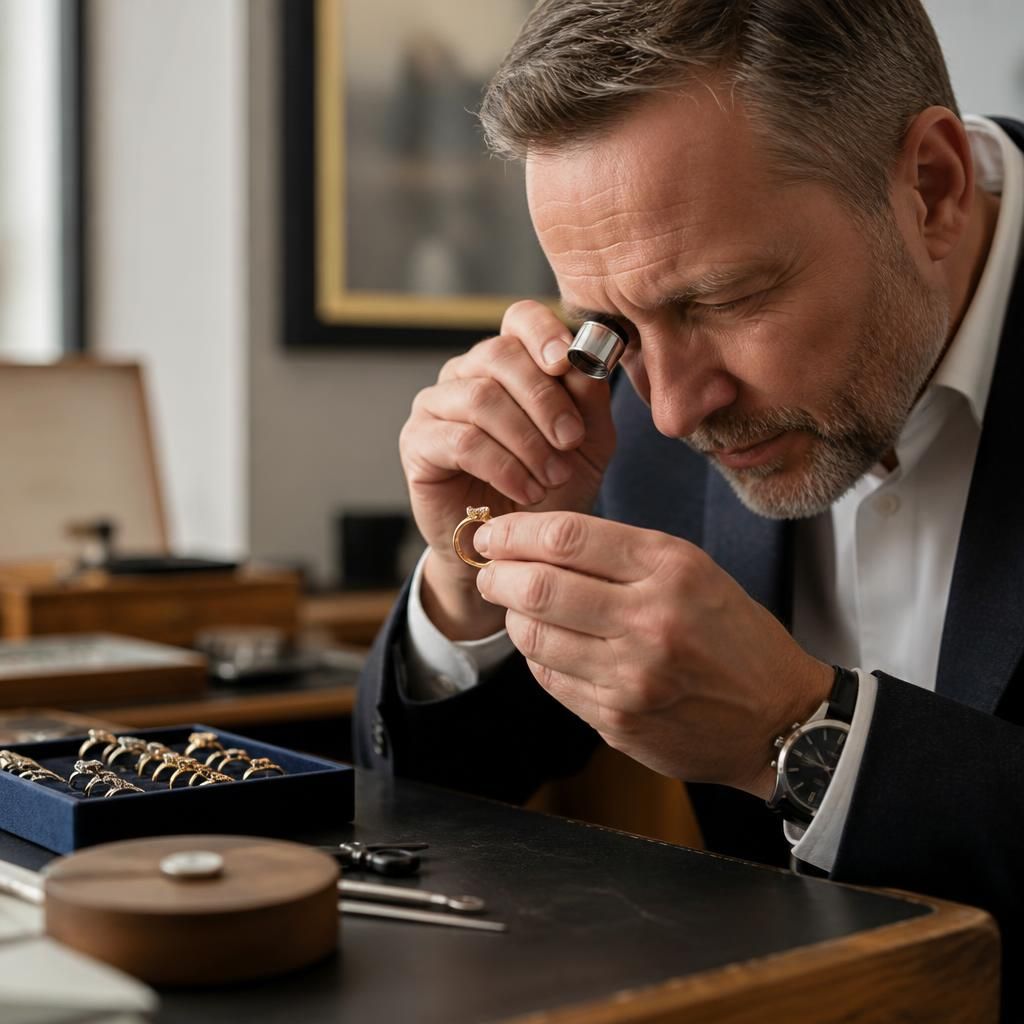
When choosing a used 9ct gold ring, its condition is one of the most important factors because previous wear can affect both appearance and durability. Inspect the band for deep scratches, dents, splits and thinning, particularly along the underside where contact with hard surfaces can gradually reduce the metal.
Also check the shoulders, setting and decorative details for bending or distortion. Light surface marks are usually consistent with pre-owned jewellery and may be polished, but excessive polishing can soften engraving and remove further gold. If the ring contains gemstones, look for worn claws, gaps around the settings or any movement, as these may indicate that repairs are needed before regular wear.
Ask for the ring to be professionally inspected if you cannot clearly assess its thickness, hallmark, previous repairs or stone security. This helps you understand the work required and judge whether the ring’s condition is appropriate for its intended use and price.