
What influences the cost when selling jewellery for scrap?
When selling jewellery for scrap, the cost is influenced by several critical factors, including the current market price of precious metals, the purity and weight of the metal in your jewellery, and the presence of any gemstones or additional components. The condition of the piece and its craftsmanship may also affect the value, with finely crafted items possibly commanding a higher scrap price.
Selling jewellery for scrap involves several key considerations that directly impact the value you can expect to receive. At the heart of the valuation process is the market price of precious metals, such as gold or silver, which can fluctuate due to economic factors and supply and demand conditions. Understanding current market trends can offer insights into the best time to sell.
The intrinsic properties of your jewellery are also crucial. The purity of the metal, often expressed in karats for gold, directly affects scrap value. Higher purity presents higher value, making items constructed from 24-karat gold more desirable price-wise than those of lesser purity. Additionally, the weight of the metal is integral; heavier pieces obviously contain more precious metal, thus fetching a higher price.
Other elements within the jewellery, such as gemstones or other ornamental parts, can complicate scrap valuations if these components are not separately priced or resellable. Notably, the presence of high-quality stones may require that they are extracted and assessed individually, potentially adding value beyond mere scrap considerations.
The condition and craftsmanship of the piece might also play a role, especially where the item’s artistry is acknowledged, potentially leading to offerings above the standard scrap valuation. However, this scenario typically applies when the craftsmanship is exceptional and recognisable, contributing to what might be termed ‘added artistic value’ rather than mere metal worth.
Scrapping jewellery is not just about melting down pieces; it requires careful attention to market insights, an understanding of material attributes, and acknowledgement of artistic significance. At Steven Charles Quance, our expertise ensures every component influencing value is appraised meticulously, giving clients an accurate and fair valuation for their precious items.
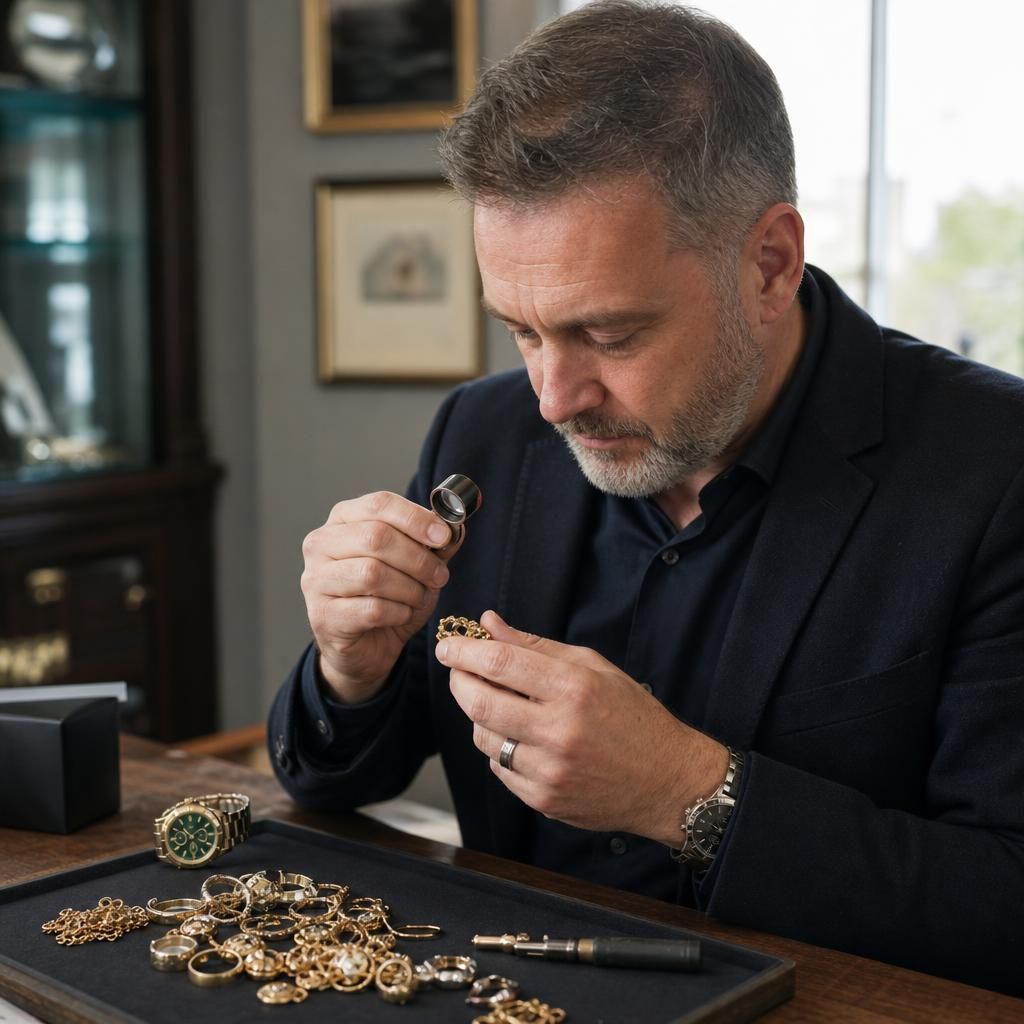
The Purity of Precious Metals: One of the most significant factors influencing the cost when selling jewellery for scrap is the purity of the precious metals it contains. Purity is typically denoted in carats for gold and percentages for other metals, such as silver or platinum. The higher the purity, the greater the value, because pure metal is more valuable in the market. For instance, a 24-carat gold piece is purer and thus more valuable than a 14-carat gold item. Understanding the purity of the metal in your jewellery can give you a better idea of its intrinsic scrap value. When considering selling for scrap, it is crucial to have an accurate assessment of these purity levels.
Find out what your scrap jewellery is worth
For an accurate assessment of your scrap jewellery’s value, bring your items to Steven Charles Quance for expert advice based on their materials, condition and current market rates. We can also discuss whether selling for scrap, repairing or remodelling is the most suitable option.