
What should you do if your necklace string snaps, and can restringing prevent future damage?
If your necklace string snaps, it’s essential to have it professionally restrung to prevent further damage. Restringing not only repairs the break but also strengthens the necklace, potentially extending its lifespan and maintaining its beauty and integrity.
When your necklace string snaps, prompt action is key to ensuring the longevity of your treasured piece. The first step is to have it professionally restrung. This process involves replacing the broken string with a new, stronger one that securely holds the beads or elements together. Restringing is not merely a repair; it’s a preventive measure that fortifies the structure of your necklace, reducing the risk of future breaks.
Professional restringing typically involves assessing the original stringing material, as some materials may weaken over time due to wear or exposure to environmental factors. Jewellery professionals often opt for durable materials like silk thread, nylon-coated wire, or specialised beading cord known for their strength and flexibility. Choosing the suitable stringing material is crucial as different necklace styles require different tension and support.
Additionally, the restringing process can involve inspecting other components such as clasps, spacers, and bead alignments, ensuring that everything is intact and functional. Replacing a worn-out clasp with a new, more secure option could further enhance the necklace’s durability. This expert attention to detail helps preserve the necklace’s original appearance and functionality while potentially adding longevity.
Regular maintenance and occasional restringing are advised, particularly for necklaces worn frequently. While some signs of wear may be noticeable, such as frayed threads or loose beads, others may require a professional assessment to determine the best corrective action. A thorough professional inspection ensures your necklace not only looks its best but also remains a secure part of your jewellery collection.
By consulting with our trusted team at Steven Charles Quance, you gain access to bespoke advice tailored to the unique requirements of your jewellery piece. We offer specialised expertise in crafting one-of-a-kind designs and utilising ethically sourced materials, ensuring your piece maintains its beauty and significance over time. Regular checks and maintenance after an initial restringing can mitigate potential issues, securing your jewellery’s longevity and sentimental value.
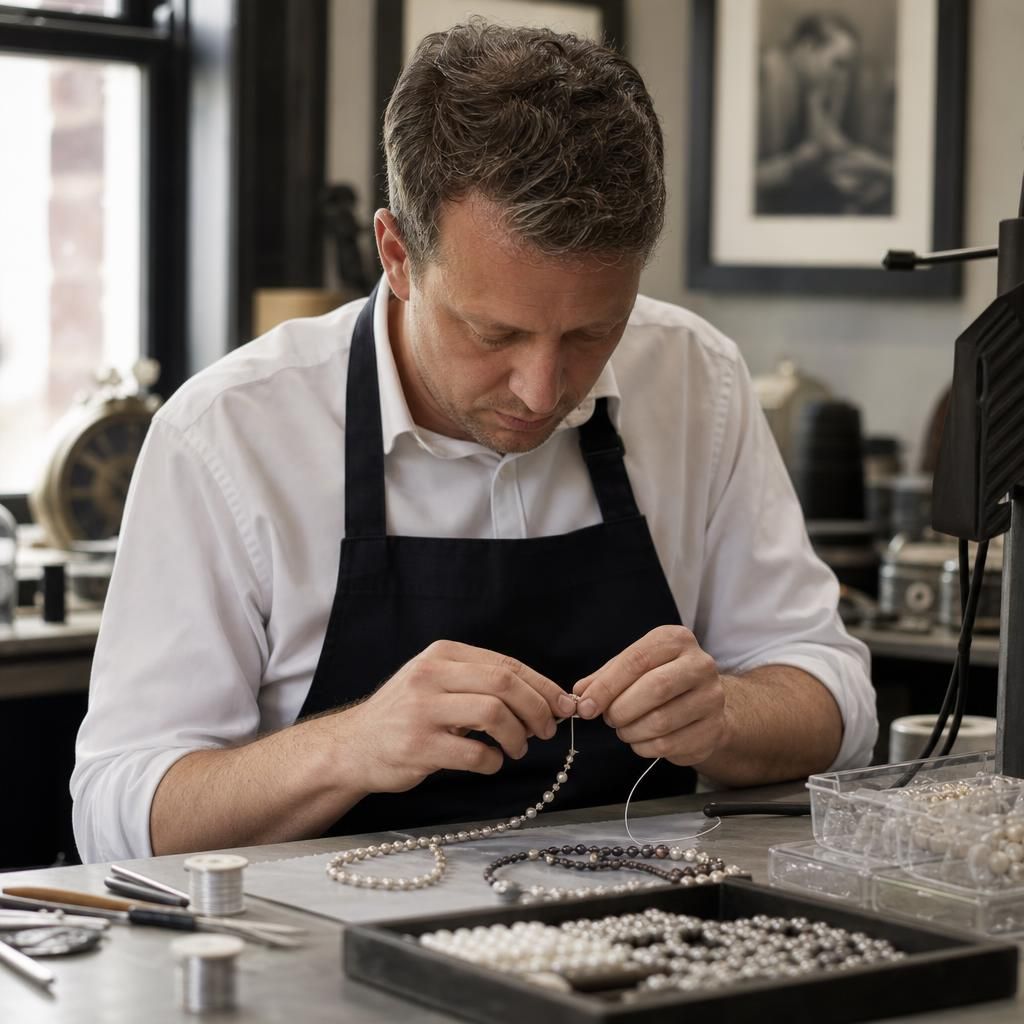
When your necklace string snaps, one essential aspect to consider is the choice of stringing material used for the repair. This decision is crucial as it directly influences the durability and flexibility of the necklace. For instance, using materials like silk thread provides an elegant drape suitable for high-end pearls, while nylon-coated wire offers superior strength for more substantial beadwork. Selecting the appropriate stringing material tailored to the specific needs of your necklace style can significantly prevent future damage. Additionally, regularly inspecting for frayed threads or infrequent loose beads can alert you to potential weak points, enabling preemptive restrung measures before a complete break occurs. Such proactive care ensures that your necklace remains a cherished part of your collection, showcasing both its visual and sentimental allure for years to come.
Arrange Your Necklace Restringing Assessment
If your necklace string has snapped or shows signs of wear, arrange a restringing assessment so we can check the beads, settings, clasp and tension before recommending the appropriate repair. Contact Steven Charles Quance for expert necklace restringing and aftercare advice.