
What considerations should be made when selecting the design elements for a bespoke engagement ring?
When selecting design elements for a bespoke engagement ring, consider the wearer’s personal style, lifestyle, gemstone choice, setting, metal, comfort, durability and budget. These decisions should work together to create a distinctive ring that is practical for everyday wear and reflects the intended meaning.
The design elements of a bespoke engagement ring should be selected as a coordinated set, balancing the wearer’s personal style with comfort, durability, symbolism and budget. The most important considerations are the choice of gemstone, its cut and proportions, the setting, precious metal, overall shape, practical requirements and the quality of the materials. A well-designed ring should look distinctive while remaining suitable for regular wear and capable of being maintained over time.
Start with the wearer’s style and everyday requirements
Personal taste provides the foundation for the design, but it is useful to consider how the ring will be worn in practice. Some people prefer clean, understated lines, while others are drawn to intricate detail, unusual stone arrangements or vintage-inspired features. Existing jewellery can help identify preferences in metal colour, scale, finish and ornamentation.
Lifestyle is equally important. A person who works with their hands, plays sport or regularly wears gloves may need a lower-profile setting, protected stone edges and fewer raised details. Someone who is comfortable removing their ring for particular activities may have more flexibility with a prominent centre stone or delicate decorative elements. The ring should also be considered alongside any wedding band, particularly if the intention is to wear both rings together.
Choose the gemstone with appearance and durability in mind
The centre gemstone usually determines the character, proportions and cost of the ring. Diamonds remain a common choice, but sapphires and other gemstones can provide colour and a different visual identity. The decision should take account of the stone’s hardness, toughness, sensitivity to heat or chemicals, and the level of protection offered by the setting.
For a diamond, the cut has a major effect on brightness, contrast and apparent size. Round, oval, pear, emerald, cushion, marquise and other cuts each produce a different pattern of light and suit different design styles. The length-to-width proportions of an elongated stone can also alter the appearance of the ring significantly. A gemstone should therefore be assessed as part of the intended setting rather than selected in isolation.
Colour, clarity and carat weight should be judged according to the design and the wearer’s priorities. A stone with characteristics that are less visible to the naked eye may be appropriate where overall appearance and value are more important than a particular specification. Conversely, a client may place greater importance on a completely clean appearance, a specific colour grade or a meaningful gemstone origin. Professional assessment and independent documentation can help establish that the stone is suitable and accurately represented.
Select a setting that supports the stone
The setting holds the gemstone in place and affects both its security and how it is seen. Claw or prong settings can expose more of the stone to light, whereas bezel settings surround the edge and can offer additional protection. Halo settings, shoulder stones and multi-stone arrangements change the perceived scale and style of the centre gemstone, while channel or pavé details can introduce continuous sparkle across the band.
Practical questions should be considered before finalising the setting:
- Are the stone’s vulnerable edges protected from knocks?
- Is the setting high enough to accommodate the intended wedding band?
- Could claws or decorative details catch on clothing?
- Can the setting be inspected and repaired if it becomes worn?
- Will the design be comfortable when worn alongside other rings?
The height of the centre stone is particularly important. A high setting can create a more dramatic profile but may be more exposed to impact. A lower setting can be easier to wear every day, although it may restrict the shape of a straight wedding band. These choices are best resolved at the design stage rather than after the ring has been made.
Consider the metal’s properties and appearance
Platinum and gold are common choices, with different colours, weights, finishes and maintenance requirements. White, yellow and rose gold create distinct contrasts with gemstones and may be selected to match existing jewellery. The metal should also be chosen for its suitability for the design: a fine, delicate structure may need different proportions from a substantial ring intended for active daily wear.
Ask about the metal’s purity, durability, sourcing and future maintenance. Some finishes naturally change with wear, and white gold may require periodic refinishing depending on its composition and the desired appearance. Mixed-metal designs can be useful where the wearer likes more than one colour, but the joins and proportions need to be carefully planned so that the result remains comfortable and structurally sound.
Use proportion and scale to create a balanced design
The size of the gemstone, width of the band, height of the setting and amount of decorative detail should work together. A large centre stone may need a broader band or stronger shoulders for visual and structural balance. Conversely, extensive detailing on a narrow band can make the ring appear crowded or reduce the available metal around important areas.
Scale should also be judged against the wearer’s hand, finger length and existing jewellery. This does not mean that certain designs are restricted to particular hand shapes; it means that proportions can be adjusted to achieve the intended effect. Sketches, computer-aided designs and physical samples can help confirm the scale before production begins.
Build the budget around priorities
A bespoke budget should include the gemstone, metal, design complexity, labour, setting, finishing and any independent documentation or valuation required. It is helpful to decide which features matter most before making compromises. For example, the priority may be a particular gemstone shape, a higher-quality metal, intricate hand engraving or a ring that sits flush with the wedding band.
Where the budget needs to be controlled, adjustments can often be made without losing the central design idea. These might include changing the gemstone size or shape, simplifying the setting, reducing the number of accent stones or selecting a different metal. The effect of each change should be explained clearly, including any implications for durability, appearance and future maintenance.
Check ethical and provenance considerations
Material sourcing should form part of the design discussion. For gemstones, ask what information is available about origin, supply-chain controls and any relevant documentation. For precious metals, discuss whether newly mined or recycled material is being considered and what evidence supports the stated sourcing. Ethical choices should be assessed alongside quality, security and suitability for the finished design, rather than treated as a separate afterthought.
Plan for wear, care and future changes
A bespoke ring should be designed with inspection, cleaning and possible repairs in mind. Settings can require checking over time, particularly where claws or fine pavé work are used. The design should also allow for sensible resizing where possible, although some complex patterns, full eternity arrangements and certain stone settings may limit future alterations.
Consider whether the ring may later be remodelled, passed on or worn with additional jewellery. Keeping design details, gemstone information and valuation records provides useful support for insurance and future aftercare. Before approval, confirm the ring size, setting security, metal specification, gemstone details, finish, timescale and aftercare arrangements.
In practice, the strongest bespoke designs result from making these decisions together rather than choosing each feature separately. Personal style establishes the direction, the lifestyle determines practical requirements, and the gemstone, setting, metal and budget define what can be achieved securely and comfortably. A detailed consultation and careful review of the proposed design should resolve these points before the ring enters production.
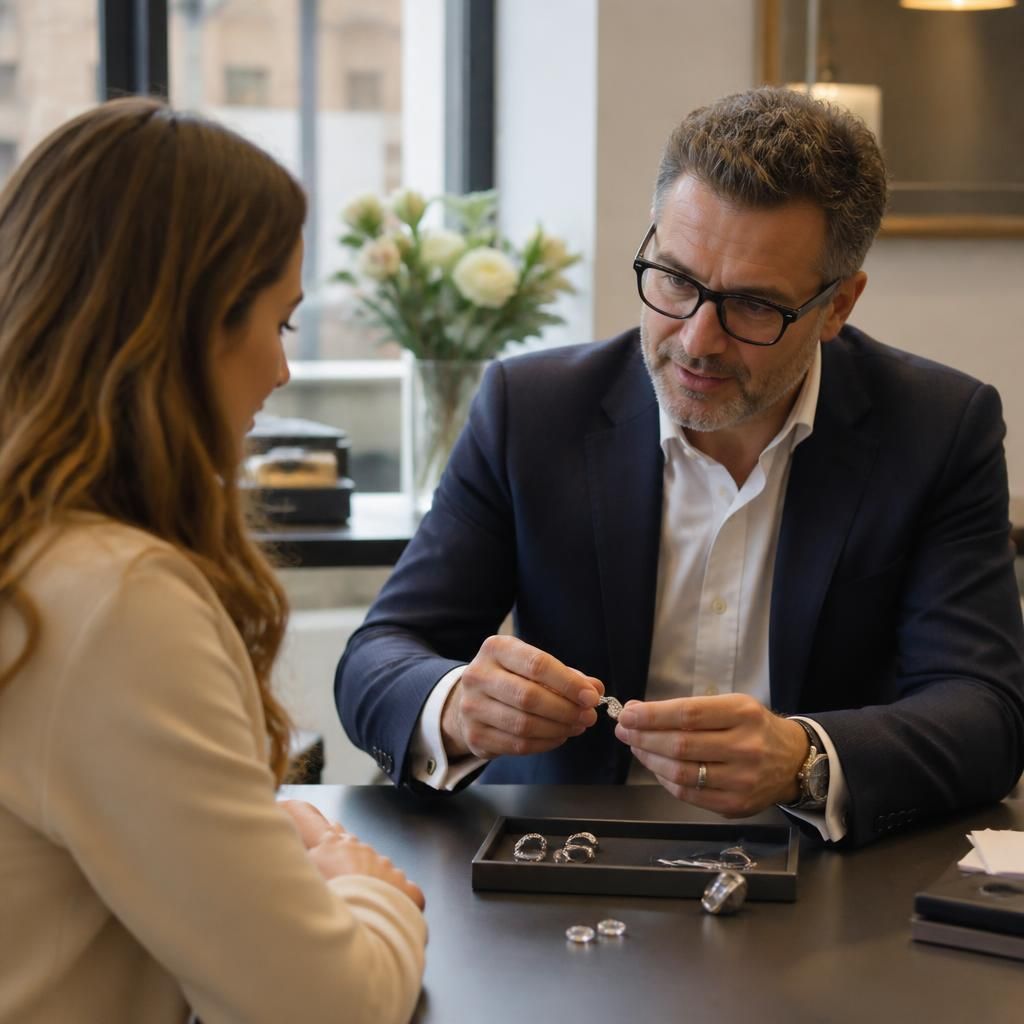
When selecting design elements for a bespoke engagement ring, the wearer’s lifestyle should be considered alongside appearance. A ring that looks beautiful but is difficult to wear, catches on clothing or leaves a gemstone exposed to frequent knocks may not be suitable for everyday use.
People who work with their hands, play sport or regularly wear gloves may benefit from a lower-profile setting, protected stone edges and a smooth band with fewer raised details. A bezel setting can provide more coverage around a gemstone, while carefully proportioned claws can secure the stone without creating unnecessary snag points. Those who remove their ring for particular activities may have more flexibility with a higher setting or more intricate decoration.
The design should also be assessed with the intended wedding band. Confirm whether the bands should sit flush together, whether a shaped wedding ring is needed and whether the setting leaves enough room for comfortable movement. Considering these practical points before production helps ensure that the gemstone, setting, metal and decorative details work together securely and comfortably.