
What is the importance of checking the provenance of a Rolex before purchase?
Checking a Rolex’s provenance means verifying its ownership history, purchase documentation and service records before you buy. This can help confirm the watch’s identity and legitimacy, expose undisclosed alterations or stolen-property concerns, and support a more accurate assessment of its value.
Checking a Rolex’s provenance means establishing where the watch came from, who has owned it, how it has been maintained and whether its documentation agrees with the watch itself. This matters because provenance can help identify stolen property, undisclosed alterations, replacement parts, an incorrect watch-and-paperwork pairing and an inflated asking price. It is an important part of due diligence, alongside physical inspection and movement authentication.
A credible ownership history does not prove that every component is genuine, and a lack of paperwork does not automatically mean that a Rolex is counterfeit. However, consistent and verifiable records give you a stronger basis for deciding whether the watch is legitimate, fairly valued and suitable for purchase.
Provenance can help establish the watch’s identity. Compare the serial and reference details on the watch with the information shown on the original guarantee or warranty card, purchase receipt, service documentation and any valuation. The description should also agree with the watch’s configuration, including its dial, bracelet, bezel, case material and approximate production period. Discrepancies should be investigated rather than dismissed as clerical errors.
Be aware that Rolex documentation has changed over time, particularly for vintage and older pre-owned watches. The format of guarantee papers, serial information and service records may vary according to the watch’s age and country of sale. An experienced specialist should assess whether the documents are appropriate for the period rather than applying modern expectations to an older watch.
It can reduce the risk of buying stolen or unlawfully obtained property. Ask the seller how the watch was acquired and whether they have evidence of their right to sell it. Useful supporting material may include an original purchase receipt, a dated service invoice, insurance documentation, previous valuation records or a clear transaction history. These documents should be handled responsibly because they may contain personal information, but a seller should still be willing to provide reasonable evidence of ownership.
No single document is conclusive. Receipts can be altered, warranty cards can be separated from watches and genuine papers can be paired with a different watch. Look for consistency across the complete set of evidence, including the seller’s identity, the watch’s serial and reference details, the dates of ownership and the condition or configuration described in earlier records.
Service history helps explain the watch’s condition and originality. Records may show when the movement was serviced, whether water-resistance testing was carried out and whether components such as the crystal, crown, bracelet or dial were replaced. Replacement parts are not necessarily a defect, particularly where they improve reliability, but they can affect collectability and value. A watch represented as original should be examined carefully if the service history indicates significant replacement work.
Provenance is especially relevant when a watch is described as rare, untouched, belonging to a particular production period or having an unusual configuration. Those claims require more than a verbal assurance. Compare the watch with period-correct features and obtain an independent opinion where the historical details materially affect the price.
Before committing to a purchase, ask for:
- the watch’s reference and serial information, recorded accurately and securely;
- the original guarantee or warranty documentation, if available;
- the purchase receipt and any subsequent service or repair invoices;
- a clear explanation of the seller’s ownership or supply history;
- details of replaced, refinished, restored or non-original components;
- confirmation of whether the watch has been reported lost, stolen or subject to an ownership dispute, where appropriate checks are available; and
- an invoice that describes the watch accurately and identifies the seller.
Common warning signs include:
- serial or reference details that are missing, obscured or inconsistent;
- papers that describe a different model, material, dial or bracelet;
- a seller who refuses reasonable questions about ownership or documentation;
- pressure to pay quickly, use an untraceable payment method or avoid an invoice;
- service records that do not match the claimed age or condition of the watch; and
- a price that appears difficult to reconcile with the watch’s condition, specification and supporting evidence.
Use a qualified watch specialist for an independent examination when the purchase is significant or the history is incomplete. The inspection should include the case, dial, bracelet, serial and reference details, movement, seals and any evidence of polishing or alteration. If concerns remain, pause the transaction until they have been resolved. A seller’s willingness to allow appropriate checks is itself an important part of a safe purchase process.
Keep copies of the documents, photographs and written description supplied at the time of sale. They provide a useful record for insurance, future servicing, resale and any later valuation. Provenance therefore protects more than the initial purchase: it helps preserve the watch’s identity, supports an accurate valuation and makes its future ownership easier to demonstrate.
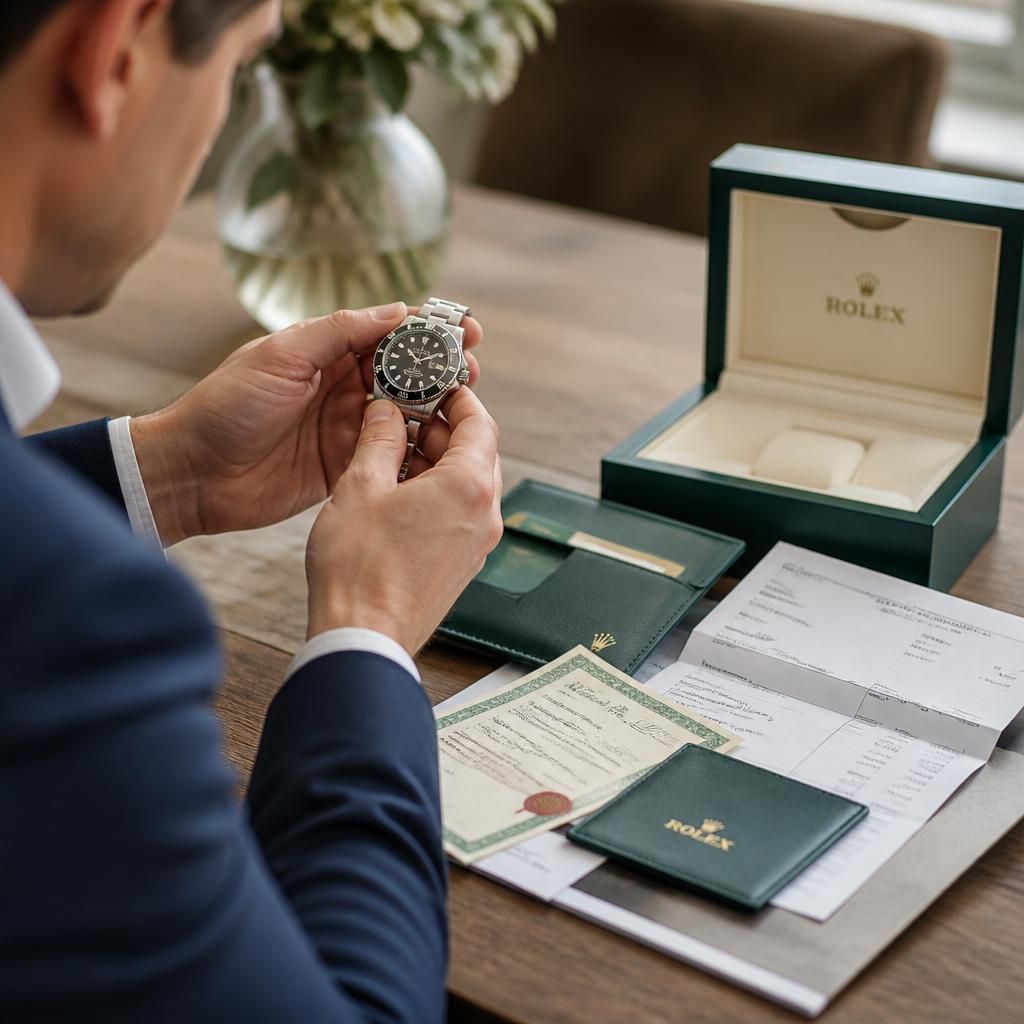
Checking a Rolex’s provenance means verifying its ownership history and comparing its documentation with the watch itself. The original guarantee or warranty card, purchase receipt and service records should support the stated reference, serial details, configuration and age.
Consistent records can help identify an incorrect watch-and-paperwork pairing, undisclosed replacement parts or concerns about lawful ownership. No single document proves authenticity, so discrepancies should be investigated by an independent watch specialist before you commit to the purchase.
Arrange an Expert Rolex Provenance Check
Arrange an expert Rolex provenance check with Steven Charles Quance to compare the watch’s ownership history, documentation, serial details and configuration before purchase. We can help identify inconsistencies and advise whether further authentication or valuation is appropriate.