
Can engraving be done on all types of jewellery and watch materials?
Engraving is possible on many jewellery and watch materials, including gold, platinum, silver and some stainless steel, but not every surface is suitable. The design, finish, hardness, coating and thickness of the piece must be assessed first, as engraving may be unsuitable for plated, heavily textured, ceramic, glass or delicate materials.
Engraving can be carried out on many jewellery and watch materials, but it is not suitable for every surface. Gold, platinum, silver and some stainless-steel components are generally suitable, provided the item has sufficient thickness and a stable, accessible surface. Before accepting a piece, we assess its material, hardness, finish, construction and any coatings to determine whether engraving can be completed safely and with a clear, durable result.
Precious metals are usually among the most adaptable materials for engraving. Yellow gold, white gold, rose gold, platinum and sterling silver can often be engraved by hand or with precision equipment. The metal’s purity and condition affect the depth and appearance of the engraving. Softer alloys may take a crisp inscription but can show wear or marks more readily, while harder metals may require a different engraving approach.
Gold-plated, vermeil and gold-filled jewellery needs particular care. Engraving cuts through the surface layer, so it may expose the underlying metal and create a visible contrast that was not intended. This can sometimes be part of the design, but it may also affect the appearance and longevity of the piece. We therefore assess the thickness and condition of the plating before recommending personalisation.
Stainless steel watches and jewellery can often be engraved, especially on a suitable case back, clasp or other flat component. However, stainless steel is harder than many precious metals, and some watch cases have a hardened, brushed, polished or coated finish. The engraving method must be chosen to suit the surface so that the surrounding finish is not unnecessarily disturbed.
Other watch materials require a more cautious assessment:
- Titanium: some titanium components can be engraved, although the finish and hardness may affect the technique and the colour of the result.
- Ceramic: ceramic is hard and can be brittle, so conventional engraving may risk chipping or cracking. It is not automatically suitable.
- Glass and sapphire crystal: these surfaces are generally unsuitable for ordinary personal engraving, particularly where engraving could affect clarity, strength or water resistance.
- Leather, rubber and fabric: straps and bracelets are not normally engraved in the same way as metal. Personalisation may instead involve embossing, branding or a separate engraved fitting, depending on the construction.
- Coated or painted surfaces: engraving can remove the coating and reveal the material beneath. The result may be deliberately contrasting, but it cannot always be restored or made invisible if the inscription is later removed.
The shape and construction of the item are just as important as the material. A broad, flat surface usually provides the clearest result, whereas curved, narrow or highly detailed components can limit the size and legibility of the design. Hollow jewellery, thin bands and delicate components may not have enough metal for a deep engraving. On a watch, the case back, clasp or buckle may be more suitable than the case itself, but the chosen area must not interfere with seals, hinges, threads, sensors or the movement.
The existing finish also affects the outcome. Polished, brushed, satin and hammered surfaces reflect light differently, so the same inscription can appear more or less prominent depending on where it is placed. Gemstones should not normally be engraved without specialist assessment, and settings, pavé work and fine detailing must be protected from the engraving process.
We consider the wording, lettering style, symbol, placement and intended depth before work begins. A fine script may not remain legible on a small or frequently handled item, while a simple block font may be more appropriate for a watch clasp or narrow ring. Engraving is permanent in most cases, so confirming the spelling, date, initials and layout in advance is essential.
If a material or finish is unsuitable for direct engraving, there may be an alternative. Options can include engraving a different component, adding a personalised plaque or tag, using a compatible finish, or selecting a piece with a more appropriate engraving surface. These alternatives depend on the item’s design and the type of personalisation required.
Engraving may also affect a watch’s manufacturer finish, water resistance or warranty considerations, particularly if work is proposed on a case or case back. For that reason, watches should be assessed before any alteration is made. Bring the item to us for an inspection and we can explain whether engraving is appropriate, where it can be placed, how the material is likely to respond and what finish to expect.
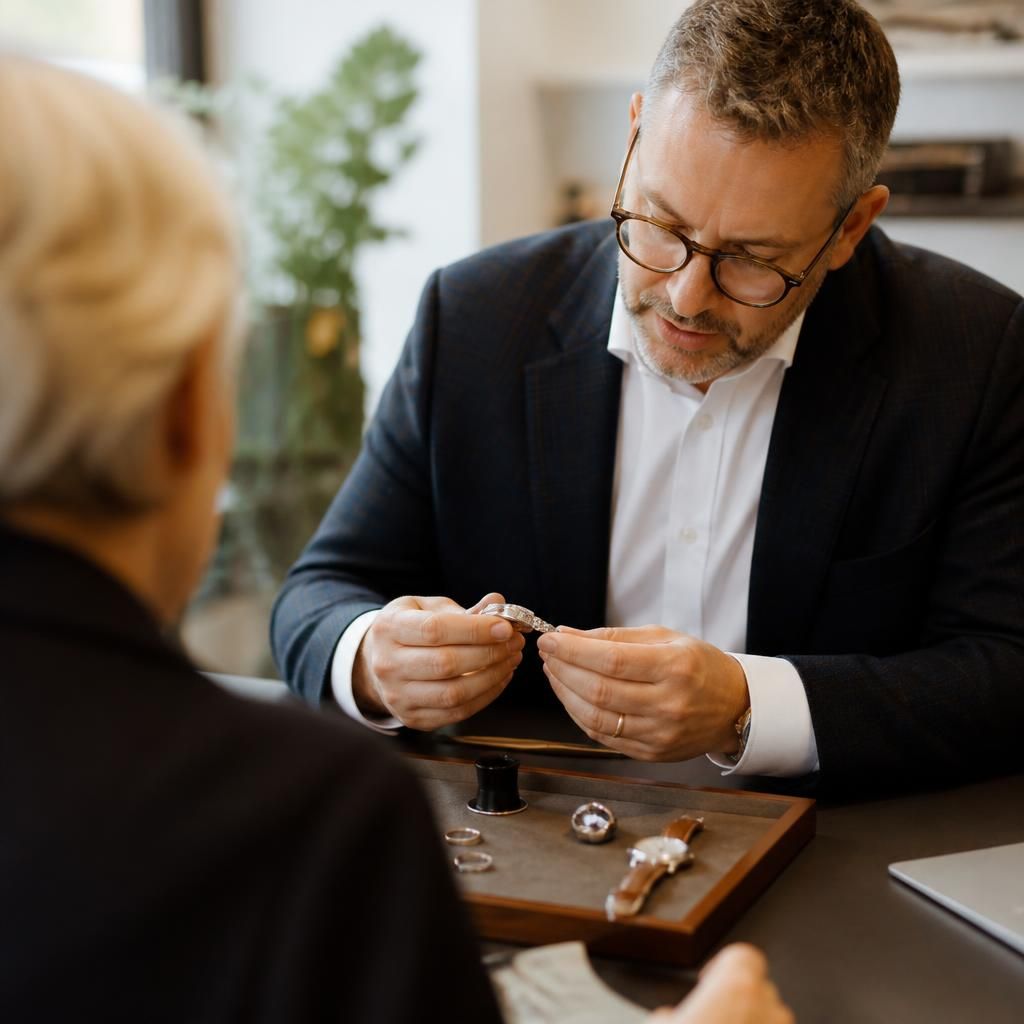
Engraving is not suitable for every jewellery or watch material. Precious metals such as gold, platinum and sterling silver are often suitable, while stainless steel may also be engraved when the surface is stable, accessible and thick enough. Plated, coated, ceramic, glass and very delicate materials require greater caution because engraving can expose the underlying surface, cause damage or affect the item’s appearance.
The material is only part of the assessment. We also consider the item’s shape, thickness, finish and construction, as well as the proposed wording or design. A flat watch clasp or case back may provide a clearer and safer engraving surface than a curved case, narrow ring or detailed setting. If direct engraving is unsuitable, an alternative such as a separate engraved fitting or plaque may be possible.