
How can you ensure the integrity of the material during engraving on a bespoke necklace or ring?
Ensuring the integrity of the material during engraving on a bespoke necklace or ring requires precision and expertise. It involves careful assessment of the jewellery’s material properties and selecting appropriate engraving techniques that maintain the piece’s structural integrity while achieving a personalised finish.
Ensuring the integrity of the material during engraving on a bespoke necklace or ring requires understanding the material composition and selecting suitable engraving techniques. Different materials exhibit distinct characteristics that influence the engraving process. Metals such as gold, sterling silver, and platinum react differently to various engraving tools and methods, necessitating customised approaches to preserve their structural integrity. Soft metals like gold, while malleable, require gentle handling to avoid distortion, whereas harder materials like platinum demand more robust techniques to achieve precision without compromising the piece’s durability.
Bespoke jewellery, with its personalised designs and intricate craftsmanship, requires exceptional care during engraving. The first step is a thorough assessment of the jewellery’s material properties, including its hardness, ductility, and existing design elements. This evaluation assists in choosing the right engraving tools and techniques, whether hand engraving, laser engraving, or machine-assisted methods. Hand engraving offers a classic, tactile quality, ideal for softer metals, whereas laser engraving provides precision for complex designs in harder materials, ensuring both aesthetic and structural preservation.
Moreover, the scale and intricacy of the engraving play a crucial role in maintaining material integrity. Fine, detailed engravings may require multiple passes at controlled depths, particularly in fragile or thin areas of the jewellery. It is also essential to consider the location of the engraving, as areas subjected to pressure or frequent contacts, like ring bands, might require reinforcement to prevent wear over time. Our comprehensive experience in jewellery engraving ensures these factors are meticulously considered, leveraging expert judgement to maintain the jewellery’s integrity while delivering a personalised and lasting finish.
Finally, ongoing care and maintenance of engraved jewellery are paramount. Avoid exposing pieces to harsh chemicals or extreme environments that might degrade the engraving or the material itself. Regular inspections and follow-up consultations with our aftercare services help address any concerns promptly, ensuring your bespoke jewellery retains its beauty and integrity for generations.
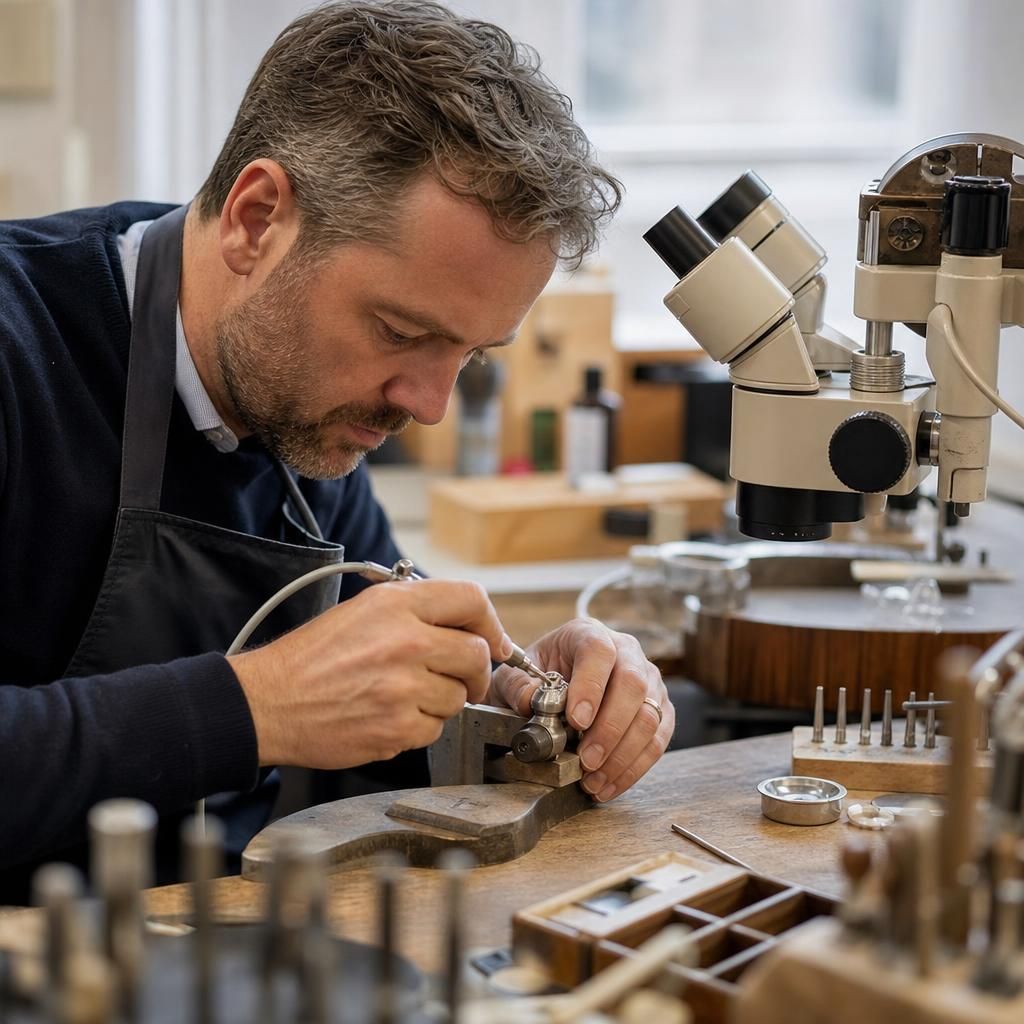
When engraving bespoke jewellery, such as necklaces or rings, ensuring the material’s integrity hinges on choosing the correct engraving technique. Each material, whether gold, platinum, or sterling silver, possesses unique physical properties that demand a tailored approach. For instance, gold’s malleability requires a delicate touch to prevent distortion during the engraving process. In contrast, platinum’s hardness necessitates robust techniques to maintain precision without compromising the piece’s durability.
An important aspect is the choice between hand engraving and laser engraving. Hand engraving suits softer metals, offering a classic, tactile feel, whereas laser engraving is preferable for intricate designs on harder materials, ensuring precision and structural preservation.
Additionally, consider the specific site of the engraving. Areas prone to wear, such as ring bands, need strategic reinforcement to prevent deterioration over time, enhancing the longevity of the piece. By understanding these nuances and utilising expert judgements, we safeguard the material integrity of each unique jewellery creation.
Discuss Safe Engraving for Your Bespoke Jewellery
For expert advice on protecting the material integrity of your bespoke necklace or ring during engraving, speak to Steven Charles Quance about your design and chosen metal. We can assess the piece, recommend a suitable engraving method and explain the safeguards used before work begins.