
How do different metal choices impact the longevity and aesthetic of wedding bands?
The choice of metal for wedding bands significantly influences both their longevity and aesthetic appeal. Metals such as platinum offer exceptional durability and resistance to wear, while others like gold provide a rich variety of hues and finishes. Different metals also contribute to the weight, colour, and overall style of the band, which can enhance or complement the design of engagement rings and other jewellery pieces.
The choice of metal for wedding bands is pivotal to both their longevity and aesthetic attributes, directly affecting their durability, wear resistance, and visual harmony with other jewellery items. Platinum, renowned for its incredible hardness and resistance to scratching, offers longevity unmatched by softer metals. This makes it an ideal choice for those desiring a wedding band that will endure the test of time while maintaining its pristine appearance. Conversely, gold, available in yellow, white, and rose variants, provides a versatile canvas for custom designs, though its softer nature may necessitate more frequent maintenance to preserve its appearance.
Titanium and palladium present themselves as contemporary alternatives, catering to those who value both durability and a modern aesthetic. Titanium is particularly notable for its strength-to-weight ratio, making it a desirable option for individuals preferring lightweight yet robust jewellery. Palladium, part of the platinum group metals, offers a similar appearance to platinum at a more accessible price point, combining durability with a lustrous finish.
In addition, selecting metals such as tungsten or cobalt can enhance the band’s resilience. These metals are highly scratch-resistant and suitable for those whose lifestyle involves considerable physical activity. However, due to their extreme hardness, resizing these bands can be complex.
From an aesthetic perspective, each metal’s colour, sheen, and finish contribute to the band’s overall design. The warm tones of yellow gold can provide a classic, timeless appeal, while the cooler white metals like platinum and white gold offer a modern, understated elegance. Rose gold adds a romantic, vintage charm, increasingly favoured for its unique hue that complements various skin tones.
Ultimately, the decision on which metal to choose should consider your lifestyle, preference for maintenance frequency, and how the wedding band harmonises with other pieces, such as engagement rings. By understanding these factors, you can ensure that your bespoke wedding band is not only a symbol of love and commitment but also a reflection of your personal taste and style, destined to last a lifetime.
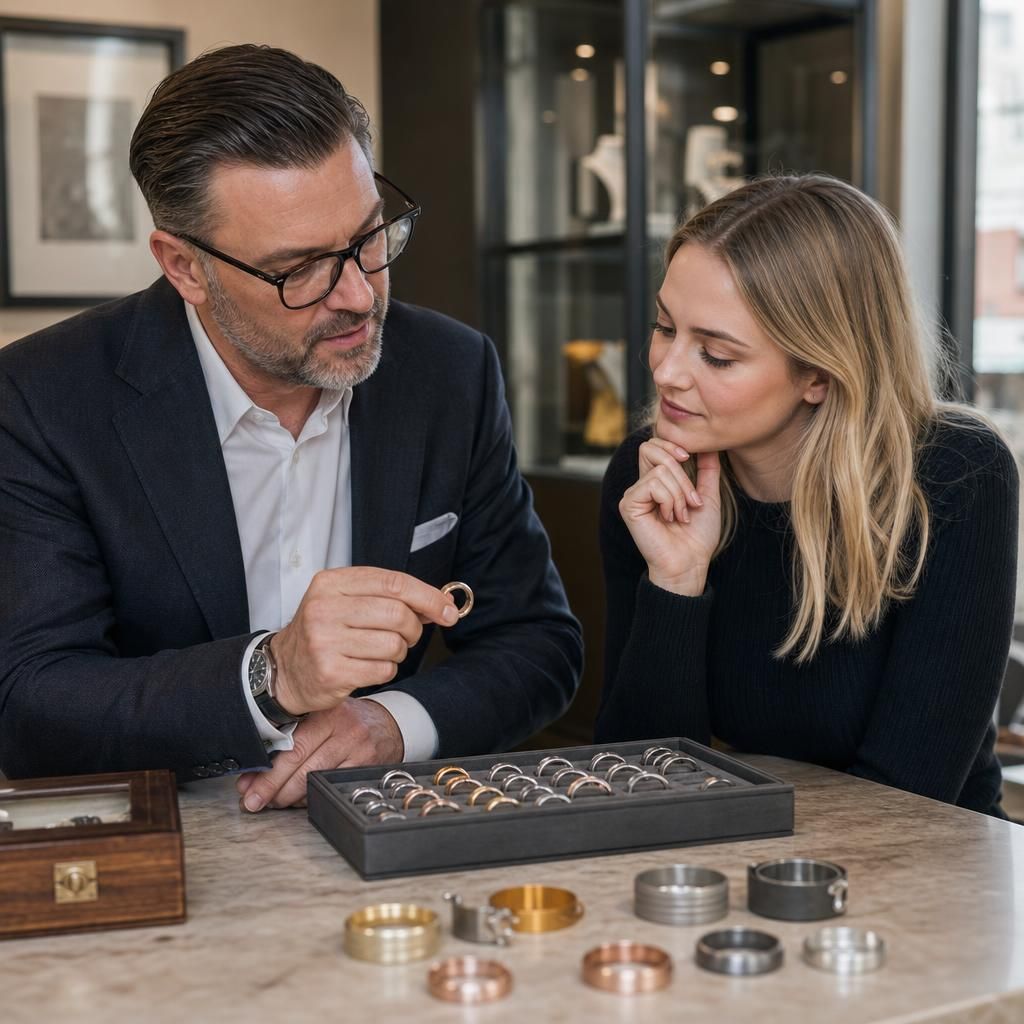
The selection of metal for wedding bands holds significant importance in ensuring longevity and aligning with aesthetic preferences. Platinum, known for its exceptional durability, is resistant to scratches and tarnish, making it an excellent choice for those seeking a timeless and enduring wedding band. Its natural white sheen also complements an array of gemstones, enhancing its universal appeal. However, platinum’s density can make it heavier than other metals, a factor to consider for those unaccustomed to wearing jewellery.
In contrast, gold offers a softer metal choice and is available in various hues such as yellow, white, and rose, each providing distinct styling options. Yellow gold exudes traditional warmth, while white gold offers a contemporary look similar to platinum but often at a more accessible price. Rose gold, with its pinkish hue, adds a touch of vintage romance, which appeals to those favouring a unique and personalised touch.
Both palladium and titanium serve as modern alternatives, offering durability with a lighter feel. Palladium, resembling platinum in appearance, is a hypoallergenic option that maintains its shine without regular polishing. On the other hand, titanium boasts an outstanding strength-to-weight ratio, making it practical for active individuals who require a resilient yet lightweight band.
For those prioritising ultimate scratch resistance, metals like tungsten and cobalt are superior. Tungsten is renowned for its robustness, though its rigidity can present limitations in resizing. Cobalt offers similar resilience and presents a polished, silver-like appearance.
Each metal choice contributes distinct attributes concerning durability, maintenance, and style. Being aware of these factors enables you to select a wedding band that not only stands the test of time but also aligns harmoniously with your personal style and existing jewellery.