
What types of materials are commonly used in luxury jewellery boxes?
Luxury jewellery boxes are often crafted from high-quality materials that enhance the elegance and protection of your valuable pieces. Common materials include fine woods like mahogany, walnut, and cherry, which offer durability and a classic appearance, as well as premium leather for a sophisticated finish. The interiors are typically lined with soft materials such as velvet or suede to prevent scratching and damage to the jewellery contained within. These choices not only reflect the quality of the jewellery box but also ensure that your bespoke pieces are stored in an environment that respects their value and uniqueness.
When considering luxury jewellery boxes, the selection of materials plays a crucial role in determining both aesthetic appeal and functional integrity. These boxes are most commonly constructed from high-quality woods like mahogany, walnut, and cherry. Each wood type offers distinct characteristics: mahogany is renowned for its rich reddish-brown hue and resistance to rot, walnut presents a deeper colour and fine grain patterns, while cherry is appreciated for its smooth texture and beautiful ageing patina. Such materials not only provide durability but also endow the box with a timeless and elegant appearance, complementing the luxury of the contents within.
Beyond wood, premium leather is frequently used to impart a sophisticated and contemporary look to luxury jewellery boxes. Leather, known for its flexibility and strength, adds a tactile quality and a layer of protection against external factors. It is often chosen for its classic yet versatile aesthetic, which can complement modern and traditional jewellery collections alike.
Inside the jewellery box, the linings are equally important. High-end boxes typically feature interiors lined with soft materials like velvet or suede. These plush fabrics prevent scratching and tarnishing of the jewellery, safeguarding the delicate surfaces of rings, necklaces, and watches. Velvet is particularly appreciated for its luxurious feel and ability to cushion jewellery, while suede offers a slightly different texture that still provides excellent protection.
Additionally, the hardware and fittings of luxury jewellery boxes merit consideration. Finishes made from metals like brass or polished nickel not only secure the box but also add to its visual allure. These metal components are selected for their strength and resistance to corrosion, enhancing the longevity and functionality of the box.
The choice of materials ultimately reflects the value and uniqueness of the jewellery box, ensuring that it effectively houses your bespoke pieces with the care and attention they deserve. By understanding these material options, clients can select a jewellery box that not only meets their aesthetic preferences but also aligns with the high standards of craftsmanship that define their collection.
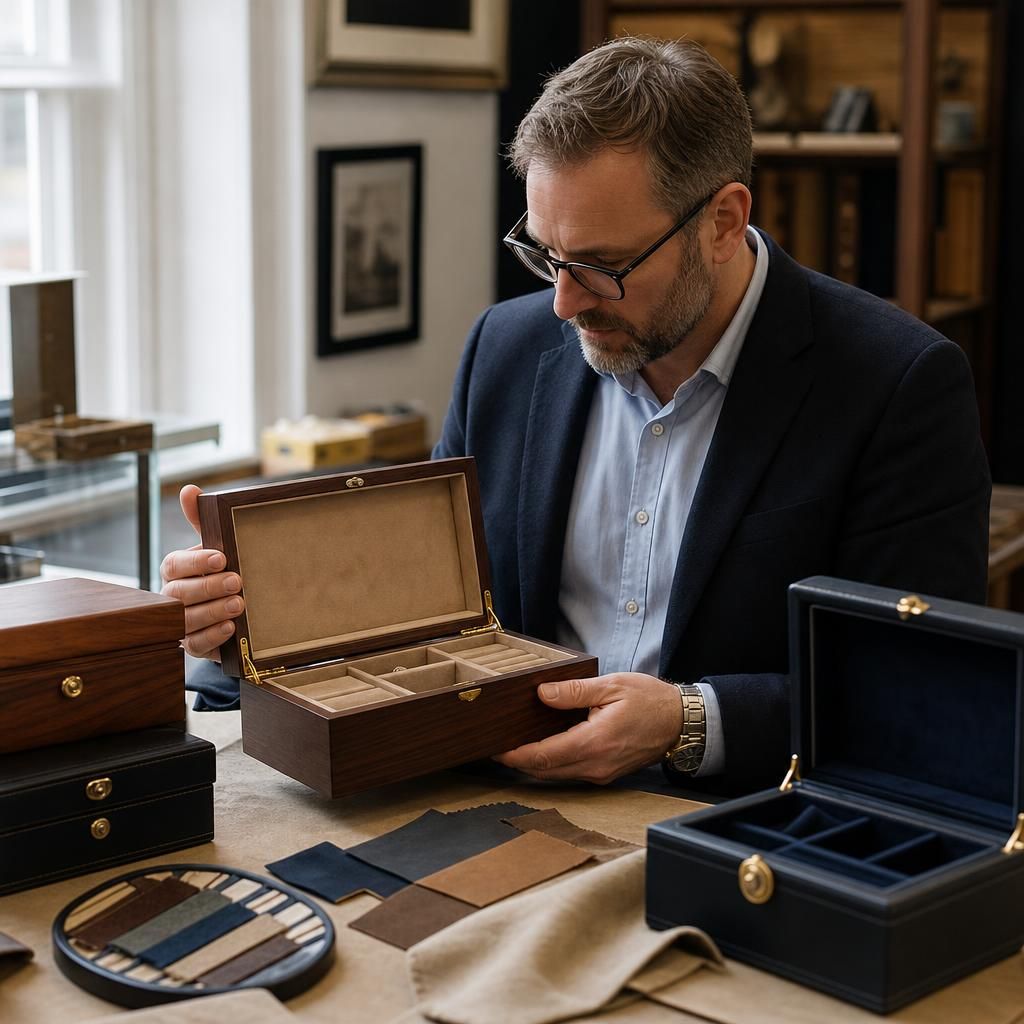
The choice of materials for luxury jewellery box linings is pivotal for both aesthetic appeal and the practical safeguarding of your precious jewellery. High-quality linings are typically composed of soft textiles such as velvet and suede, which play a crucial role in protecting delicate pieces from scratches and tarnishing. Velvet is often favoured for its sumptuous texture, offering a plush bed that cushions the jewellery within, while suede provides a slightly different tactile experience with similar protective qualities. These materials are carefully selected for their ability to cradle fine jewellery gently, ensuring that each piece remains as pristine as when it was first placed inside. By understanding the significance of these linings, clients can ensure their bespoke jewellery is housed with the optimal care it merits.