
What types of gold are commonly used in personalised bracelets for him, and how do they differ in terms of durability and appearance?
Gold types frequently chosen for men’s personalised bracelets include yellow gold, white gold, and rose gold. Yellow gold is prized for its classic, warm hue and robust durability. White gold, known for its sleek and modern appearance, offers a durable option with a slightly softer metal that requires occasional rhodium plating for enhanced lustre. Rose gold, celebrated for its unique pinkish tint, combines durability with a contemporary aesthetic. Each variety provides a distinct look while ensuring the necessary resilience for daily wear.
When designing personalised bracelets for men using gold, the three most prevalent choices are yellow gold, white gold, and rose gold, each offering unique characteristics in terms of durability and appearance. Understanding these differences can help you select the ideal type of gold to meet personal preferences and ensure long-lasting wear.
Yellow Gold is arguably the most traditional and widely recognised form of gold, renowned for its radiant, warm yellow hue. Typically alloyed with metals such as copper and zinc to enhance its strength, yellow gold is an excellent choice for robust and durable jewellery, particularly suitable for men’s bracelets that can withstand the demands of daily wear. Its timeless appeal ensures that yellow gold never goes out of style and complements a wide range of skin tones and personal styles.
White Gold provides a sleek and contemporary alternative to yellow gold, characterised by its silvery-white colour. This is achieved by alloying yellow gold with white metals such as palladium or nickel and often finished with a rhodium plating to enhance its reflective quality. While generally durable, white gold may require more regular upkeep than yellow gold, as the rhodium plating can wear over time, necessitating occasional replating to maintain its lustre. This maintenance consideration is essential for ensuring the longevity and appearance of the bracelet.
Rose Gold stands out for its distinctive pinkish hue, a result of mixing yellow gold with copper. This modern and fashionable choice is both striking and versatile, appealing to those who favour bolder, more individualistic designs. The copper content not only gives rose gold its unique colour but also provides added strength, making it a durable option for bracelets. Additionally, rose gold’s understated elegance allows it to blend seamlessly with various other metals and fashion choices, making it an adaptable option for many.
When selecting the type of gold for a men’s personalised bracelet, consider both aesthetic preferences and the lifestyle of the wearer. Each gold type has its own merits and considerations, ensuring that whatever choice you make reflects both durability and personal style. Rest assured that at Steven Charles Quance, we place equal emphasis on quality and craftsmanship, ensuring your bespoke bracelet not only looks superb but also stands the test of time.
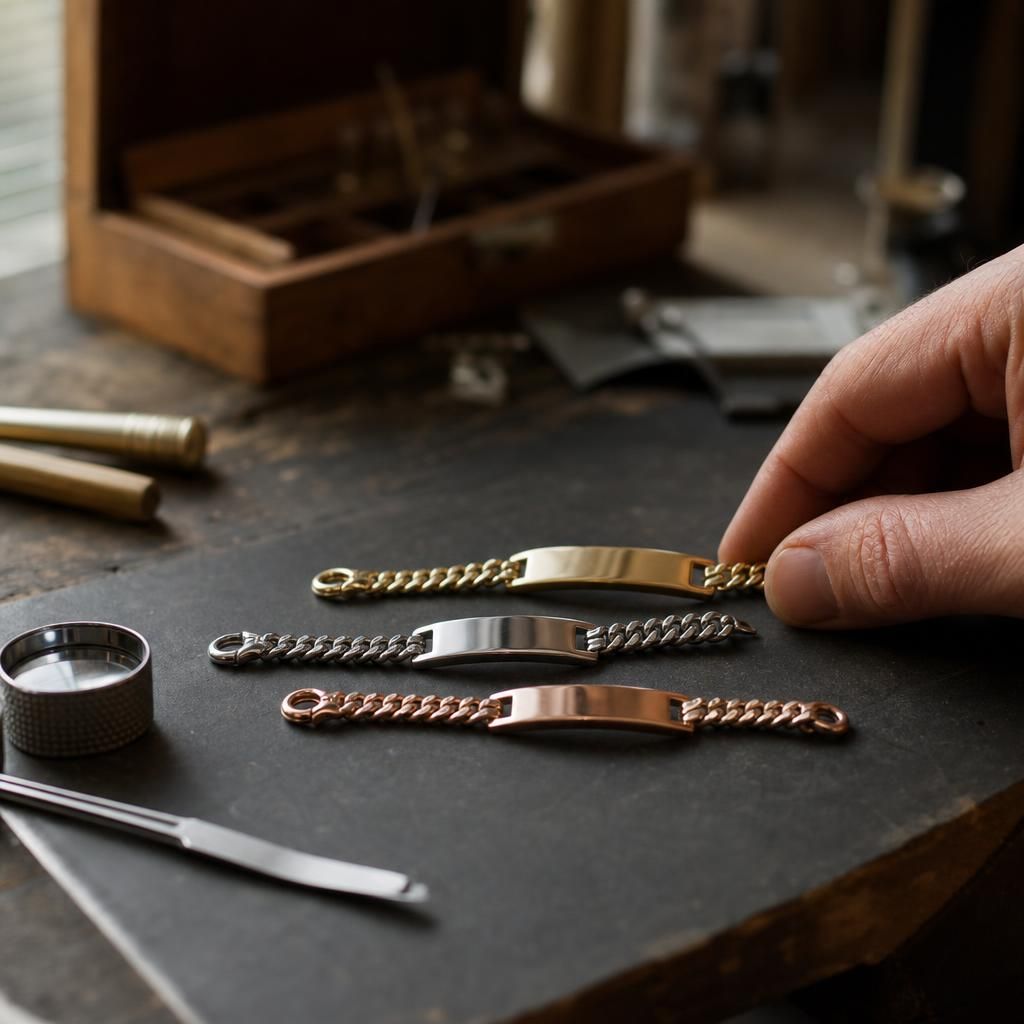
Yellow gold, white gold, and rose gold each bring unique characteristics to personalised men’s bracelets, influencing both their durability and appearance. One key difference between these types of gold is the alloys used to strengthen the metal and refine its colour. Yellow gold is typically mixed with copper and zinc, providing a classic look and robust structure suitable for those who prefer traditional aesthetics. In contrast, white gold combines yellow gold with metals like palladium or nickel, achieving a lustrous, modern finish that requires occasional rhodium plating for maintenance. Rose gold, distinguished by its warm, pinkish hue, results from the alloying of gold with copper, offering enhanced durability while standing out as a bold, stylish choice.