
How do different gold karats affect the appearance and durability of engagement rings?
Different gold karats significantly influence both the appearance and durability of engagement rings. Lower karat golds, such as 9k or 14k, contain more alloyed metals, offering enhanced durability which makes them less prone to scratching and bending, making them a practical choice for daily wear. Higher karats like 18k possess a richer gold colour due to their higher gold content, offering a luxurious appearance but may be slightly softer, requiring more care to prevent damage. Each option caters to specific preferences and lifestyle needs, allowing you to select the perfect blend of beauty and resilience for your engagement ring.
The karat of gold in your engagement ring plays a critical role in determining both its aesthetic appeal and long-term durability. Gold used in jewellery is typically alloyed with other metals to enhance its strength, and the proportion of gold to these other metals is expressed in karats. For instance, 24k gold is pure gold, but for practical purposes in jewellery, lower karat golds such as 9k, 14k, and 18k are more common due to their added durability.
9k Gold is composed of 37.5% gold and a blend of other metals like copper and silver, which makes it the hardest among the common gold karat options. This robust composition makes it particularly resistant to scratching and bending, an ideal choice for rings subject to frequent wear. However, it has a paler yellow hue compared to its higher karat counterparts, which could be a consideration based on your aesthetic preference.
14k Gold, containing 58.3% gold, strikes a favourable balance between durability and appearance. It offers a warm, rich colour and is less prone to wear and tear than higher karat options, making it suitable for active lifestyles whilst still retaining a notable gold appearance.
18k Gold, with 75% gold content, boasts a deeper, richer colour that many associate with luxury. While it provides a visually stunning appearance, it is softer and more susceptible to scratches and dents compared to 14k and 9k. Consequently, it requires more mindful handling and maintenance to preserve its beauty over time.
When selecting the appropriate gold karat for your engagement ring, consider both your lifestyle and your aesthetic desires. If daily wear and minimal maintenance are priorities, 9k or 14k gold might be the most practical choices. Conversely, if the richness of colour and luxury appeal is paramount, 18k gold could offer the visual splendour you seek, provided you are attentive to its care. Your preferences, in conjunction with our expert guidance at Steven Charles Quance, will ensure your engagement ring represents both an enduring symbol of commitment and a personal statement of style.
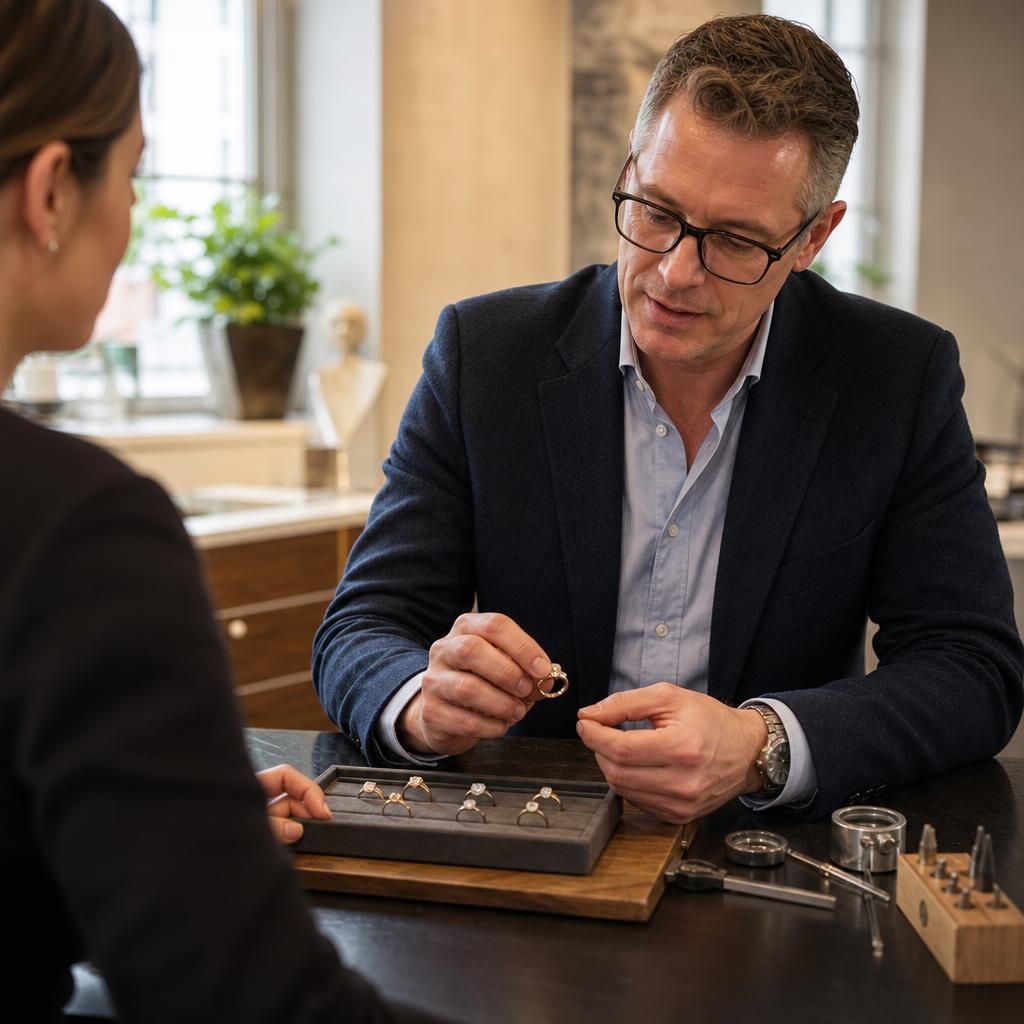
The choice of gold karat in your engagement ring significantly affects its overall appearance, particularly in terms of colour and sheen, which are important considerations alongside durability. A higher gold content results in a richer, more vivid hue. 18k gold, containing 75% pure gold, is well-regarded for its deep, warm colour, offering a classic and luxurious look. This elevated aesthetic can be especially appealing for those seeking a standout piece, embodying elegance and timeless beauty.
However, with this allure comes a slight trade-off in terms of hardness. Despite being more malleable, 18k gold does bring the benefit of being hypoallergenic, making it a smart choice for those with sensitive skin. In contrast, 9k and 14k gold present a more muted yellow tone due to a higher percentage of alloy metals, yet they offer enhanced scratch resistance and structural integrity, ideal for daily wear. At Steven Charles Quance, we help you weigh these factors, ensuring your ring aligns with your personal aesthetic while remaining practical for your lifestyle.