
Is there a visible difference between gold and white gold wedding bands?
Gold and white gold wedding bands differ primarily in colour and composition. Gold wedding bands have a rich, warm hue due to their natural golden colour, while white gold bands offer a cooler, silvery appearance achieved by alloying gold with metals like palladium or nickel and often plating them with rhodium to enhance their brightness. Both options provide a unique aesthetic suitable for various preferences, with gold embodying timeless warmth and white gold lending a modern, elegant touch.
At first glance, gold and white gold wedding bands may appear distinct due to their noticeable difference in colour. Gold wedding bands are characterised by their natural, warm golden hue, which is an enduring choice for many seeking a traditional and classic look. This rich shade is attributed to the inherent qualities of pure gold. In contrast, white gold exhibits a more contemporary appeal with its clean, silvery-white appearance. This transformation from natural gold colour to white is achieved by alloying gold with white metals such as palladium or nickel and often further enhanced through rhodium plating. This plating not only contributes to a brighter, shinier finish but also helps to maintain the band’s lustre over time.
Choosing between these two options often boils down to aesthetic preference, as both materials deliver durability and luxurious appeal. However, it’s important to consider the unique properties each offers. Gold, in its traditional yellow form, is slightly softer than its white gold counterpart, making it potentially more vulnerable to scratches or dents if not adequately cared for. Conversely, white gold’s hardness, enhanced by its alloy metals, provides a more robust choice for those with active lifestyles, although its rhodium plating may need periodic reapplication to retain its original brightness.
In terms of wearability, it’s prudent to consider any possible skin sensitivities, particularly with white gold, as the nickel content in some alloys can occasionally trigger allergic reactions in certain individuals. Those concerned with allergens may opt for hypoallergenic alloys or consult with us for customised solutions to meet specific skin needs.
Ultimately, whether you are drawn to the timeless elegance of gold or the sleek sophistication of white gold, we are here to guide you through each choice to ensure your wedding band not only matches your style but also aligns with your lifestyle preferences. By selecting your materials based on informed decisions, you can enjoy the lasting beauty and significance of your ring. Reach out to our expert team should you have further questions or wish to explore bespoke options tailored to your unique requirements.
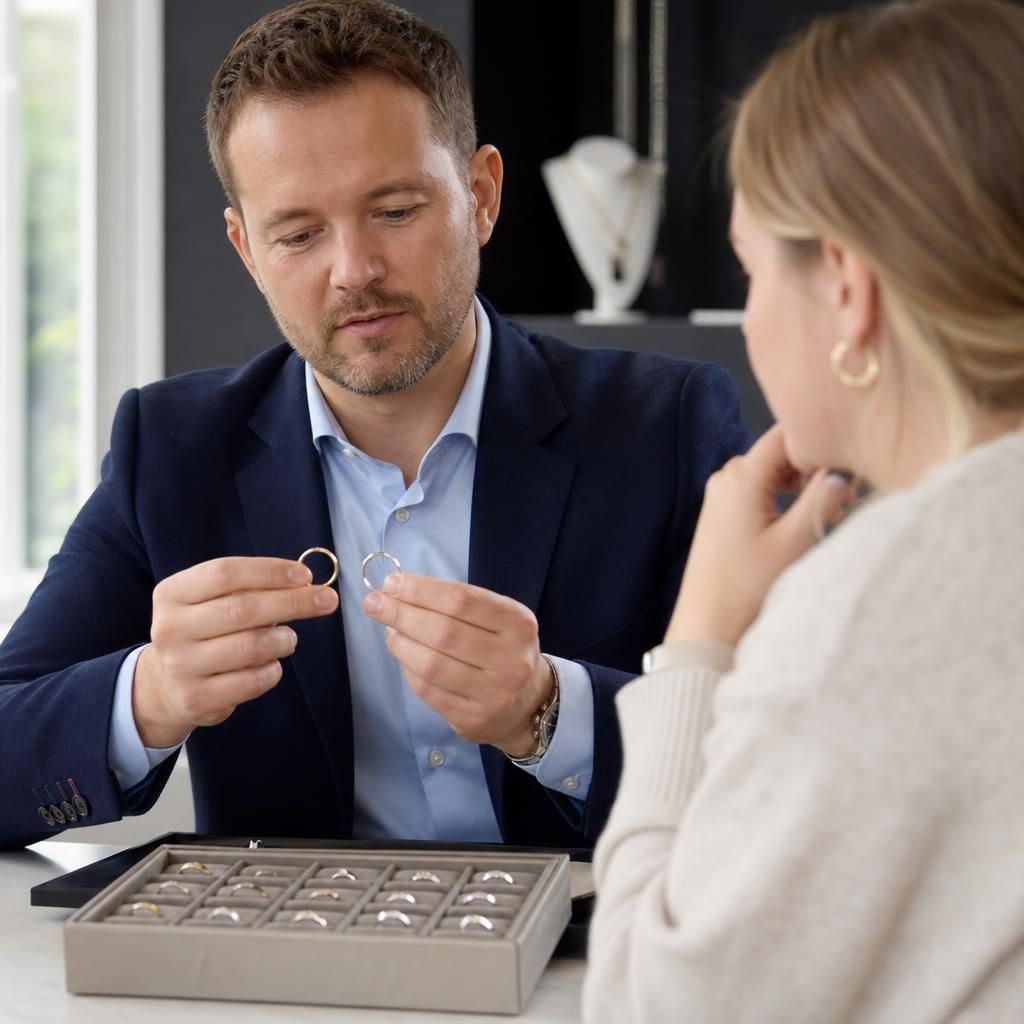
When comparing gold and white gold wedding bands, one notable difference lies in the surface treatment of white gold, which often involves rhodium plating. This plating process serves to accentuate the white metal’s brightness and offers additional protection to the underlying material. Rhodium, a precious metal, enhances the shine and elegance of the band, lending it that desired silvery-white finish. However, it is important to note that over time and with regular wear, this rhodium layer can wear away, necessitating re-plating to restore the band’s original brilliance. This is a key consideration in maintaining the appearance of a white gold wedding band, and something that we, at Steven Charles Quance, can assist you with as part of our comprehensive aftercare services.