
How do I determine the authenticity of the scrap gold I'm selling?
To determine the authenticity of the scrap gold you’re selling, start by checking for hallmarks or engravings that indicate purity and the manufacturer. These are typically found on non-flat surfaces of jewellery pieces. Additionally, conducting a simple magnet test can be beneficial; genuine gold is not magnetic, so if your item is attracted to a magnet, it may contain other metals. For further assurance and accuracy, consider consulting with a certified jeweller who can conduct specialised tests such as acid tests or electronic gold testers to verify authenticity. It’s always wise to seek expert advice to ensure you receive a fair value for your gold.
Determining the authenticity of the scrap gold you’re intending to sell is crucial to ensuring you receive an accurate valuation. A starting point in this process is to examine your gold items for hallmark stamps, which are standard symbols indicating metal content and purity, often accompanied by a maker’s mark. These hallmarks are usually found on hidden or inconspicuous parts of jewellery such as clasps or inner bands.
Another straightforward method is the magnet test; gold in its pure form is not magnetic, so if your item is drawn to a magnet, it might be indicative of the presence of other metals. However, this test isn’t definitive for determining purity; non-magnetic materials can also be used in fake gold.
For a more reliable assessment, engage with a professional jeweller who can perform specialised testing such as an acid test. This involves applying a small drop of acid to the gold and observing any colour change, which reflects different purities. For those seeking a non-invasive alternative, electronic gold testers can be utilised to provide a more precise measurement of gold content.
In cases where verification and peace of mind are paramount, consulting an experienced jeweller like Steven Charles Quance offers the assurance of expert evaluation. With access to advanced equipment and a deep understanding of gold standards, their professional services can ensure your scrap gold’s authenticity, safeguarding your transaction and helping you secure its true value. It’s advisable to trust only experienced experts who can also provide documentation if required for further proceedings. Taking these steps will reinforce your confidence in the authenticity of your scrap gold and prevent unforeseen pitfalls in the selling process.
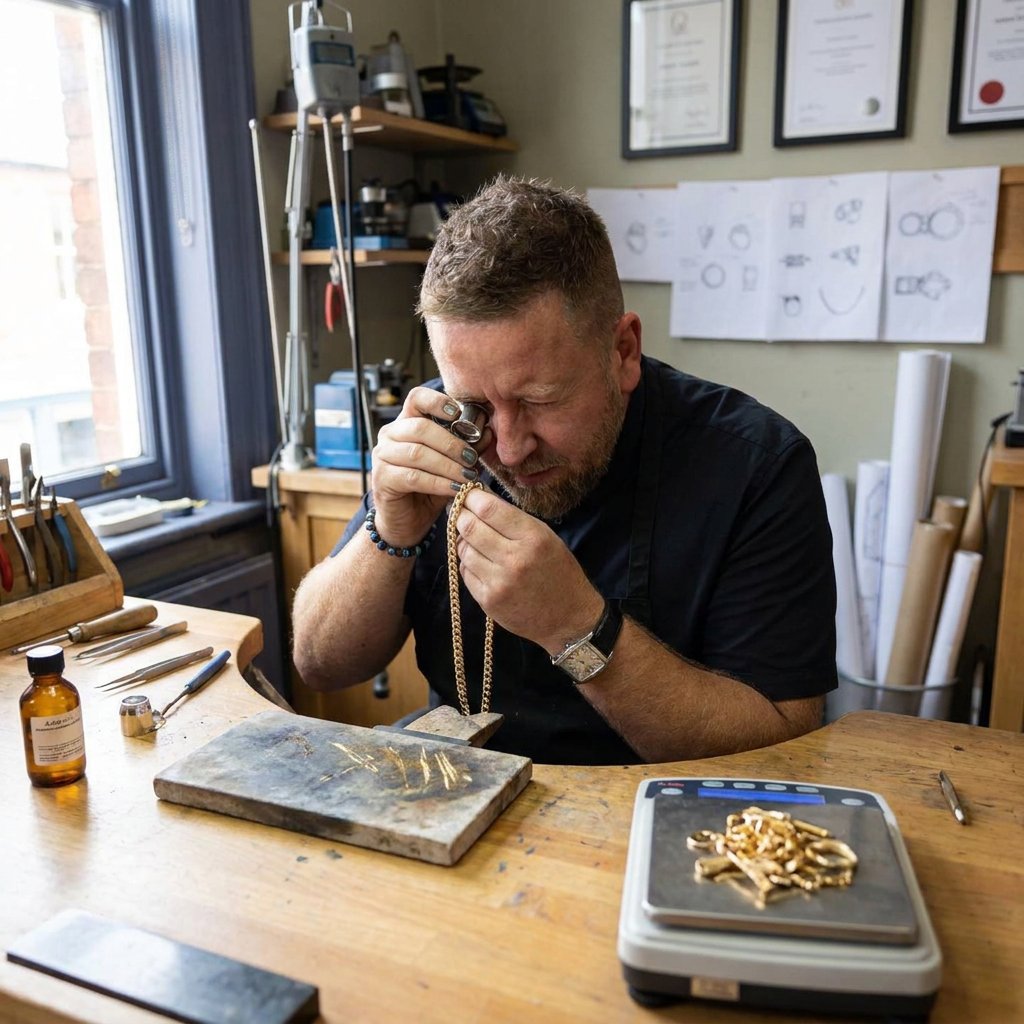
A crucial aspect of determining the authenticity of your scrap gold is understanding the role of hallmarking. Hallmarks are official stamps on metal items that determine their origin, manufacturer, and purity. In the UK, the practice of hallmarking is steeped in tradition and regulation, ensuring consumers are aware of the precious metal content they’re dealing with. When examining your gold items, look specifically for these hallmarks in discreet locations like the inside of a ring band or on the clasp of a necklace. These marks will typically include a symbol representing the fineness of the metal (for example, 750 for 18-carat gold), which is an invaluable clue in assessing authenticity.