What should I know about the durability and longevity of laser engraved jewellery and watches?
Laser engraving is generally durable because it creates a precise, permanent mark in the surface of the jewellery or watch component, but its longevity depends on the material, engraving depth, placement and level of wear. Engraving on protected areas is more likely to remain sharp; marks on frequently handled or polished surfaces may gradually soften and require professional assessment during future servicing.
Laser engraving is generally a durable form of personalisation because it removes or alters a controlled area of the surface rather than applying ink or a temporary coating. Its longevity depends on the jewellery or watch material, the depth and finish of the engraving, its position, and the amount of contact, abrasion, polishing and chemical exposure it receives. A mark placed on a protected inner surface will usually remain clearer for longer than one on a clasp, bracelet or other area handled frequently.
Laser engraving should be regarded as permanent, but not completely immune to wear. Precious metals are relatively soft and their surfaces naturally acquire fine scratches through everyday use. If an engraved area is repeatedly rubbed, caught against other objects or polished during future repairs, the edges of the design may gradually become less defined. This is normal surface wear rather than the engraving simply disappearing.
Durability varies between materials:
- Gold: Engraving is usually long-lasting, although softer alloys and high-polish surfaces can show handling marks more readily. White gold may also be refinished or replated during future servicing, which should be considered before engraving.
- Platinum: Platinum is well suited to permanent engraving. It develops a distinctive patina as it is worn, and professional refinishing can alter the surrounding surface even though the engraved detail itself remains in the metal.
- Silver: Silver can be engraved precisely, but it is more susceptible to scratching, tarnishing and surface changes. Regular cleaning and appropriate storage help preserve legibility.
- Stainless steel and other hard metals: These can provide strong resistance to everyday abrasion, although the visible contrast of the engraving depends on the metal’s finish and the chosen laser process.
- Coated, plated or treated surfaces: The laser may expose a different layer beneath the surface, creating contrast. This can be effective, but wear through the coating may change the appearance over time and must be assessed before work begins.
The design also affects how well an engraving ages. Fine lettering, delicate linework and very small details are more vulnerable to becoming difficult to read if the surrounding surface is scratched or polished. Stronger lettering, adequate spacing and a suitable engraving depth generally provide better long-term clarity. The placement should be chosen with the way the piece is worn in mind: the inside of a ring, the back of a pendant or a protected watch caseback will normally experience less abrasion than an exposed outer edge.
Watch engravings require additional care because a case, caseback, clasp or bracelet may have a specific finish and may form part of the watch’s service history. Engraving must not interfere with seals, threads, hallmarks, reference markings, serial details or functional components. On a water-resistant watch, the engraving itself does not guarantee or remove water resistance, but opening the case or working near sealing components means the watch should be inspected and tested by a suitably qualified professional afterwards. Personalisation should never obscure identifying marks or manufacturer information.
Laser engraving can also look different as the surrounding finish changes. A polished surface may become satin-finished through wear, or a watch may be refinished to restore its original appearance. The engraved lines may remain present while the contrast becomes softer. Similarly, cleaning, tarnish removal or replating can affect the visual relationship between the mark and the surrounding metal. Before any future restoration, tell the jeweller that the piece has been laser engraved so the engraving can be protected and assessed.
To preserve the engraving and the jewellery or watch as a whole:
- Remove rings, bracelets and watches before activities involving heavy contact, tools, sport or manual work.
- Keep engraved pieces separate in a lined jewellery box or pouch to reduce rubbing against other items.
- Wipe away perspiration, cosmetics and everyday residue with a soft, lint-free cloth.
- Follow material-specific cleaning advice and avoid abrasive cloths, polishing compounds and unapproved chemical cleaners.
- Keep watches away from unnecessary moisture and arrange professional checks if the case has been opened, damaged or exposed to water unexpectedly.
- Ask for the engraving to be inspected before a ring is resized, a bracelet is altered, or a watch is refinished.
Professional cleaning and routine servicing can help maintain clarity, but aggressive polishing should be avoided. Polishing removes a small amount of surface metal and may soften shallow engraving, reduce definition at the edges or remove it altogether if repeated. A jeweller can often recommend cleaning or light refinishing that preserves the personalised area, but the appropriate treatment depends on the material, construction and condition of the piece.
If an engraving has become difficult to read, it may be possible to deepen, restore or recreate it, although this is not always advisable. The original design, remaining metal, surface finish and position all need to be assessed. Reworking a watch case or a valuable bespoke item may affect its finish, markings or future service considerations, so it should be discussed before any work is authorised.
In practical terms, a well-designed laser engraving on a suitable material can remain legible for many years, particularly when placed in a protected position and cared for correctly. It is best to choose the material, lettering, depth and location together, with future resizing, repairs, refinishing and servicing taken into account from the outset.
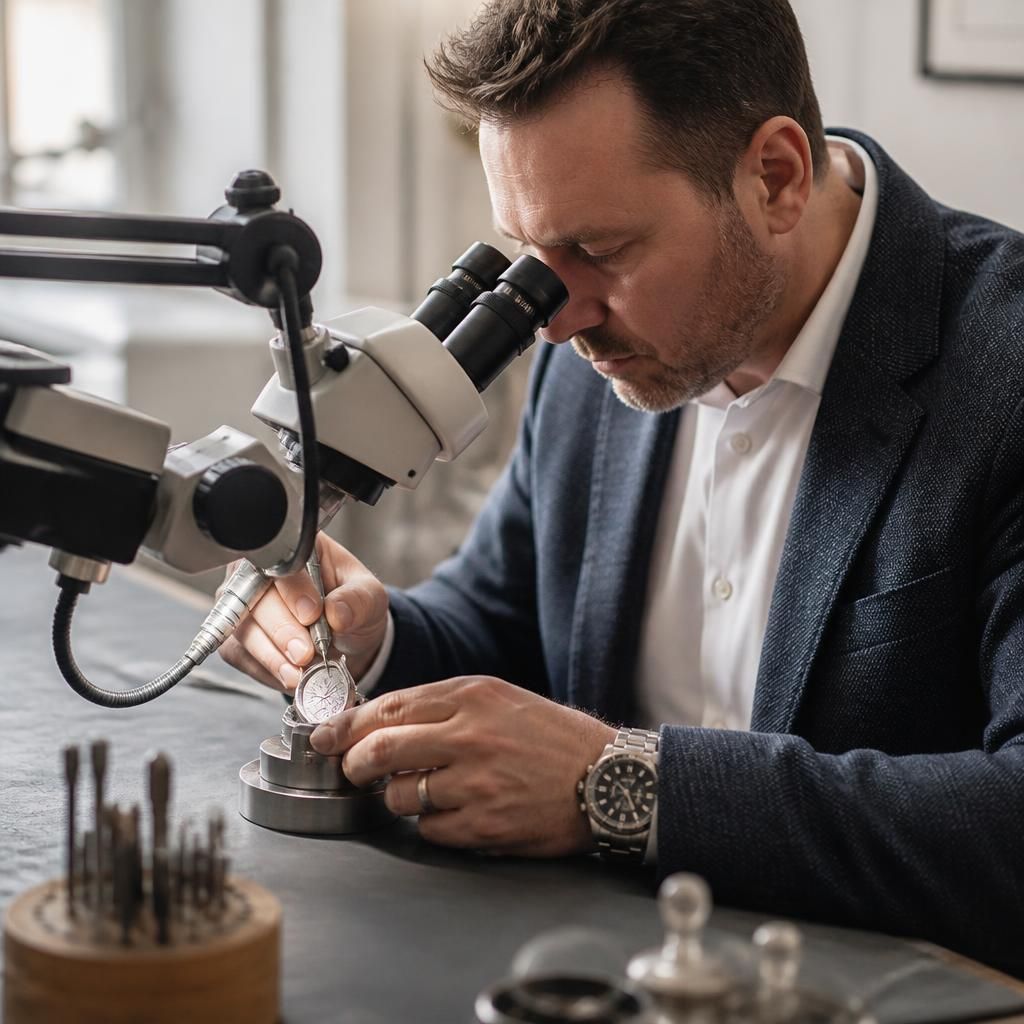
Laser engraving is a permanent surface mark, but its clarity can gradually change with everyday wear. The engraving itself does not simply wash away; rather, repeated rubbing, scratching or polishing may soften fine details and reduce the contrast between the design and the surrounding metal.
Placement has a significant effect on longevity. Engraving on the inside of a ring, the reverse of a pendant or a protected watch caseback is generally better shielded than engraving on a bracelet, clasp or exposed outer edge. Choosing clear lettering, sensible spacing and a suitable depth also helps the design remain legible over time.
Before resizing, repairing or refinishing an engraved piece, tell your jeweller about the personalisation. Professional work can often be planned to protect the engraving, while aggressive polishing, replating or refinishing may alter its definition or appearance.