
What services should I expect from the best jewellers in the Jewellery Quarter?
The best jewellers in the Jewellery Quarter should offer expert consultations, bespoke design and crafting for engagement, wedding and other significant pieces, alongside carefully selected luxury watches. You should also expect professional repairs, resizing, remodelling, cleaning, valuations and ongoing aftercare, with clear guidance on materials, craftsmanship, timescales and ethical sourcing.
The best jewellers in the Jewellery Quarter should provide more than a selection of finished pieces. You should expect a complete service covering jewellery consultations, bespoke design, expert sourcing, skilled manufacture, luxury watches, repairs, valuations and ongoing aftercare. The jeweller should explain each stage clearly, give realistic advice on materials and timescales, and provide a reliable point of contact after your purchase.
Professional consultation and guidance
A proper consultation is the starting point for any significant jewellery or watch purchase. An experienced jeweller should take time to understand the purpose of the piece, your preferred style, practical requirements and budget before recommending suitable options. For an engagement or wedding ring, this may include discussing lifestyle, ring proportions, metal choices, stone settings, wearability and how the piece will sit alongside existing jewellery.
Advice should be specific rather than limited to general descriptions. You should be able to ask about the durability, appearance and maintenance requirements of different metals and gemstones, as well as the advantages and limitations of particular designs. Clear guidance helps you make an informed decision without pressure.
Bespoke jewellery design and manufacture
For a custom piece, the jeweller should be able to develop an idea into a workable design. This usually involves discussing your requirements, preparing design concepts and refining details such as proportions, setting style, engraving and finish. The process may also include drawings or digital representations so that you can understand the proposed result before manufacture begins.
Once the design is approved, the jeweller should explain how it will be made and which elements will be completed by hand or using specialist manufacturing techniques. A high standard of service includes checking the finished piece against the agreed design, ensuring that stones are secure and confirming that the proportions and finish are suitable for everyday wear.
Bespoke services should cover meaningful pieces beyond engagement rings. These can include wedding rings, anniversary jewellery, eternity rings, pendants, earrings, bracelets, signet rings and redesigned family jewellery. A skilled jeweller can also advise when an existing stone or item can be incorporated safely into a new design.
Gemstone and precious metal sourcing
A reputable jeweller should explain the characteristics and provenance of the materials being considered. This includes discussing gemstone quality, treatments, durability and suitability for the intended setting. Diamonds and coloured gemstones should be described accurately, with relevant documentation where appropriate.
You should also receive clear information about the precious metal used, including its colour, durability, care requirements and suitability for resizing or future alterations. Where ethical sourcing matters to you, ask how the jeweller selects suppliers and what information is available about the origin of metals and gemstones. Responsible practice should be supported by transparent explanations rather than unsupported claims.
Luxury watch advice and services
The best jewellers may also offer carefully selected luxury watches, including Rolex timepieces, with guidance suited to your requirements. This should cover the watch’s condition, authenticity, provenance where available, servicing history and any relevant documentation. You should be given an opportunity to ask questions about ownership, maintenance, insurance and long-term servicing before making a purchase.
For a valuable watch, the service should extend beyond the initial transaction. A knowledgeable jeweller can advise on appropriate care, safe storage, bracelet or strap adjustments, servicing intervals and the practical effects of everyday wear. Any work undertaken should be explained in advance, particularly where specialist parts or manufacturer-approved procedures may be required.
Repairs, alterations and resizing
Professional repair services should cover common problems such as worn claws, loose stones, damaged settings, broken chains, faulty clasps and worn shanks. The jeweller should inspect the item before work starts, identify any underlying weakness and explain the recommended repair, likely risks and expected timescale.
Ring resizing requires particular care. The correct approach depends on the metal, construction, setting, pattern and amount of adjustment required. Some rings can be resized conventionally, while others may need a more involved alteration or may not be suitable for resizing at all. A competent jeweller should assess the piece rather than promise a standard solution.
After repair or alteration, the item should be checked for security and finish. You should know what work has been completed and whether any areas require additional monitoring during future wear.
Remodelling and restoration
Remodelling allows sentimental jewellery to be adapted for a different style or purpose. The service may involve reusing gemstones, melting or incorporating precious metal, changing the setting, or combining elements from several pieces. Before work begins, the jeweller should explain which original materials can be retained, which may need replacing and how the proposed design could affect the item’s value or character.
Restoration should balance appearance with structural integrity. Older jewellery may contain worn settings, fragile solder joints or construction methods that require specialist handling. A careful assessment helps preserve important features while making the piece suitable for continued use.
Cleaning, inspection and routine maintenance
Regular cleaning can restore the appearance of jewellery, but it should be combined with inspection. The jeweller should check settings, claws, hinges, clasps and areas of wear rather than simply polishing the surface. This can identify problems before a stone becomes loose or a component fails.
Not every item should be cleaned in the same way. Porous or treated gemstones, delicate antique pieces and jewellery with fragile settings may require gentler methods. You should be told how to care for the item at home and when professional inspection is advisable.
Valuations and documentation
A valuation is an important service for valuable or sentimental jewellery. The document should identify the item accurately, describe its materials and gemstones, record notable features and state the purpose of the valuation. Insurance valuations, probate valuations and market-related assessments may have different requirements, so make sure the jeweller understands why you need the document.
Good records should be retained for bespoke pieces, repairs and alterations where possible. Design details, gemstone information, receipts and valuation documents can assist with insurance, future maintenance and any later decision to remodel or sell the item.
Clear pricing, timescales and communication
A professional service includes a written explanation of the agreed work, price and expected completion date. For bespoke commissions, confirm what is included, how design changes are handled, when payment is due and what happens if a particular stone or material becomes unavailable. For repairs, ask whether the initial assessment is chargeable and whether further work will require your approval.
Timescales should be realistic and should allow for sourcing, design approval, manufacture, specialist work and quality checks. If circumstances change, the jeweller should tell you promptly rather than leave you uncertain about the progress of your piece.
Aftercare and ongoing support
Aftercare should remain available once the jewellery or watch has been collected. This may include cleaning, inspections, resizing, repairs, remodelling, valuation updates and advice on storage and daily wear. The jeweller should also explain any care recommendations that relate specifically to your item, such as avoiding chemicals, removing rings for certain activities or arranging periodic checks.
Before leaving with a completed piece, check that the fit is comfortable, the clasp or setting operates correctly and the finish matches what was agreed. Keep invoices, valuation documents and care information in a secure place. If you notice movement, damage or a change in fit, stop wearing the item and arrange an inspection rather than attempting a home repair.
In practice, the strongest Jewellery Quarter jewellers combine design expertise, technical workmanship, responsible sourcing and dependable aftercare. The service should feel consistent from the first consultation through to future maintenance, with accurate information, careful handling and advice that reflects the specific jewellery or watch you own.
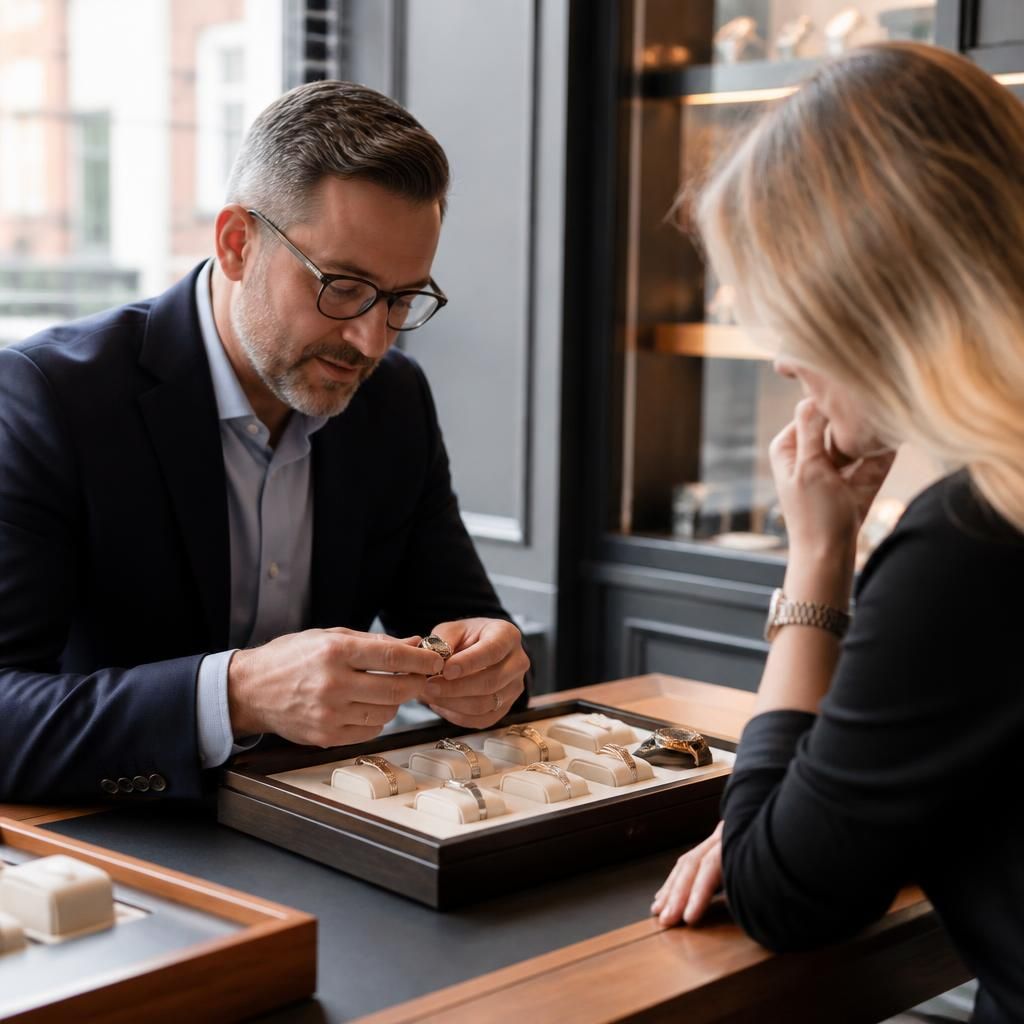
The best jewellers in the Jewellery Quarter provide support beyond the initial purchase, including expert consultations, bespoke design, repairs, valuations and ongoing aftercare. This complete service helps ensure that your jewellery remains secure, correctly fitted and suitable for continued wear.
For bespoke commissions, you should receive clear advice on metals, gemstones, design details, timescales and pricing before manufacture begins. After collection, professional cleaning and inspection can identify worn claws, loose stones or damaged clasps before they become more serious problems. Services such as ring resizing, remodelling and valuation updates should also be available when your needs change.
A reliable jeweller will explain the work recommended for your particular piece and provide practical care guidance. Keep your invoices, design information and valuation documents safely, and arrange an inspection if you notice movement, damage or a change in fit.