
Are gold wedding earrings suitable for sensitive ears?
Yes, gold wedding earrings can be suitable for sensitive ears, particularly when they are made from a high-purity gold alloy and fitted with secure backs that contain no nickel. However, sensitivity varies, so ask your jeweller to confirm the metal composition and discuss suitable alternatives if you have reacted to jewellery before.
Gold wedding earrings can be suitable for sensitive ears, provided the gold alloy and every part that touches the skin—including the posts and backs—are chosen carefully. Reactions are often caused by nickel or another base metal in the alloy, rather than by the gold itself, so confirming the full metal composition is more important than relying on the word “gold” alone.
Pure gold is generally well tolerated, but it is too soft for most practical earrings and is therefore combined with other metals to improve its strength, colour and durability. Yellow gold may contain metals such as silver or copper, while white gold can be alloyed with nickel or palladium. Nickel is a common cause of allergic contact dermatitis and may cause itching, redness, soreness or a rash where the earring touches the skin. Some people can also react to copper or other alloy metals, although this is less common.
Gold purity marks can help you understand the amount of gold in the alloy. For example, 375, 585 and 750 indicate nine, fourteen and eighteen-carat gold respectively. A higher gold content may reduce the proportion of other metals, but it does not automatically confirm that an item is nickel-free or suitable for every wearer. A hallmark primarily confirms the fineness of the precious metal; it does not always provide a complete list of the alloy ingredients.
When selecting wedding earrings for sensitive ears, ask your jeweller to confirm:
- the gold carat and colour;
- whether the alloy contains nickel;
- what metal is used for the posts, butterfly backs, hinged fittings or other components;
- whether any plating, coating or solder could come into contact with your skin; and
- whether replacement backs made from a more suitable metal are available.
White gold requires particular care when choosing earrings. Some white-gold alloys use nickel, while others use palladium, which is often selected for people who wish to avoid nickel. White gold may also be rhodium plated to give it a bright, white surface. This plating can wear over time, especially on posts and fittings, potentially exposing the underlying alloy. It is therefore sensible to ask what lies beneath the plating and whether the earrings can be safely refinished if needed.
Gold-plated earrings and gold-coloured fashion jewellery require similar caution. The surface layer may initially prevent contact with a base metal, but it can become thinner through wear, cleaning or friction. If the underlying metal is unsuitable for you, a solid gold design with compatible fittings is usually a more dependable choice. Your jeweller can also discuss platinum or another appropriate skin-friendly material if you have previously reacted to several gold alloys.
For a bespoke pair, your metal preference can be specified before the design is made. This includes the gold colour, purity, post construction and earring backs. If you have a known nickel allergy, tell us at the consultation rather than simply requesting “hypoallergenic” earrings, as that description does not identify the complete metal composition. We can help select components that avoid known triggers and ensure that the finished earrings are comfortable as well as secure.
It is wise to check the earrings before the wedding rather than wearing an unfamiliar pair for the first time on the day. Wear them for a short period in a clean, dry environment and stop if you notice discomfort, warmth, itching or redness. Avoid applying perfume, hairspray or cosmetics directly to the posts, and remove the earrings before swimming or bathing, as moisture and chemical residues can increase irritation.
If a reaction develops, remove the earrings, gently clean and dry the area, and avoid wearing them again until the cause is clear. Persistent, severe or spreading symptoms should be discussed with a healthcare professional or dermatologist. A previous reaction does not necessarily mean that all gold wedding earrings are unsuitable; it usually means that the specific alloy, fitting or surface treatment needs to be identified and changed.
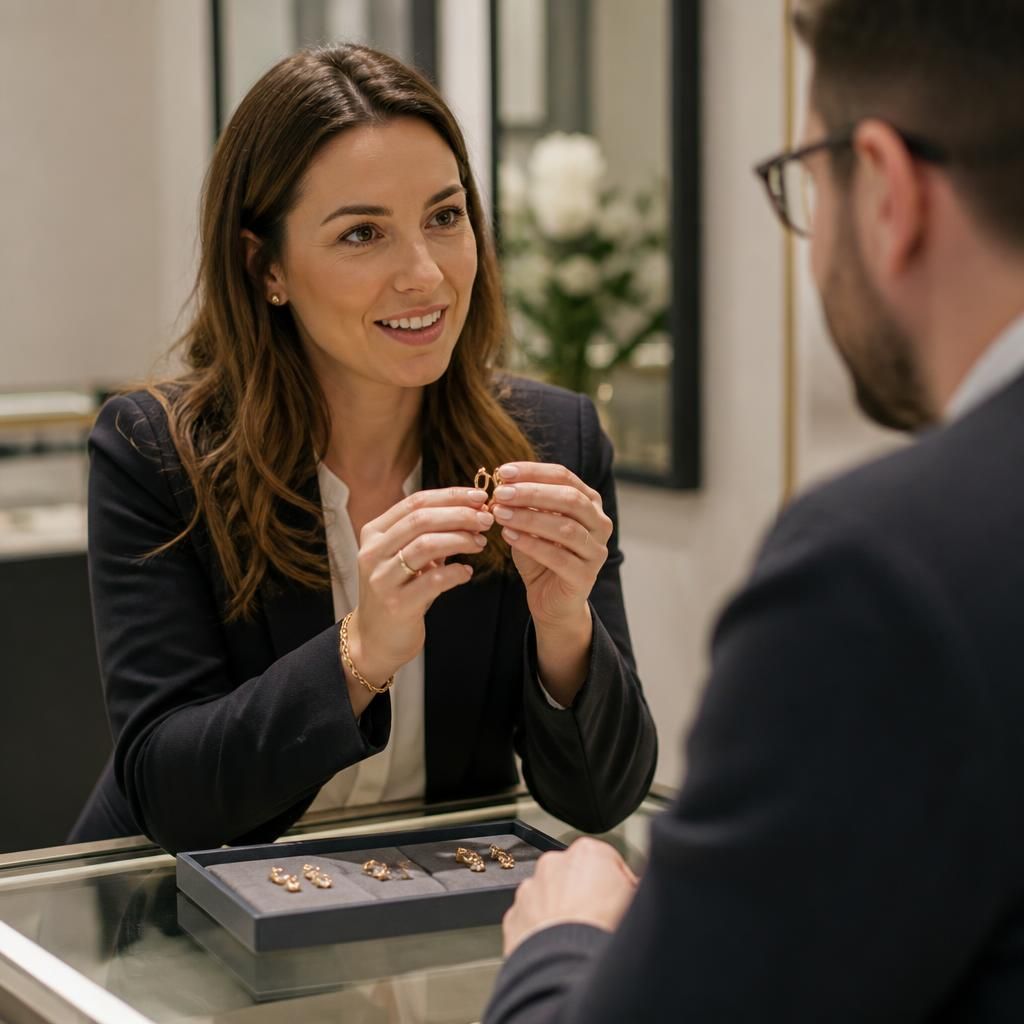
For sensitive ears, the earring post and back are just as important as the gold itself. Ask us to confirm that every skin-contact component is nickel-free and made from a compatible metal, rather than checking the gold carat alone. This is particularly important with white gold, which may contain nickel beneath a rhodium-plated surface.
Before the wedding, wear the earrings for a short period and remove them if you notice itching, redness or soreness. If you have reacted to jewellery previously, discuss the allergy during your consultation so the gold alloy, fittings and finish can be selected with your comfort in mind.
Ask Us About Gold Wedding Earrings for Sensitive Ears
If you have sensitive ears or a known nickel allergy, speak to us before choosing your gold wedding earrings so we can confirm the alloy, posts and backs. We can recommend suitable materials and discuss bespoke fittings for a comfortable, secure pair.