
What are the best ways to ensure the quality of second-hand jewellery before purchasing?
To ensure the quality of second-hand jewellery before purchasing, begin by closely examining the piece for any signs of wear, repairs, or damage. Look for hallmarks or stamps indicating the metal’s purity and authenticity, as these are crucial markers of quality. It’s also advisable to consult with a trusted jeweller, such as Steven Charles Quance, who can provide expert evaluation and guidance on the authenticity and craftsmanship of the piece. Obtaining a professional valuation can further reassure you of the jewellery’s worth and condition before making a purchase decision.
Understanding how to gauge the quality of second-hand jewellery is crucial before committing to a purchase. When you’re considering buying pre-owned pieces, it’s imperative to carry out a thorough inspection. Start by examining the jewellery for physical imperfections such as scratches, dents, or any signs of previous repairs. These elements can indicate not only the piece’s age but also its potential longevity and structural integrity.
A prominent mark of quality in second-hand jewellery is the presence of hallmarks or stamps. These act as assurances of the metal’s purity and authenticity, often found in gold, silver, or platinum items. Familiarising yourself with these marks, which typically include the manufacturer’s symbol and the material’s fineness, can offer clarity on the jewellery’s provenance and value.
Consulting with an established jeweller, such as Steven Charles Quance, can provide valuable insights into the piece’s craftsmanship and underlying worth. Expert assessment often reveals aspects of the jewellery that aren’t immediately evident to the untrained eye, ensuring you’re aware of its actual condition and authenticity. If you’re unsure about a piece, seeking a professional jewellery valuation can further support your purchase decision with a detailed report on the item’s characteristics and current market price.
Consider the overall design and style of the jewellery, as unique handcrafted pieces often possess superior craftsmanship compared to mass-produced alternatives. This level of detail, along with an understanding of period-specific styles, can add significant value and desirability.
Finally, it’s beneficial to inquire about any aftercare services available from the seller, such as cleaning, repairs, or resizing, which can enhance the jewellery’s longevity. By taking these practical steps, you can make informed decisions and invest wisely in second-hand jewellery that not only meets your aesthetic preferences but also holds substantial value.
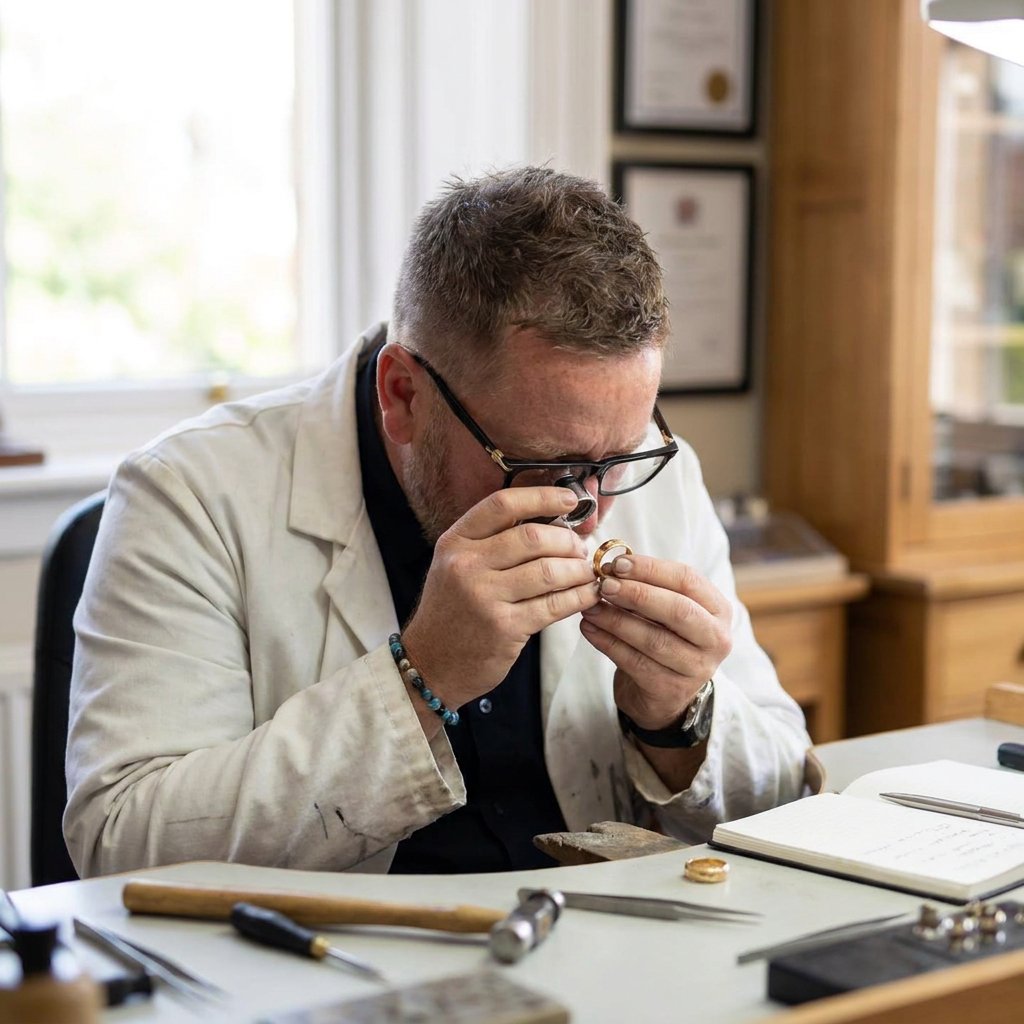
Identifying hallmarks on second-hand jewellery is a crucial step in verifying its authenticity and value. Hallmarks serve as a form of quality assurance, indicating important information about the metal content and origin of a jewellery piece. These marks are often stamped in discrete locations on the item and can include symbols representing the material’s purity, the manufacturer’s identity, and the country of origin. For example, a hallmark on a gold ring might include a three-digit number like ‘750’, signifying it is 18 carat gold, consisting of 75% pure gold. By familiarising yourself with common hallmark symbols, you can gain insight into the piece’s genuine nature and potentially identify its maker and era. This knowledge empowers you to make informed purchases, ensuring that the jewellery you acquire is worth its valuation and meets your quality expectations. While hallmarks provide preliminary assurance, coupling this with expert evaluation, such as the services offered by Steven Charles Quance, can provide a comprehensive understanding of a piece’s authenticity and worth.