
What should I look for in the craftsmanship of second-hand jewellery in Birmingham's Jewellery Quarter?
When assessing the craftsmanship of second-hand jewellery in Birmingham’s Jewellery Quarter, look for precise finishing, such as smooth edges and seamless settings, ensuring stones are securely in place. Examine the hallmarks and any maker’s marks for authenticity, and inspect the integrity of clasp mechanisms or links in necklaces and bracelets, as well as the overall weight and balance, which often indicate quality materials and expert design. A well-crafted piece will demonstrate attention to detail and durability, characteristic of skilled artisanship.
When examining the craftsmanship of second-hand jewellery in Birmingham’s Jewellery Quarter, several key indicators can help you determine the quality of a piece. First and foremost, consider the precision of the jewellery’s finish. High-quality pieces usually feature smooth edges and seamless stone settings. These elements not only highlight the artisan’s skill but also play a critical role in the piece’s durability and comfort when worn.
Hallmarks and Maker’s Marks: Authenticity is a cornerstone of valuable jewellery. In the UK, hallmarks are essential for verifying the metal’s purity and legal adherence, and a maker’s mark can indicate the creator or originating workshop, adding to the piece’s provenance and potential historical significance.
Integrity of Components: Examine the functionality of clasps, links, and earring backings. These components are critical to both the jewellery’s security and wearability. Any sign of stress or poor repair can undermine the piece’s value and longevity.
Balance and Weight: A well-constructed piece often has a reassuring weight. While not definitive proof of quality, heft is typically associated with the use of superior materials. Conversely, pieces that are overly light may indicate the use of hollow or less durable components.
Craftsmanship Signs: Look for subtle indicators of a skilled hand. Handcrafted pieces, especially older ones, may display slight irregularities that signify individuality and uniqueness, as opposed to the uniformity of mass-produced items. These imperfections can add charm and character to the jewellery.
Personal Inspection and Care: Consider taking advantage of jewellery consultations to better understand the distinctive features important to identify during your personal inspection. Additionally, a reliable aftercare service, including appraisals and repairs, such as offered by us, can give you greater confidence in your purchase.
By paying careful attention to these details, you can confidently navigate the second-hand jewellery market in Birmingham’s Jewellery Quarter, ensuring that your purchases are not only aesthetically pleasing but also noteworthy investments marked by genuine craftsmanship.
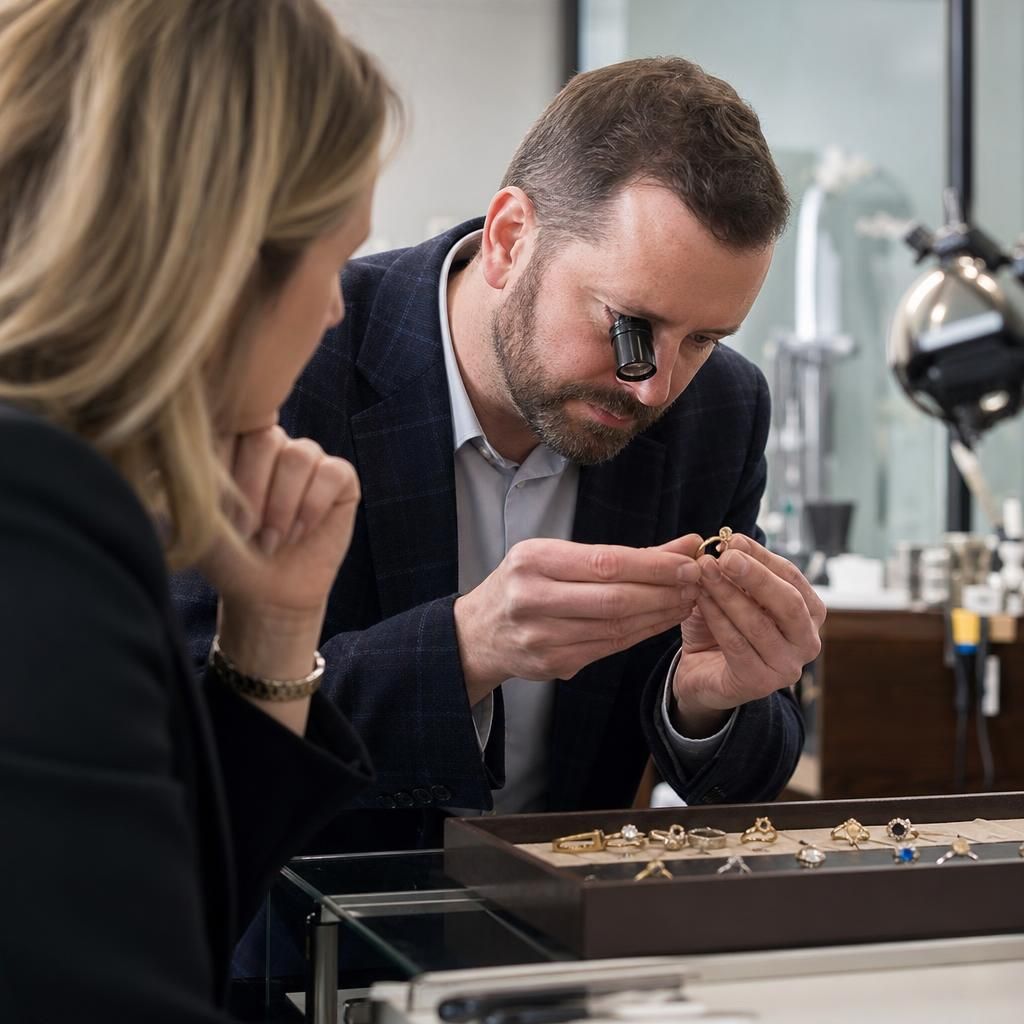
When evaluating the quality of second-hand jewellery, particularly in Birmingham’s well-regarded Jewellery Quarter, the presence and condition of hallmarks play a crucial role in identifying the piece’s authenticity and materials. Hallmarks, a series of stamped symbols, provide essential information about the purity of the metal, the date it was assayed, and, in many cases, the identity of the maker. In the UK, hallmarks are a legal requirement for certain precious metals, making them a reliable measure of authenticity. Within older pieces, legible hallmarks can also enhance their historical significance and collector’s value. If you’re uncertain about interpreting these marks, our experienced jewellers are always available to assist, offering clarity and peace of mind in your purchasing decisions.