
What should I look for when assessing the style and design of a used 9ct gold ring?
When assessing the style and design of a used 9ct gold ring, consider whether its shape, proportions, setting and decorative details suit your personal taste and intended use. Also examine the craftsmanship and condition, including even symmetry, secure stones, clear hallmarks and any wear or alterations that may affect its appearance or durability.
When assessing the style and design of a used 9ct gold ring, begin by deciding whether its overall shape, proportions, detailing and stone setting suit your taste, wardrobe and intended use. Then examine how well the design has been made and preserved: the ring should be balanced, comfortable, structurally sound and consistent with its age, with secure stones, clear hallmarks where present and no wear or alterations that compromise its appearance or durability.
Consider the ring’s overall style. A used ring may reflect a particular period, such as a vintage-inspired design with decorative shoulders, a traditional signet shape, a simple wedding-band profile or a more contemporary design with clean lines. The age or style of a ring should not determine its value to you, but it can help you judge whether the piece will remain suitable for everyday wear and whether it complements jewellery you already own.
Look at the silhouette from above and from the side. A broad, substantial design may make a stronger visual statement, while a slimmer band can appear more understated and may sit comfortably alongside another ring. Check whether the shoulders taper evenly towards the setting, whether the central stone is positioned correctly and whether the profile is low enough for practical wear. A high setting may show a stone prominently but can catch on clothing more easily than a lower, protected setting.
Assess the proportions and balance. The width of the band should look appropriate in relation to the head of the ring, shoulders and stone. A large setting on a very fine band may appear visually unbalanced and may need closer examination for strength. Conversely, a wide band with a small stone may be intended as a subtle design rather than a fault. Look at the ring on the finger as well as in the display: a design that appears attractive alone may feel too prominent, too delicate or uncomfortable when worn.
Pay attention to how the ring sits on the finger. The setting should not tilt noticeably to one side, and the band should not appear twisted or flattened. If the ring is intended to be worn with an engagement ring, wedding ring or another band, consider whether the shapes will sit neatly together. A curved, fitted or unusually raised design may leave a gap beside a neighbouring ring, whereas a straight-sided band may create a closer fit.
Examine the gold colour and finish. 9ct gold contains a smaller proportion of pure gold than higher-carat gold, with other metals used to create the alloy. Its colour can vary according to the alloy and finish, so compare the ring with your existing jewellery if matching is important. White, yellow and rose-toned 9ct gold can each have a distinct appearance, and a used ring may show changes in polish or surface finish from previous wear.
Check whether the surface is bright, matte, brushed, engraved or deliberately textured. A polished finish can show fine scratches more readily, while a textured finish may disguise minor marks but can be more difficult to reproduce accurately during repair. Look for a consistent finish across the band and shoulders. Noticeable differences in colour or texture may indicate previous resizing, repair, plating or localised wear rather than an intentional design feature.
Study the stone setting and decorative details. The setting is both a visual feature and a functional part of the ring. Common designs include claw, bezel, rub-over, channel and pave settings. Claws allow more light to reach a stone but may catch if worn or worn down. A bezel or rub-over setting offers more protection around the stone, while channel and pave styles require careful inspection of the surrounding metal and small stones.
View the ring from different angles and check that the central stone, if there is one, is centred and appears level. The claws or surrounding metal should be even and should meet the stone securely. Decorative shoulders, milgrain edging, engraving and pierced details should look deliberate and symmetrical unless an intentionally hand-finished or historic design calls for slight variation. Missing accents, open gaps, flattened claws or a stone that moves when gently tested are reasons to seek a professional assessment before purchase.
Consider the stones in relation to the design. Colour, clarity, cut and shape affect how a ring looks, but the setting and proportion can be just as important. A small stone in a well-designed setting may look more balanced and wearable than a larger stone in a poorly proportioned mount. Ask what is known about any gemstones, particularly where the appearance could be affected by treatments, replacement stones or previous repairs.
Look for evidence of craftsmanship. Inspect the inside of the band as well as the outer surfaces. The inner surface should generally be smooth, without sharp edges, deep tool marks or unfinished areas that could irritate the finger. The shoulders should transition cleanly into the setting, and decorative work should not appear blurred or uneven unless that is characteristic of the design.
On a used ring, some signs of previous wear are expected. Fine surface scratches, a softened engraving or a slightly less crisp edge may be consistent with normal use. More important concerns include a thin section of band, deep dents, cracks, excessive thinning beneath a setting, pronounced distortion or a visible join from an earlier alteration. These issues can affect both the appearance and the cost of future maintenance.
Check whether the design has been altered. Resizing, shank replacement, stone replacement, setting repairs and changes to the surface finish can all alter a ring’s appearance. A professional alteration is not necessarily a disadvantage, particularly if it has preserved a valuable or meaningful design. However, the work should be disclosed and the ring should be examined to ensure that the altered area is secure and visually consistent with the rest of the piece.
Look for a change in colour, a solder seam, uneven thickness or a break in an engraved pattern around the lower part of the band. These signs may indicate resizing. If the ring has detailed shoulders or a continuous pattern, ask whether the design has been maintained through the alteration. A ring that has been resized substantially may need particular care because its proportions, pattern or structural strength can be affected.
Make condition part of the style assessment. A design should be judged in the context of its present condition, not only how it may have looked when new. A worn finish can sometimes be restored through professional cleaning and polishing, but polishing removes a small amount of metal and should not be used to disguise serious damage. Engraving and textured details may also become less defined if the ring is repeatedly refinished.
Check the ring under good light and, where possible, use magnification to inspect the setting and hallmarks. Confirm that stones are present, intact and secure, and that there are no chips, significant abrasions or cloudy areas that alter the intended appearance. Examine the band for dents and flat spots, particularly at the base where regular contact can cause gradual wear.
Review the hallmarks and supporting information. A UK hallmark can help identify the metal standard and assay office, although the location and clarity of marks can vary depending on the ring’s age, size and design. Hallmarks should be considered alongside the ring’s construction, weight, condition and any available purchase or valuation documentation. A worn or incomplete mark should not be interpreted in isolation, and the absence of a visible hallmark may require further explanation or professional testing.
Ask whether the ring is sold with details about its metal, gemstones, measurements, known repairs and current condition. For a valuable or unusual piece, an independent appraisal can help clarify the materials and identify work that is not immediately visible. This is particularly useful when the ring has a complex design, an older mounting or stones whose identity and treatment are uncertain.
Judge practicality as well as appearance. A ring that looks attractive should also suit the way it will be worn. Consider whether raised claws, openwork, sharp edges or protruding decoration could catch on clothing or be exposed to knocks. A delicate design may be appropriate for occasional wear but less suitable for a hand that is frequently used for manual work. A plain or protected setting may be more practical for everyday use.
Try the ring on if possible and check for pressure points, rough edges and comfortable movement. The band should not feel excessively tight or spin continually, although finger size can change with temperature and time of day. If the fit is not right, ask whether resizing is appropriate for that particular design. Some rings with intricate shoulders, continuous patterns or settings close to the base of the band have limited scope for alteration without changing their appearance.
Finally, assess whether the ring’s style remains appealing independently of fashion and whether its existing wear is acceptable for the price and intended use. A thorough assessment combines visual preference with evidence of sound construction, secure settings, suitable proportions, honest disclosure of alterations and realistic aftercare requirements. If any part of the design or condition is unclear, obtain a professional inspection before committing to the purchase.
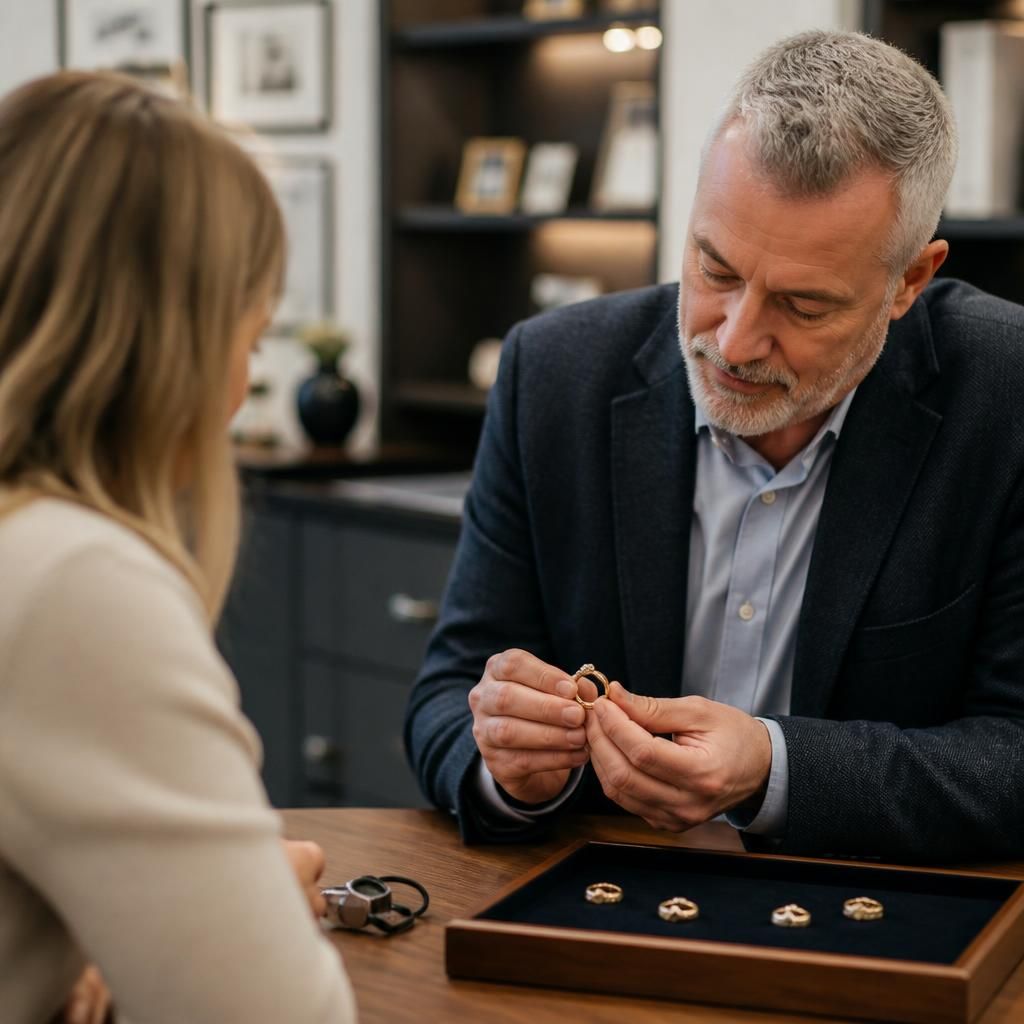
When assessing the style of a used 9ct gold ring, examine how its proportions, setting and decorative details work together, as well as whether the design remains practical to wear. The band should look balanced in relation to the shoulders and central stone, sit comfortably on the finger and show no obvious distortion.
View the ring from above and from the side. Check that the stone is centred, the setting is level and the claws or surrounding metal are even and secure. Also inspect the finish for consistent colour, texture and polishing. Fine scratches may be normal on a pre-owned ring, but deep dents, worn claws, sharp edges or visible alterations should be assessed by a professional before purchase.