
How do jewellery valuation services incorporate historical significance and provenance in assessing the value of bespoke and antique pieces?
The value of bespoke and antique jewellery is significantly influenced by historical significance and provenance. Professional jewellery valuation services assess these factors meticulously, examining the piece’s origin, ownership history, and any notable associations, which can enhance its market value and provide a deeper appreciation for its cultural heritage.
Understanding how jewellery valuation services incorporate historical significance and provenance is critical for assessing the value of bespoke and antique pieces accurately. Historical significance refers to the influence a piece has had within cultural or historical contexts, which may include its creation during a particular period, use in significant events, or association with notable figures. Provenance, on the other hand, involves the documented history of ownership, which provides valuable insight into a jewellery piece’s authenticity and rarity.
Valuation experts scrutinise several elements to gauge historical significance. They assess the era and location of creation, examining stylistic attributes and craftsmanship techniques typical of the time, thereby ensuring authenticity and uniqueness. This evaluation often involves a meticulous examination of the piece’s attributes and design, cross-referencing them with historical records. For instance, an engagement ring crafted during the Art Deco period can command higher value due to its distinctive design and significance within that era’s artistic movement.
- Cultural Associations: Jewellery often bears cultural connotations, such as motifs emblematic of specific ethnic or artistic traditions. The valuation takes into account these cultural narratives, which enhance the piece’s historical worth.
- Influential Owners: Provenance also involves tracing the ownership lineage. Ownership by renowned individuals or appearances in historical events can elevate both the historical allure and the market value.
- Authentic Documentation: Having original documentation or artefacts linking the jewellery to particular historical episodes or ownership chains is invaluable. Such evidence substantiates provenance, lending credibility to the valuation process.
Furthermore, expert valuers use a combination of specialist knowledge and technological tools, such as databases and digital registries, to verify provenance. Thorough research ensures the piece’s authenticity and traces its journey, providing transparency which enhances trustworthiness during transactions.
For existing clients at Steven Charles Quance, our knowledgeable team understands the crucial impact of historical significance and provenance in enhancing the valuation of your bespoke jewellery pieces. With expertise across various jewellery periods and styles, coupled with a commitment to transparency and ethical sourcing, we ensure an authentic and precise valuation that reflects the true historical and monetary worth of your cherished possessions.
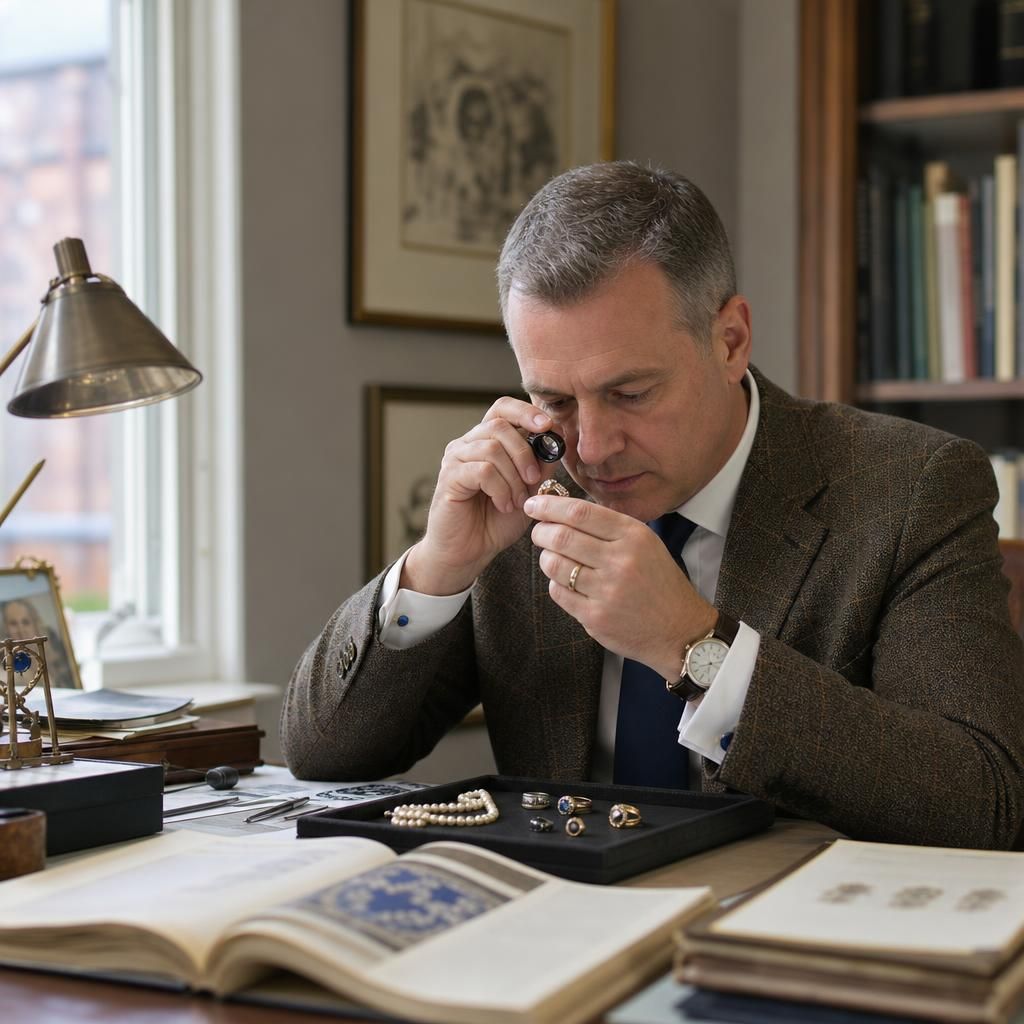
Assessing the provenance of bespoke and antique jewellery involves a thorough examination of its documented history of ownership, which significantly impacts its valuation. Provenance not only authenticates the piece’s past but can also enhance its market value through associations with notable individuals or eras. For example, jewellery once owned by a celebrated public figure or linked to historic events often carries a premium value, given its greater appeal to collectors and historians alike. Maintaining original documentation such as purchase receipts, certificates of authenticity, or historical references can bolster the perceived value, adding credibility to the valuation process and assurance to prospective buyers or sellers. At Steven Charles Quance, we understand the importance of such documentation in reflecting the true value of your luxury items.