
What are the most common reasons for choosing to remodel jewellery?
The most common reasons for choosing to remodel jewellery are to update an outdated style, repair or improve a worn piece, adapt an inherited item, or create a new design using its existing gemstones and precious metal. Remodelling can also make a cherished piece more wearable, better suited to a changing lifestyle, or meaningful for a new occasion while preserving elements of its history.
Jewellery remodelling is most commonly chosen to update an outdated design, repair or strengthen a worn piece, adapt an inherited item, or create a new design from existing gemstones and precious metal. It allows a piece to become more wearable and relevant while retaining selected materials, personal history or sentimental significance.
Updating an outdated style
Styles change, and a ring, pendant or pair of earrings that once suited the wearer may no longer reflect their taste. Remodelling can alter the setting, profile, proportions or overall arrangement without discarding the parts that still matter. For example, an ornate ring may be redesigned with cleaner lines, or a dated cluster may be transformed into a more contemporary design.
The aim is not simply to make an old piece look newer. The design should be considered in relation to how the jewellery will be worn, the wearer’s preferred metal colour, and whether the existing gemstones remain suitable for the proposed setting.
Repairing damage or improving wearability
Some pieces are remodelled because repair alone would not provide a reliable or practical long-term solution. Thin areas of metal, worn claws, damaged settings, distorted shanks and repeated repairs can affect both appearance and security. A new setting or redesigned structure may provide better protection for the gemstones and make the piece more comfortable to wear.
Remodelling may also address practical problems such as a ring that catches on clothing, a pendant that regularly twists, or earrings that are too heavy for regular use. Existing materials can sometimes be incorporated into a design with a lower profile, improved balance or more secure fastening. The condition of the jewellery must be assessed first, as not every damaged component can be safely reused.
Adapting inherited jewellery
Inherited jewellery is a frequent starting point for a redesign. An heirloom may have substantial sentimental value but not suit the recipient’s style, finger size or lifestyle. Remodelling can preserve a gemstone, a portion of the precious metal or a recognisable detail while creating a piece that will be worn and cared for regularly.
Before work begins, it is important to establish which features carry the most meaning. This could be a central gemstone, an engraved section, a distinctive setting or the complete original form. Some clients prefer a subtle alteration, while others want a substantially different design that retains only selected elements. Recording and discussing these priorities helps ensure that the finished piece respects the item’s history.
Reusing gemstones and precious metal
Existing materials are often remodelled because they have value beyond their market price. A gemstone may have been given for a significant occasion, while gold or platinum may have belonged to a family member. Reusing these materials can make a new design more personal than purchasing unrelated components.
Gemstones should be checked for chips, abrasions, fractures, loose areas and previous repairs before they are placed in a new setting. Their shape, dimensions and durability will influence what can be made. Precious metal can sometimes be incorporated directly, but it may also need to be separated, refined or supplemented with new metal. The final design should be based on the condition and suitability of the materials rather than an assumption that every element can be retained.
Changing a piece for a new occasion
A remodelled piece can mark a change in circumstances or a new stage of life. Common examples include converting a single ring into a pendant, adapting a family stone into an engagement or wedding ring, or redesigning several pieces into jewellery for a significant birthday or anniversary. Remodelling can also create a matching item, such as earrings or a pendant made from stones originally set in a ring.
This approach is particularly useful when the original jewellery is no longer worn but its materials remain appropriate for a meaningful gift. The new design can be created around the intended occasion, the recipient’s preferences and the way the piece is expected to be worn.
Making jewellery suit a changing lifestyle
Jewellery needs can change over time. A person may move from occasional wear to daily wear, begin working with their hands, prefer understated designs, or need a piece that is easier to put on and remove. A remodel can alter the size, weight, setting height or fastening to improve practicality.
For rings, this may involve changing the profile, widening or rebuilding the band, improving the relationship between multiple rings, or creating a design that is less likely to catch. For necklaces and earrings, the length, drop, balance and fastening can be reconsidered. The design should reflect the intended use, because a delicate structure suitable for occasional wear may not be appropriate for everyday use.
Combining several pieces into one design
Remodelling can bring together materials from jewellery that is rarely worn. Stones from different pieces may be arranged into a single ring, pendant or pair of earrings, provided they are compatible in size, colour, condition and durability. This can create a more coherent design while reducing the number of separate items requiring storage and maintenance.
Combining pieces requires careful planning. Differences in metal colour, alloy, stone shape and gemstone setting may affect the appearance and construction of the finished item. Where the original materials do not provide enough metal or suitable matching stones, additional components may be needed.
Creating a more personal bespoke design
Some clients choose remodelling because they want a design that reflects their own preferences rather than selecting an existing item. The starting point may be a stone, an inherited element, a preferred motif or a particular way of wearing jewellery. The design can then be developed around the available materials and the practical requirements of the piece.
This differs from buying a new item because the finished jewellery may retain a direct connection to an existing possession. It also differs from a simple repair: the purpose is to reconsider the design, not merely restore it to its previous condition. Sketches, computer-aided design or physical samples may be used where appropriate to clarify proportions and setting details before manufacture begins.
Preserving selected sentimental details
Remodelling does not have to remove every trace of the original piece. A discreet section of an old band, an engraving, a birthstone or a particular setting detail may be incorporated into the new design. In other cases, the original shape can be referenced through the outline or arrangement of the new jewellery.
It is helpful to identify these details before agreeing the design. If an element cannot be safely reused, it may be possible to preserve it separately or document it before the remodel. This is also a suitable time to discuss whether the original piece should be retained in part, completely transformed or left unchanged alongside a new design.
What to consider before choosing remodelling
- Decide which materials, gemstones or design features must be retained and which can be changed.
- Consider how often the finished piece will be worn and what level of durability it needs.
- Ask for the gemstones and metal to be assessed before making design decisions.
- Discuss whether the original item has importance as an antique or complete piece, since remodelling may affect its originality and potential value.
- Confirm which new materials, settings, labour and finishing work may be required.
- Allow for the possibility that a design may need to change if a gemstone or metal component is found to be unsuitable during preparation.
A professional assessment should establish what can be retained, what needs replacing and which design options are practical. Remodelling is most successful when the desired appearance, sentimental priorities, wear requirements and condition of the original jewellery are considered together before work starts.
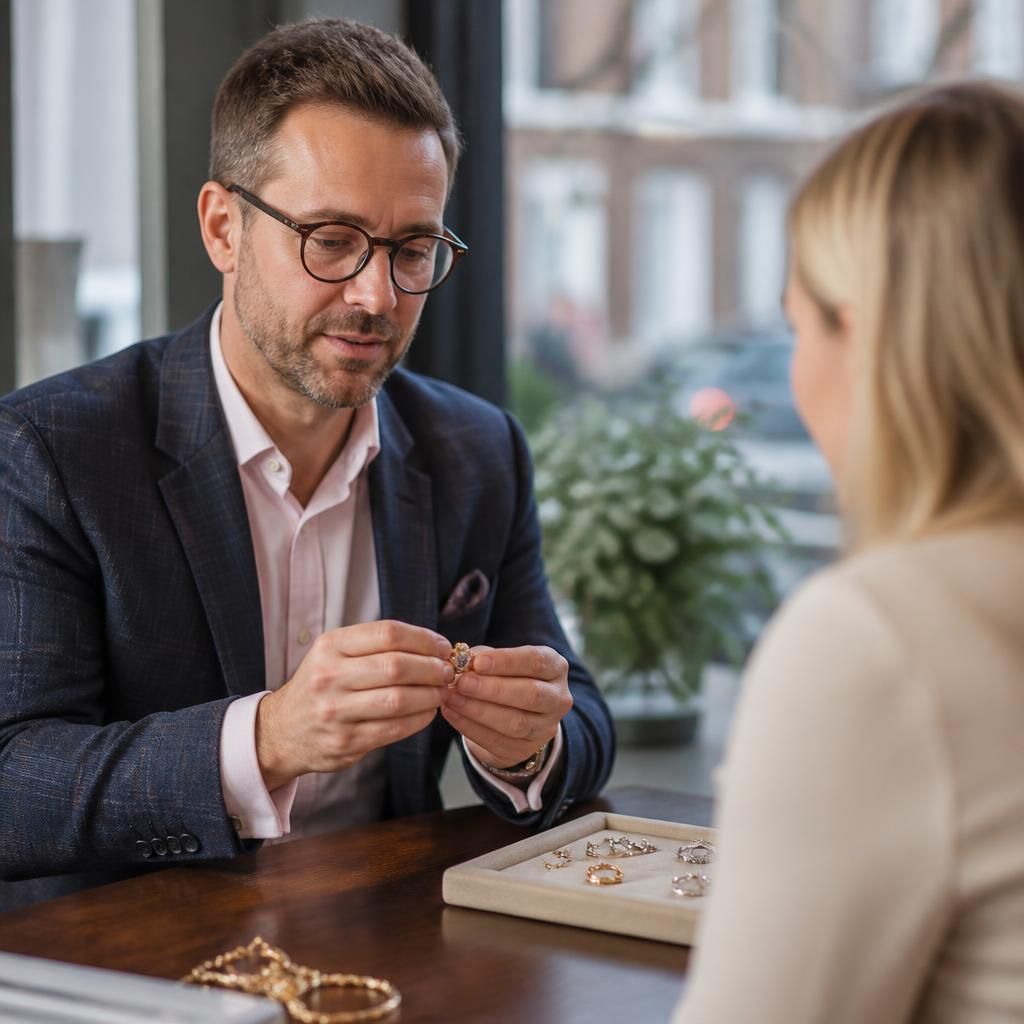
Jewellery is often remodelled when its original design no longer suits the way it is worn. A ring may be too high, a setting may catch on clothing, or a piece may be too heavy or difficult to fasten. Redesigning the structure can improve comfort, security and everyday practicality while retaining suitable gemstones or meaningful details.
The proposed design should reflect the jewellery’s intended use. A lower setting may protect a stone and reduce snagging, while a stronger band or more secure fastening can make a piece more suitable for regular wear. The gemstones and metal should be assessed first, as wear, previous repairs or damage may limit what can safely be reused.