
Have you verified whether your necklace or bracelet repair requires replacement parts, such as missing stones or broken links, and do you know where to source high-quality materials?
Yes—replacement parts may be needed for missing stones, broken links, damaged clasps or worn fittings, and they should be selected to match your necklace or bracelet’s metal, design and finish. A professional jeweller can assess the repair and source suitable, high-quality components, including replacement stones and custom-made links where standard parts are unsuitable.
Replacement parts should be assessed and sourced as part of the repair, rather than fitted as an afterthought. Missing stones, broken links, damaged clasps and worn end fittings must match the necklace or bracelet in material, dimensions, colour, finish and overall design. A professional jeweller can identify what is required, check whether a suitable standard component exists and arrange a made-to-measure part when an exact match is not available.
The repair process begins with a close examination of the jewellery. This includes checking the construction, identifying the metal, measuring the damaged area and looking for related wear that could affect the replacement. For example, replacing a broken link without examining the neighbouring links may leave the piece vulnerable to further damage. Similarly, a new clasp should be appropriate for the weight and style of the necklace or bracelet, not simply selected because it fits the existing chain.
Replacement stones require particular care. The jeweller will assess the original stone’s:
- gemstone type and likely identity;
- colour, tone, clarity and cut;
- size and shape;
- setting style and depth;
- hardness and suitability for everyday wear; and
- condition of the surrounding setting.
A replacement does not always need to be identical in every optical detail, particularly where the original stone is difficult to source, but it should sit comfortably within the design. A stone that is too shallow, too deep or incorrectly shaped may be insecure, affect the balance of the piece or require unsuitable alteration to the setting. Where an exact match cannot be found, the available options should be explained before work begins.
Replacement links, jump rings, chain sections and fittings should be made from a compatible metal. Gold, platinum, silver and other jewellery metals differ in colour, hardness, melting behaviour and resistance to wear. The karat or fineness should also be considered where relevant, as an incorrect alloy can be visibly different and may affect the strength of the repair. Mixing metals may be appropriate for a deliberate design feature, but it should not happen unintentionally.
High-quality parts are sourced through established jewellery trade suppliers, specialist stone dealers or made-to-measure manufacturing services, depending on the repair. The important consideration is not simply where a part comes from, but whether it is suitable for the specific item. A professional assessment should cover the part’s material, dimensions, finish, security and compatibility with the existing construction. For valuable or significant jewellery, the provenance and treatment of a replacement gemstone may also be relevant, particularly if the stone has been treated or is represented as natural.
Some repairs can use standard components, including commonly sized clasps, jump rings or chain sections. Bespoke parts are more suitable when the jewellery has an unusual link pattern, a discontinued fitting, a handmade element or an integrated design. A replacement link may need to be fabricated and shaped to continue the original pattern, while an ornamental clasp or decorative feature may require detailed hand-finishing to blend with the surrounding piece.
It is also important to distinguish between replacing a part and restoring the original one. A damaged clasp may be repairable if its mechanism is sound, whereas severe wear, distortion or metal fatigue may make replacement the more reliable option. A missing stone may require rebuilding or strengthening the setting before a new stone is fitted. The repair should address the underlying weakness, not only the visible loss.
Before approving the work, ask for a clear explanation of:
- which components need replacing and why;
- the proposed metal, stone or other material;
- whether the part is standard, adapted or made specifically for the piece;
- how the colour, shape and finish will be matched;
- whether additional setting, soldering or strengthening is required; and
- how cleaning, polishing or refinishing may affect the original surface.
Photographs or an in-person assessment can help with an initial discussion, but precise sourcing normally requires the jewellery to be examined directly. This allows measurements to be taken, hidden damage to be identified and the replacement to be checked against the original before it is fitted. Once the work is complete, the setting, links, clasp and surrounding areas should be inspected for security, with the piece cleaned and finished in a way that preserves its intended character.
For unusual, valuable or sentimental necklaces and bracelets, avoid buying an apparently similar stone, link or clasp independently and asking for it to be fitted without checking its suitability first. The part may be the wrong size, metal or construction, and modifying it could make the repair more complicated. Sourcing the replacement through the jeweller carrying out the work provides a more controlled match and ensures that the component is considered alongside the repair method and the long-term wear of the jewellery.
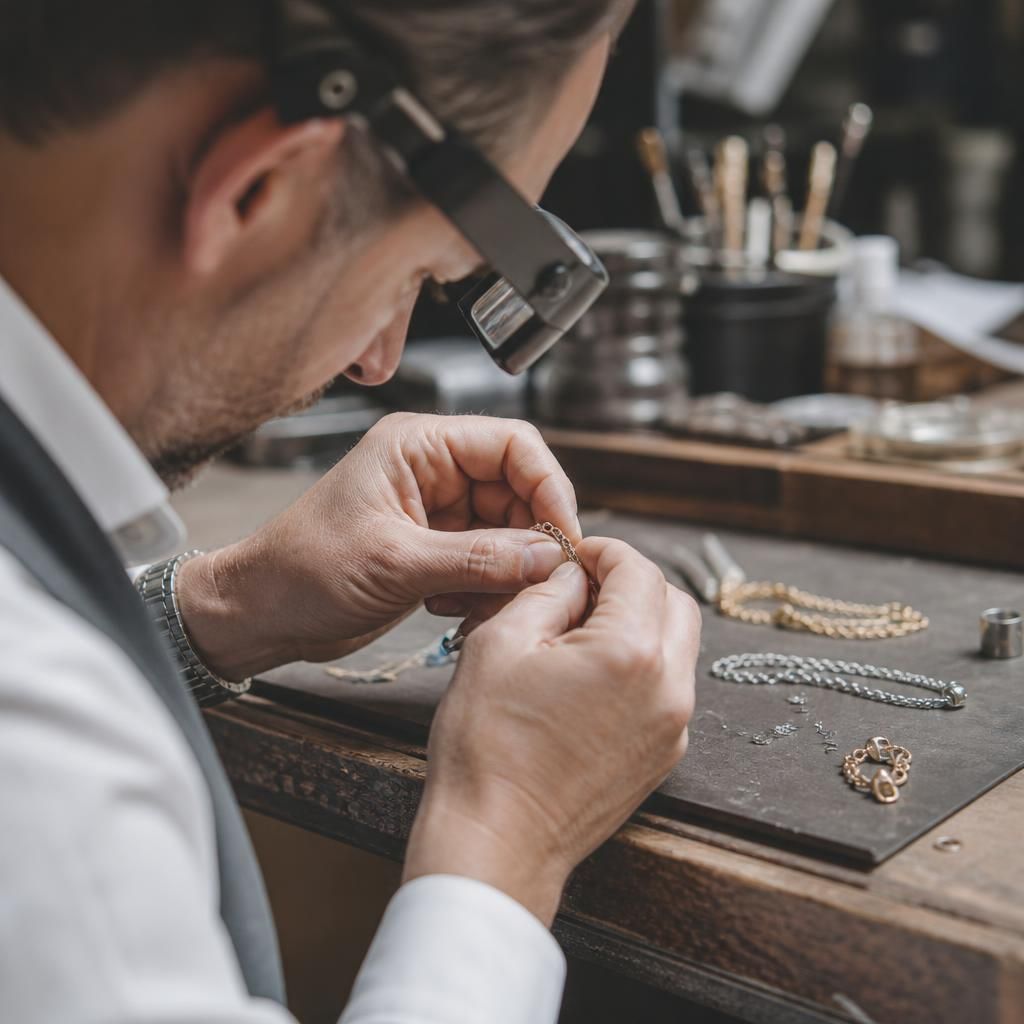
Replacement parts for necklace and bracelet repairs should be matched to the jewellery’s original metal, dimensions, construction and finish. This is particularly important for missing gemstones, broken links, worn jump rings and clasps, where an apparently similar component may be unsuitable or weaken the piece.
A professional jeweller can examine the item, identify the required material and source a suitable standard or made-to-measure part through established trade suppliers. Before work begins, confirm whether the replacement is new, adapted or bespoke, and ask how its colour, shape, setting and surface finish will be matched to the existing jewellery.
Arrange an Assessment for Replacement Parts
Arrange an assessment of your necklace or bracelet so we can identify any required replacement stones, links, clasps or fittings and source materials that match its construction and finish. Contact us to discuss the repair and the most suitable replacement options.