
What specific factors should I consider when selecting a jewellery piece for probate valuation?
When selecting a jewellery piece for probate valuation, consider its historical and sentimental value, authenticity, material composition, and craftsmanship quality. These factors influence the piece’s market value and play a crucial role in ensuring an accurate and fair assessment. It’s important to consult with experienced professionals to evaluate both contemporary attributes and potential historical significance, ensuring all aspects of the piece are accounted for in the valuation process.
When selecting a jewellery piece for probate valuation, it is essential to consider several critical factors to ensure an accurate and comprehensive assessment. Firstly, the material composition of the jewellery plays a significant role. Precious metals and gemstones used in the piece—such as platinum, gold, diamonds, and sapphires—should be examined for quality, purity, and market value. It’s crucial to obtain official documentation or certification of authenticity to support the valuation process.
Another key element is the workmanship and craftsmanship of the piece. A high level of craftsmanship can enhance a jewellery item’s worth, reflecting the skill and expertise invested in its creation. Bespoke or custom-designed pieces often possess unique attributes that may enhance their value compared to mass-produced jewellery. It is beneficial to note any distinctive characteristics or identifiers that set the piece apart.
Historical and sentimental significance should not be overlooked. Antique or vintage jewellery may carry historical importance, adding to its market value. Provenance, or the piece’s documented history of ownership and origin, can be a valuable asset during the valuation process. Sentimental value, while not directly influencing probate, may inform your decisions regarding which pieces to prioritise for valuation.
Further, consider the condition and integrity of the jewellery. Items in excellent condition, with minimal wear and repairs, are likely to retain greater market value. It’s advisable to undertake necessary maintenance or repairs beforehand where possible, ensuring the jewellery is presented in optimal condition for valuation.
Finally, the valuation process is best conducted by a qualified professional who can deliver a detailed analysis. Choose a valuer with extensive expertise in high-end jewellery assessment, who can provide an impartial and informed evaluation. Documenting each piece meticulously during this process, including photography, will bolster the reliability of the valuation outcome.
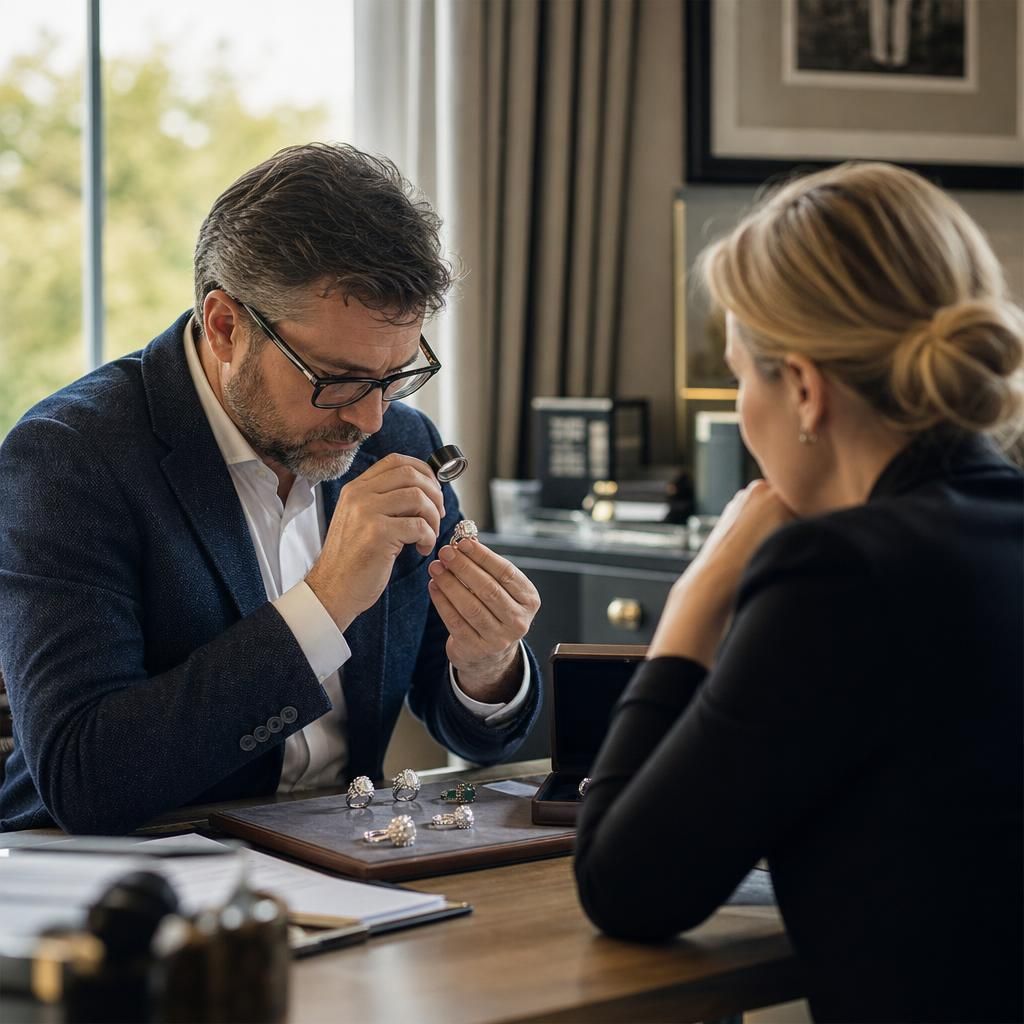
One critical factor in selecting a jewellery piece for probate valuation is its material composition, which directly influences its market value. Precious metals such as platinum, gold, and silver should be assessed for their purity and weight, as these attributes significantly impact the overall worth of the piece. Gemstones, particularly diamonds, sapphires, and emeralds, require evaluation not only for their carat weight but also for their colour, clarity, and cut. Each of these elements contributes to the gemstone’s value, thus affecting the valuation of the entire piece.
Attention should also be given to the presence of any official documentation or certification that confirms the authenticity and provenance of the materials used. Such documents provide valuable backing during probate valuation, ensuring that your piece is assessed accurately against current market standards. Having this information readily available will support the appraiser in delivering a comprehensive valuation that reflects the true worth of your jewellery. Proper preparation in this area can make a significant difference in the valuation outcome.