
How can I find the nearest jewellers to me that have scheduled valuation days and what should I bring along for an efficient appraisal process?
To find the nearest jewellers offering scheduled valuation days, check local jeweller websites and event listings, then contact the practice to confirm dates, appointment requirements, valuation types and fees. For an efficient appraisal, bring the jewellery or Rolex timepiece, any purchase receipts, previous valuations, certificates, insurance or probate paperwork, service records and suitable identification.
To find the nearest jeweller with a scheduled valuation day, check established jewellers’ websites, local event listings and professional jewellery directories, then contact the practice directly to confirm the date, location, appointment requirements, valuation type, turnaround time and fee. For an efficient appraisal, bring the jewellery or Rolex timepiece, all available supporting documents, relevant paperwork and suitable identification. In the West Midlands, it is sensible to search Birmingham and surrounding areas rather than relying solely on the phrase “valuation day”, as some jewellers offer dedicated appointment days or visiting valuer sessions instead.
How to locate a suitable valuation day
- Review the valuation, repairs or appointments section of local jewellers’ websites. Event dates may be listed separately from the main valuation service.
- Search for jewellers in Birmingham and nearby West Midlands locations using terms such as “jewellery valuation day”, “watch valuation appointment” and “probate jewellery valuation”.
- Ask whether the service is carried out by an appropriately qualified valuer, particularly if the valuation is required for probate, insurance or legal purposes.
- Contact the jeweller before travelling. Confirm that the event covers your items, especially if you are bringing gemstones, antique jewellery, branded watches, inherited pieces or a larger collection.
- Check whether an appointment is essential. Valuation days often have limited availability, and a walk-in service may not provide enough time for a detailed assessment.
- Ask how the valuation will be supplied. A written report may be suitable for insurance or probate, whereas a verbal indication may not meet the requirements of an insurer, solicitor or estate administrator.
Do not assume that every advertised valuation event provides the same service. A valuation for insurance replacement, probate, resale, matrimonial purposes or general advice can involve different conclusions and report formats. Explain the intended use when booking so the valuer can prepare the correct documentation and examine the item against the appropriate basis of valuation.
What to bring to the appointment
- The jewellery, watch or other item to be assessed. Bring each piece in its complete condition, including detachable components, original straps, pendants, matching earrings and presentation boxes where available.
- Purchase receipts, invoices or order confirmations. These can help establish provenance, original specifications and the date of purchase, although they do not determine the current valuation on their own.
- Previous valuation reports, insurance schedules and certificates from a gemmologist, laboratory or manufacturer. Tell the valuer if any document relates to a different valuation purpose.
- Diamond or gemstone reports, hallmark information, certificates of authenticity and records identifying a maker, designer or collection.
- Repair, cleaning and servicing records. For a Rolex timepiece or other luxury watch, bring service documentation, warranty papers, the original box, spare links, additional straps and accessories if they are available.
- Probate or estate paperwork where relevant, including the deceased person’s inventory, executor’s instructions or correspondence from a solicitor. The valuer may need to record the owner or estate details accurately.
- Insurance details or a request from your insurer if the valuation is for cover. Some insurers specify the wording, valuation basis or report date they require.
- Suitable photographic identification and, where appropriate, evidence of authority to act for an estate or another owner. Requirements vary, so confirm this when booking.
Bring documents in a folder and keep original certificates secure. If you have digital records, save them on your phone as well as bringing any available originals. Avoid altering, polishing or repairing an item immediately before the appointment, as signs of wear, damage, previous work and construction can be relevant to the assessment. Do not clean delicate or antique jewellery aggressively; loose stones, worn settings and historic finishes may need to be examined as they are.
Preparing jewellery and watches safely
Transport valuable items discreetly in a secure, padded case rather than loose in a handbag or envelope. Keep pieces separated to prevent scratching and do not post high-value items unless the jeweller has specifically arranged an insured delivery process. If you are bringing a collection, ask whether everything should be presented at one appointment or divided into smaller visits. You should also check the jeweller’s arrangements for privacy, security and temporary custody while the items are being examined.
For a watch valuation, avoid removing the case back or attempting to test the movement yourself. Note any known faults, loss of time, water exposure or replacement parts and mention them to the valuer. The watch’s reference and serial details, originality, condition, service history, accessories and market context may all affect the assessment. If the timepiece is running, the valuer can decide whether any further testing is appropriate.
What to confirm before attending
- Whether the event is being held at the jeweller’s premises or by an external visiting valuer.
- Whether the service is by appointment only and how much time has been allocated to your items.
- Whether the valuation is written, verbal or both, and when the completed report will be available.
- Whether the fee is charged per item, by collection, by report or according to the time required. Ask about any additional charge for urgent reports, photographs, research or replacement copies.
- Whether the valuer can assess items that are damaged, incomplete, unhallmarked, inherited or of uncertain origin.
- What identification, ownership or probate documentation is required.
- Whether the report will meet the requirements of your insurer, solicitor, executor or other receiving organisation.
At the appointment, provide the purpose of the valuation at the outset and disclose anything you know about the item’s history. The valuer will normally inspect construction, hallmarks, gemstones, condition, originality and supporting evidence before recording the relevant details. Ask questions if a conclusion is unclear, particularly where an insurance replacement value differs from an open-market or probate value.
If no scheduled valuation day is available nearby, ask the jeweller about a standard valuation appointment, a visiting valuer session or a referral to an appropriately qualified specialist. For probate deadlines, explain the required date when making contact rather than relying on an event timetable. A planned appointment can often provide the same professional assessment, provided the valuer is suitably qualified and the report is prepared for the correct purpose.
Keep the final valuation report, photographs and supporting certificates together, and note when the valuation was completed and what basis was used. Valuations reflect the item’s condition, evidence and the relevant market at the date of assessment, so an insurer or estate administrator may request an update after a period of time or following significant changes to the jewellery or watch.
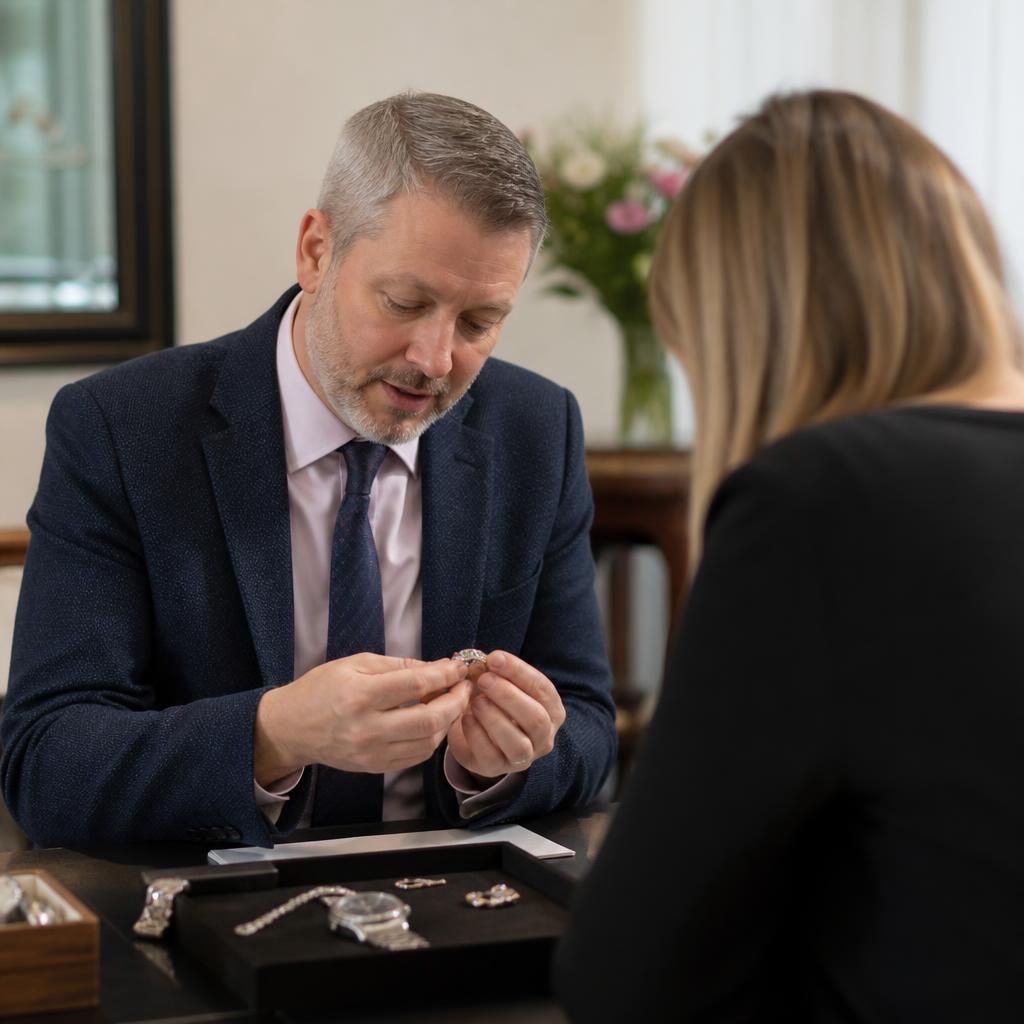
Before attending a scheduled valuation day, confirm the purpose of the appraisal and the format of the report you will receive. An insurance replacement valuation, probate valuation and open-market opinion use different approaches, so explain your requirements when booking and check that the written report will be accepted by your insurer, solicitor or estate administrator.
Bring the jewellery or watch with its certificates, purchase records, previous valuations and relevant repair or service documents. For inherited items, also bring any probate or estate paperwork and evidence that you are authorised to act. Keep valuable pieces in a secure, padded case, avoid polishing or altering them beforehand, and ask the jeweller about appointment times, fees and arrangements for handling items during the assessment.