
Are you aware of the most suitable type of stringing material for your specific necklace style and its impact on durability?
The most suitable type of stringing material for your specific necklace style significantly impacts its durability. Nylon and silk are often preferred for their strength and flexibility, supporting the longevity of both delicate and substantial pieces, while beading wire adds robustness for heavier, gemstone-laden necklaces. Consider the characteristics and demands of your piece to ensure enduring charm and resilience.
When selecting the most suitable stringing material for your necklace, it is essential to consider both the style of the piece and the impact this choice will have on its durability. Nylon thread, known for its flexibility and strength, frequently serves as a go-to material for both lightweight and medium-weight necklaces. It provides a resilient backbone while allowing for natural movement, complementing designs with intricate beadwork. Silk thread, traditionally revered in the jewellery craft, is particularly favourable for pearls and finer gemstone necklaces due to its luxurious feel and elasticity, which help the necklace drape gracefully.
For more robust pieces or those featuring heavier gemstones, beading wire becomes indispensable. This material combines stainless steel with a nylon coating, providing exceptional strength without sacrificing flexibility. Such properties are vital for ensuring that the necklace can comfortably bear the weight without compromising its aesthetic appeal.
An understanding of the demands and nuances of your specific necklace style ensures that you make informed choices, leading to long-lasting durability. For example, if your necklace frequently encounters wear and tear, opting for beading wire instead of traditional threads could significantly extend its lifespan. Conversely, prioritising aesthetic and tactile qualities might steer you towards silk for designs prioritising elegance over ruggedness.
Finally, professional consultation is invaluable, especially if you possess unique or priceless pieces. Engaging with experts, like those at Steven Charles Quance, ensures that each selection of stringing material aligns with the craftsmanship and the personalised nature of your jewellery, safeguarding both the necklace’s beauty and its structural integrity for years to come.
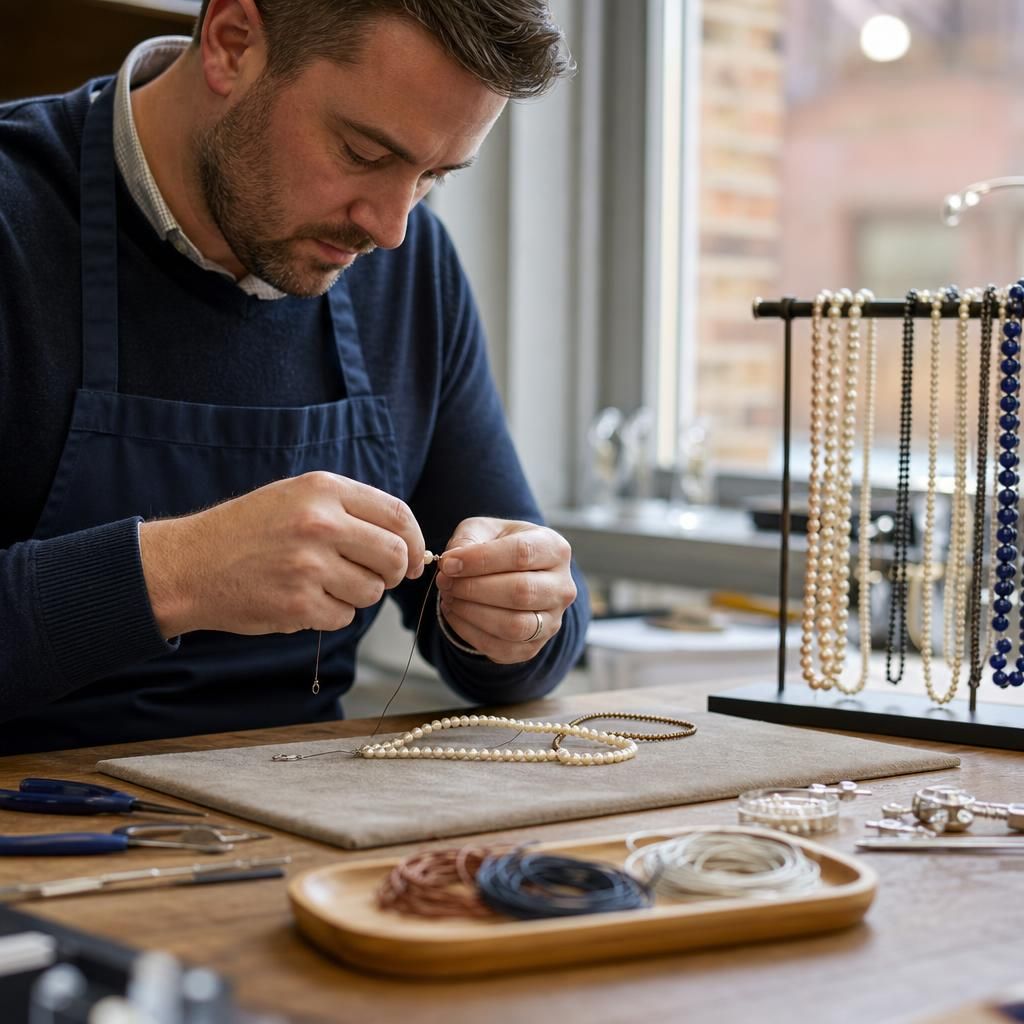
Choosing the correct stringing material is pivotal not only for the longevity but also for the safety and appearance of your necklace. Nylon thread is an excellent choice if durability and flexibility are priorities, especially for necklaces that include intricate beadwork or lighter materials. Its robust nature allows for significant movement while maintaining structural integrity.
For a more refined finish, particularly in necklaces with pearls or finer gemstones, silk thread stands out due to its natural sheen and elasticity that accentuates elegance and fluidity in the design. However, should your piece feature substantial gemstones or have a larger design, beading wire offers the necessary support and resilience. It comprises steel strands encased in nylon, providing both flexibility and strength, essential for bearing additional weight. Consider the style and demands of your necklace to ensure you select wisely and enhance the durability of your precious jewellery.