
How important is it to choose the right technique for necklace restringing, and how might the technique affect the longevity and security of your jewellery?
The choice of technique in necklace restringing is crucial as it directly impacts the durability and security of your jewellery. Employing the correct method ensures that each element, from clasps to beads, is appropriately secured, minimizing the risk of breakage and maintaining the piece’s original aesthetic and functional integrity. This careful attention to detail not only prolongs the lifespan of your necklace but also preserves its value and significance.
Choosing the right technique for necklace restringing is essential because it significantly influences both the longevity and security of your jewellery. When considering restringing, certain methods ensure that the structural integrity of the necklace is maintained, preventing issues such as premature wear or breakage. Different techniques are suitable for various types of beads and materials; for example, knotting between beads is often recommended for pearls and gemstones to prevent them from rubbing together, which can cause damage over time.
The correct technique helps distribute the tension evenly throughout the strand, reducing stress on individual beads and the stringing material. Opting for a method that complements the weight and design of your necklace will mitigate the risk of snapping, which is particularly crucial for heavier pieces or those with intricate designs. In terms of security, employing a method that integrates secure knotting or crimping can enhance the clasp’s function, ensuring the necklace remains safely fastened during wear.
Beyond the technique itself, regularly assessing the condition of the stringing material and knowing when to restring your necklace are also vital. The frequency of restringing depends on factors such as usage, exposure to elements, and the initial string material. Silk, for example, although luxurious and traditional, may need more frequent attention compared to synthetic alternatives.
Working with a professional jeweller, particularly one familiar with bespoke jewellery, ensures that the chosen restringing method is tailored to the specific requirements of your piece. At Steven Charles Quance, we understand that your jewellery is not only a financial investment but also holds great personal value. Our expert guidance and personalised service ensure that each piece retains its original beauty and functional efficacy for years to come. By trusting us with your necklace restringing needs, you are ensuring that your jewellery receives the care and attention it deserves.
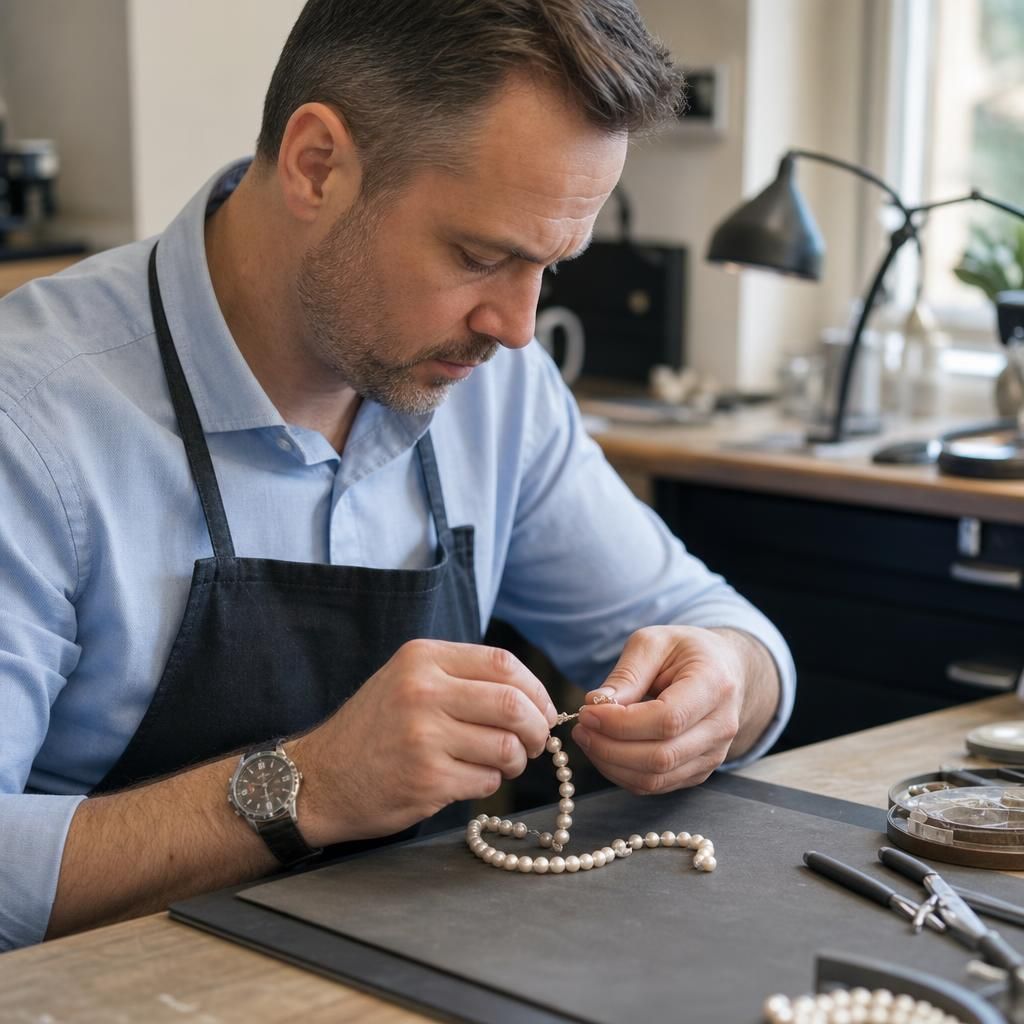
Necklace restringing techniques are pivotal in maintaining both the longevity and security of your jewellery. Employing techniques such as knotting can protect delicate beads like pearls from abrasion, which extends the life of the necklace. This method involves placing knots between individual beads to prevent them from rubbing against each other, significantly reducing wear and tear over time. Using appropriate tension in stringing ensures that the beads are neither too tightly nor too loosely strung, which is crucial in avoiding undue stress that can lead to breakage.
For instance, heavier necklaces may benefit from methods that provide extra support, such as double strand threading, where two strands are used to carry the weight, thus distributing it more evenly. This technique diminishes the likelihood of the string snapping, offering a safeguard particularly useful for intricate or weighty designs. These thoughtful measures are integral for preserving the craftsmanship and original appearance of your bespoke pieces, ensuring they remain cherished valuables in your collection.
Discuss the Right Necklace Restringing Technique
If you are unsure which restringing technique your necklace requires, bring it to Steven Charles Quance for an assessment of the beads, thread, tension and clasp. We can recommend a secure, suitable repair that protects the necklace’s structure and helps extend its useful life.