
What distinguishes professional necklace restringing from DIY attempts, and why might you opt for professional services?
Professional necklace restringing distinguishes itself from DIY attempts through the expertise and precision offered by skilled jewellers, ensuring each piece retains its original charm and structural integrity. Opting for professional services guarantees high-quality craftsmanship, appropriate tension adjustments, and the use of durable materials, all of which contribute to the longevity and overall appearance of your cherished jewellery.
Professional necklace restringing offers a level of expertise and precision that typically surpasses DIY attempts, particularly in the care and long-term preservation of jewellery. When a professional undertakes the restringing process, they apply meticulous techniques that ensure your necklace maintains its original allure and structural integrity. This process involves selecting appropriate materials that match the piece’s original components, thereby preserving its aesthetic and functional properties.
One of the core differences between professional and DIY restringing is the finesse in tension adjustment, which, if improperly managed, can lead to premature wear or even snapping. An experienced jeweller understands the nuances of adjusting string tension to match the weight and shape of the beads or gemstones, ensuring that the necklace drapes correctly and remains durable. Additionally, professionals possess in-depth knowledge of stringing materials—such as silk, nylon, or wire—and their suitability for different kinds of necklaces, thereby optimising the piece’s longevity.
Furthermore, professional restringing services often include a thorough inspection of clasps, chains, and gemstone settings. Such assessments may identify issues that a DIY approach might overlook, ensuring that any worn or damaged elements are repaired or replaced before they can affect the necklace’s wearability. This comprehensive service can include upgrading clasps or adding protective bead tips to minimise friction and wear.
Given the range of potential challenges and intricacies involved in necklace restringing, opting for professional services ensures not only aesthetic appeal but also structural reliability, preserving the jewellery’s value over time. Skilled artisans, such as those at Steven Charles Quance, bring years of experience to the task, providing peace of mind that your treasured pieces remain as splendid today as they were when first crafted.
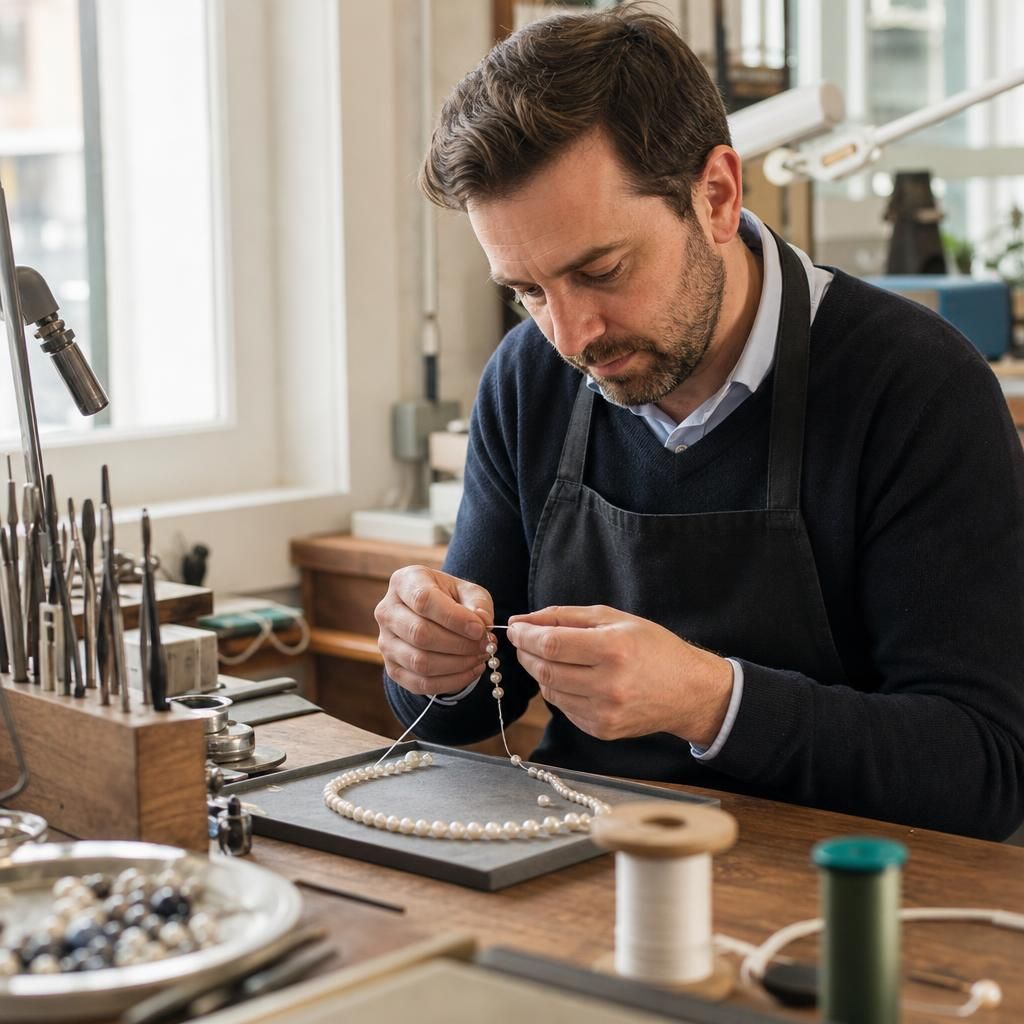
One of the essential aspects distinguishing professional necklace restringing from DIY efforts is the expertise in selecting and using the appropriate stringing materials. A seasoned jeweller keenly understands the different properties of materials such as silk, nylon, and wire, and evaluates which one best suits the structure and design of your necklace. These materials are chosen not only for their strength and durability but also for their ability to complement the aesthetic and tactile qualities of the jewellery. For instance, delicate pearl strands often require silk threading for its flexibility and traditional appeal, while heavier gemstone necklaces may benefit from a more robust nylon or wire that can support their weight without compromising on elegance.