
Are pre-owned Rolex watches for women a good investment?
Pre-owned Rolex watches for women can be a sound long-term purchase because well-maintained, authentic models often retain value, but they are not guaranteed investments. Resale potential depends on the model, condition, provenance, originality, servicing and market demand, so professional verification and realistic pricing are essential.
Pre-owned Rolex watches for women can be a sound long-term purchase, but they should not be treated as guaranteed investments. Authenticity, model, condition, originality, service history, provenance, purchase price and future demand all affect resale value. A well-chosen watch may retain a substantial proportion of its value, while an over-polished, modified or poorly documented example can be more difficult to sell and may lose value.
Investment value and personal value are different. A Rolex is a precision timepiece designed to be worn, and ownership brings maintenance costs, insurance considerations and the possibility of accidental damage. Its value should therefore be assessed as a combination of enjoyment, quality, longevity and potential resale strength rather than as a guaranteed financial return.
Model and demand are important. Some women’s Rolex models and configurations have broader demand in the pre-owned market than others. Factors such as case size, metal, dial colour, bracelet, bezel and production history can influence desirability. Classic, versatile designs may appeal to a wider group of future buyers, while unusual or highly specialised configurations can take longer to sell even if they are attractive to the original owner.
Condition directly affects value. A watch with a sharp case, clear hallmarks, an undamaged dial and a clean, correctly functioning movement will generally be more attractive than one showing heavy wear. Light signs of use are normal for a pre-owned watch, but deep scratches, dents, moisture damage, bracelet stretch or an over-polished case may reduce its desirability. Cosmetic refurbishment should be carried out carefully, as excessive polishing can remove the original definition of the case.
Originality and completeness matter. Original components are usually preferable to aftermarket replacements or mismatched parts. Check the dial, hands, bezel, bracelet and clasp, as replacing one of these can affect both authenticity and collectability. The original presentation box, warranty documentation, service records and other supporting paperwork can strengthen buyer confidence, although their absence does not automatically make a watch unsuitable. The watch itself must still be examined on its own merits.
Provenance and authenticity should be established before purchase. Serial and reference details should correspond with the watch and its documentation, and the movement, case, dial and bracelet should be inspected by someone with appropriate expertise. A professional assessment can identify replaced parts, inconsistencies, water damage and servicing concerns that are not obvious from photographs. This is particularly important when a price appears unusually low or the seller cannot explain the watch’s history.
Service history affects the real cost of ownership. A recent service from a suitably qualified specialist may provide useful reassurance, but service work should be documented and performed to an appropriate standard. If a watch needs servicing, bracelet work or replacement components soon after purchase, those costs reduce its effective investment value. Ask what has been serviced, which parts were replaced and whether the work preserves the watch’s original character.
Purchase price is one of the most controllable factors. Paying a fair market price for a correctly authenticated watch gives you a stronger starting point than paying a premium based on unverified claims about rarity or future appreciation. Compare like-for-like examples, taking account of age, condition, metal, dial, accessories and service history rather than comparing headline prices alone.
Resale is not always immediate. The time required to sell depends on demand for the specific configuration, the condition of the watch, the quality of its documentation and the route used for sale. Dealer offers may be lower than private asking prices because they account for authentication, servicing, overheads and the risk of holding stock. A realistic valuation should distinguish between an advertised price and the amount a suitable buyer or professional trader is likely to pay.
Before buying, consider the following:
- Whether the watch has been independently authenticated.
- Whether the reference, serial details and components are consistent.
- Whether the condition matches the asking price.
- Whether service records or a professional inspection are available.
- Whether the configuration is likely to have ongoing demand.
- Whether you are comfortable owning and maintaining the watch even if its resale value does not increase.
For most buyers, the best approach is to choose a genuine, well-maintained Rolex that suits their wrist and lifestyle, then regard any future value retention as a potential benefit rather than the primary reason for purchase. A careful inspection and professional valuation before committing can help confirm that the watch is correctly priced and provide a more reliable basis for judging its long-term potential.
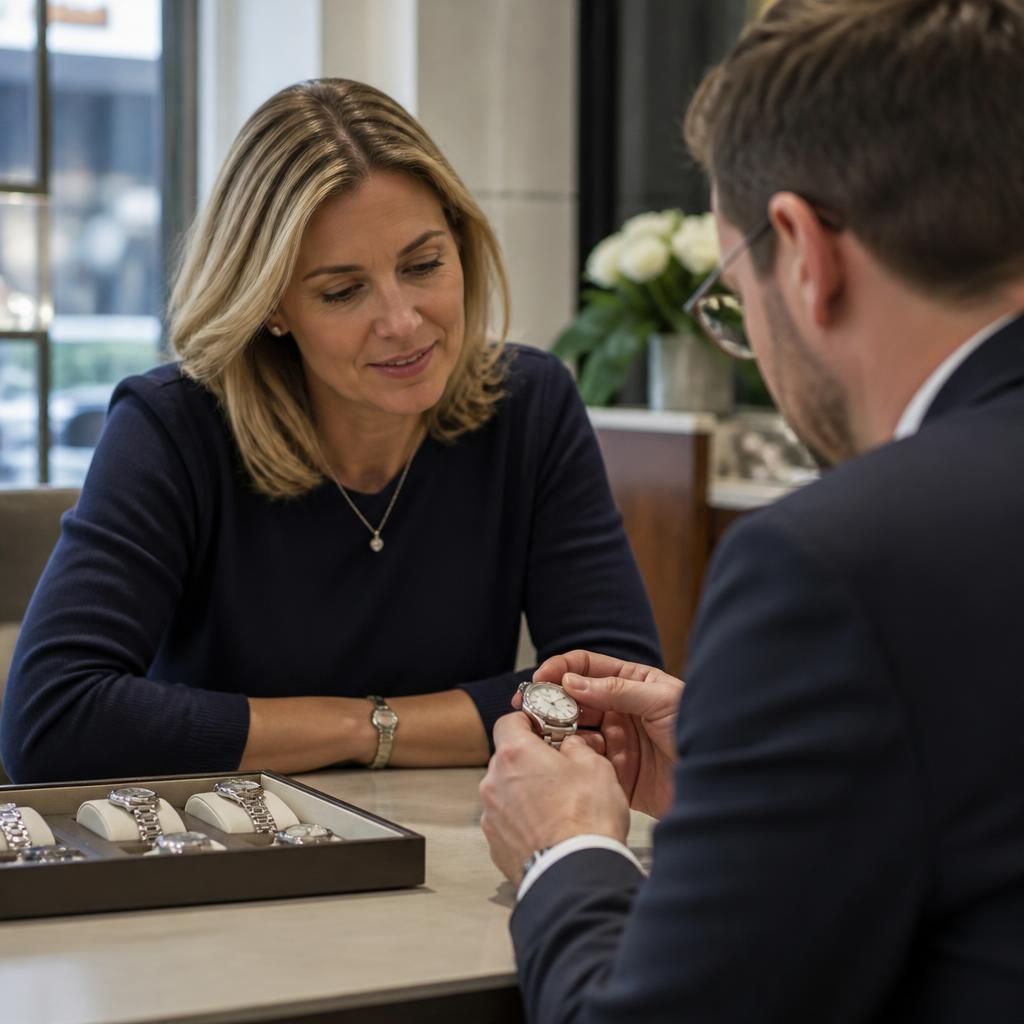
A pre-owned Rolex for women is best viewed as a luxury purchase with potential value retention, rather than a guaranteed investment. Its future resale value depends on the specific model and configuration, authenticity, condition, originality, service history and the price paid.
Before buying, compare like-for-like watches and check that the reference, serial details, dial, hands, bezel, bracelet and clasp are consistent. Original components and clear service documentation can support buyer confidence, while over-polishing, replacement parts, damage or an unexplained history may reduce desirability. An independent inspection can also identify servicing needs that would affect the true cost of ownership.
Choose a watch you are happy to wear and maintain even if its value does not increase. Any future resale strength should be treated as a possible benefit, not the main justification for purchase.