
How do I ensure the condition of a pre-owned Rolex watch for women?
To ensure the condition of a pre-owned Rolex watch for women, inspect the case, crystal, bracelet and dial for wear or damage, then have the movement, water resistance, authenticity and service history checked by a qualified Rolex specialist. Request clear details of any polishing, replacement parts or repairs, together with a written condition report and warranty before buying.
The condition of a pre-owned Rolex watch for women should be assessed through a combination of physical inspection, movement testing, service records and authenticity checks. Examine the case, crystal, bezel, dial, hands, bracelet and clasp, then ask a qualified Rolex specialist to inspect the movement, confirm water resistance where appropriate and provide a written condition report before you buy.
A watch can show light signs of careful use and still be in excellent condition. Conversely, a polished case, attractive photographs or a recently serviced movement do not by themselves confirm that the watch is sound or original. The most reliable assessment considers both the watch’s current condition and whether its components, history and servicing are properly documented.
Inspect the case and lugs
Look closely at the case for dents, deep scratches, corrosion, tool marks and uneven edges. The lugs should retain a consistent shape, with clear transitions between the polished and brushed surfaces. Excessive polishing can soften these edges or make the case appear unusually rounded. Polishing is not automatically a fault, but you should be told whether it has been carried out and whether it has materially altered the original form.
Check the case back and the area around the crown for signs of damage or poor previous repairs. Any engraving should be clear and consistent with the model. Damage around the crown, tube or case-back threads may affect water resistance and can be expensive to correct.
Check the crystal, bezel and dial
The crystal should be free from cracks, chips and distracting scratches. Minor marks may be acceptable on an older watch, while a damaged crystal should normally be replaced before regular wear, particularly if it could allow moisture into the case. Confirm whether the crystal is original or has been replaced, and whether any replacement is an appropriate Rolex specification.
Inspect the bezel for dents, looseness, uneven alignment or excessive wear. On a watch with a rotating bezel, it should operate correctly and hold its intended position. The dial should be clean, evenly finished and properly aligned, with matching hands and hour markers. Look for staining, moisture marks, discolouration, lifting print or dust beneath the crystal. A refinished or replaced dial is not necessarily unacceptable, but it can affect originality and should be disclosed clearly.
Assess the bracelet and clasp
Bracelet condition is particularly important because links and clasps receive frequent wear. Check for stretched or sagging links, excessive movement between links, damaged screws, sharp edges and a clasp that does not close securely. The bracelet should sit comfortably without feeling loose or structurally weak.
Confirm that the bracelet, end links and clasp are suitable for the model and that any additional links are included where available. A replacement bracelet may be perfectly serviceable, but it should be identified rather than presented as original. Inspect the clasp markings and mechanism for signs of inconsistency, damage or an ill-fitting replacement.
Have the movement tested
The movement is the most important part of the watch that cannot be assessed reliably from photographs. A qualified specialist should check its general condition, timekeeping, power reserve, winding, setting functions and operation of any date or other complications. Diagnostic equipment can identify issues such as poor amplitude, excessive beat error or inconsistent rate, although results should be interpreted alongside the movement’s age and service history.
Ask whether the movement has been opened recently and whether the inspection found corrosion, worn components or non-genuine parts. The presence of replacement components does not automatically make a watch unsuitable, but material work should be recorded and explained. A watch that runs today may still require service if its performance is unstable or its lubrication has deteriorated.
Confirm water resistance carefully
Water resistance is not permanent. Seals can age, and previous opening of the case may affect protection even when the watch appears externally sound. Ask whether a pressure test has been completed and when the seals were last replaced. Do not assume that a water-resistant Rolex is suitable for swimming or bathing without appropriate testing and confirmation from a specialist.
If there is any evidence of condensation beneath the crystal, corrosion, staining or a loose crown, treat it as a reason for further investigation. Moisture damage can affect the movement, dial and hands and may not be immediately visible without opening the case.
Review service history and supporting documents
Service invoices, workshop reports and warranty documentation can help establish how the watch has been maintained. Check that the documents relate to the specific watch and, where possible, that the reference and serial details are consistent. Ask what work was completed, which parts were replaced, whether the case was polished and whether water-resistance testing was included.
The absence of service records does not prove that a watch is defective, particularly with older pre-owned pieces. However, it increases the importance of an independent inspection and should be reflected in the advice you receive about likely maintenance. A clear service history is useful evidence, but it should not replace a current condition assessment.
Verify authenticity and originality
Authenticity should be confirmed by examining the watch as a complete item rather than relying on a serial number, box or certificate alone. A specialist can compare the case, movement, dial, hands, bracelet, engravings and construction with the correct specifications for the reference. They can also identify replaced, modified or aftermarket components.
Be cautious if the seller will not provide detailed photographs, avoids questions about parts or service work, offers documentation that does not correspond with the watch, or applies pressure to complete the purchase without inspection. Packaging and papers can support a purchase, but they are not proof that every component of the watch is genuine or original.
Ask for a written condition report and warranty
Before committing to a purchase, request a written description covering the cosmetic condition, movement performance, water-resistance test, service work, replacement parts, polishing and any known faults. The report should distinguish between original, serviced and replaced components wherever this is known.
Read the warranty terms carefully. Check what is covered, how long cover lasts, whether water damage and accidental damage are excluded, and where future repairs must be carried out. A reputable aftercare arrangement should also explain how servicing, resizing, repairs and valuation queries will be handled.
Use a practical buying checklist
- Compare the photographs with the actual watch, including the case, dial, bracelet and clasp.
- Ask for the exact model and reference details, together with any known service information.
- Check for dents, corrosion, deep scratches, excessive polishing and softened case edges.
- Inspect the crystal, bezel, crown, dial, hands, bracelet and clasp for damage or replacement parts.
- Request movement testing and a pressure test where relevant.
- Confirm that the watch is authentic and that any non-original components are disclosed.
- Obtain a written condition report, warranty and clear returns or inspection terms before purchase.
The safest approach is to judge the pre-owned Rolex on documented condition, not age or appearance alone. If the case, bracelet and movement have been professionally assessed, the service history is explained and any replacement parts or previous polishing are disclosed, you can make a properly informed decision about whether the watch is right for you and what future care it may require.
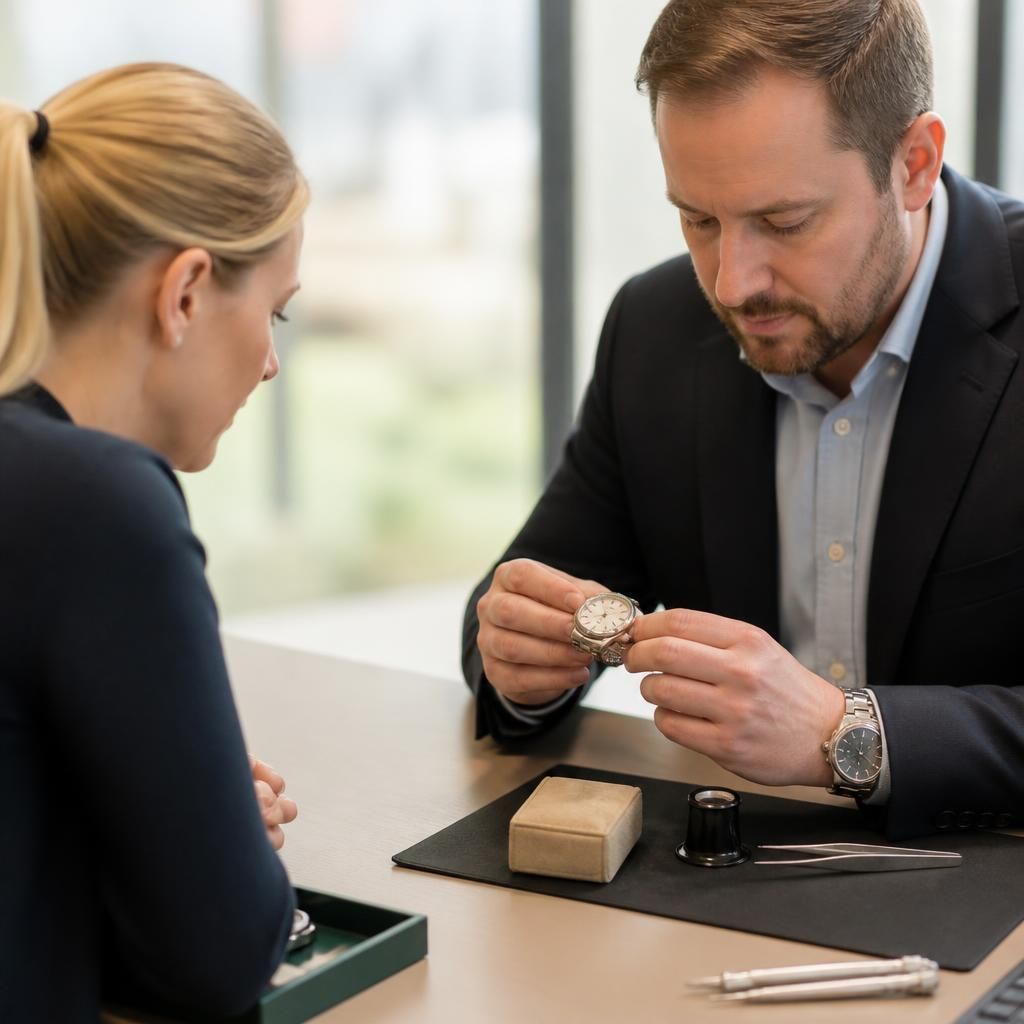
The bracelet and clasp are important indicators of a pre-owned Rolex watch for women’s condition because they experience frequent contact and movement. Check for stretched links, excessive looseness, damaged screws, sharp edges and a clasp that does not close securely. The bracelet should feel structurally sound and sit comfortably on the wrist rather than sag noticeably.
Also confirm that the bracelet, end links and clasp are appropriate for the specific Rolex reference. A replacement bracelet may be perfectly functional, but it should be identified clearly because it can affect originality and value. Ask whether spare links are included, and have a specialist inspect the clasp mechanism and markings for signs of damage or an ill-fitting replacement.