
What should I inspect in a pre-owned Rolex watch to ensure its high-quality craftsmanship and longevity?
When inspecting a pre-owned Rolex watch, focus on the authenticity of its components, the functioning condition of the movement, and the state of the case and bracelet. Carefully examine the dial, date wheel, and crown for correct detailing and signs of wear, ensuring each element reflects genuine Rolex craftsmanship. Pay attention to the serial and model numbers, as well as the watch’s service history, to verify its provenance and longevity.
Inspecting a pre-owned Rolex watch for high-quality craftsmanship and longevity requires a detailed examination of its components, the movement’s performance, and the condition of the case and bracelet. Start by confirming the authenticity of the watch. Authentic Rolex timepieces have distinct characteristics such as engravings on the inner bezel, precise detailing on the dial, and a chronometer certification on the movement, which assures accuracy. It’s important to verify the serial and model numbers. These are typically engraved between the lugs and should match the documentation provided with the watch.
Evaluate the state of the movement by listening to its rhythm and checking its consistency. A genuine Rolex exhibits a smooth, continuous sweeping motion of the second hand, indicative of its automatic movement. Additionally, the sound should be subtle yet consistent, without any rattling. Documented service history is crucial, as regular maintenance ensures longevity, even for pre-owned timepieces. It’s advisable to investigate any recent servicing and whether it was performed by a certified Rolex service centre.
Next, scrutinise the dial, date wheel, and crown. The dial should have clear, precise markings and a high-quality finish that typifies Rolex’s renowned craftsmanship. The date wheel, when present, should change precisely around midnight. The crown, often featuring the signature Rolex logo, should screw down smoothly yet securely, ensuring the watch’s water resistance.
The case and bracelet deserve attention as well. Examine the case for any signs of over-polishing, which can diminish definition and unique bevels characteristic of Rolex designs. The bracelet should feel solid, with tight links that don’t easily sag or unravel. Though minor scratches are typical in pre-owned models, excessive wear may indicate improper handling.
Finally, a thorough inspection of the provenance and documentation, including any service records, box, and previous purchase receipts, can solidly confirm the watch’s history and ownership authenticity. Engaging in a detailed analysis of these factors not only secures an authentic purchase but also supports the watch’s durability and value over time. For those uncertain or less familiar with certain elements, acquiring expert advice or assistance from trusted establishments like Steven Charles Quance can provide peace of mind and ensure an informed investment.
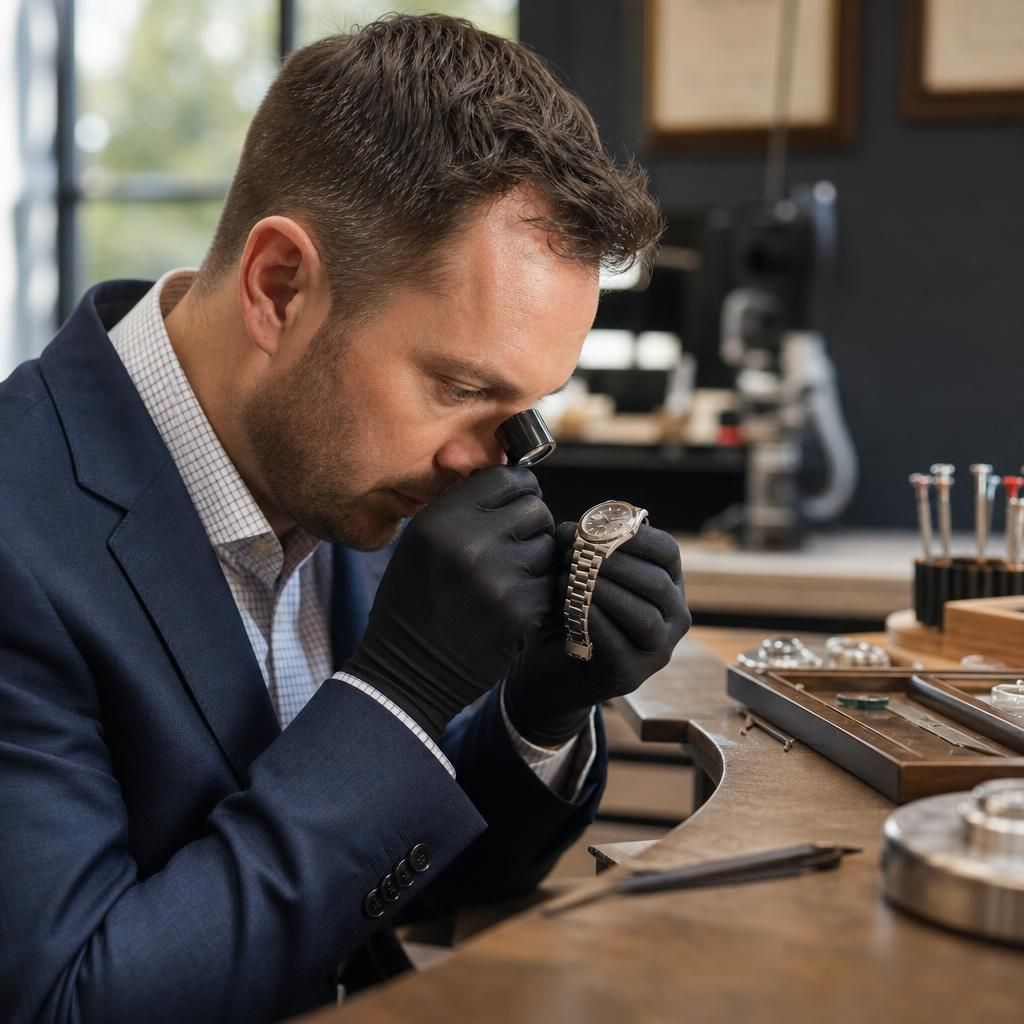
One of the fundamental aspects to inspect in a pre-owned Rolex watch is the condition and authenticity of its movement. The movement is essentially the heart of the watch, and Rolex is renowned for its high precision, certified chronometer movements, which uphold the brand’s reputation for excellence. To examine the movement, observe the smoothness of the second hand’s motion, which should exhibit a continuous sweep rather than a ticking action, reflecting Rolex’s distinctive automatic mechanism. It’s also important to listen for the movement’s operation; it should produce a consistent, gentle ticking sound without any unusual noises such as rattling, which could indicate internal issues.