
What materials are used to craft a high-quality personalised mum birthstone necklace?
A high-quality personalised mum birthstone necklace is typically crafted from precious metal such as 9ct or 18ct gold, white gold, rose gold or platinum, with genuine birthstones securely set into the pendant. The chain and fittings should match the chosen metal, while durable settings and responsibly sourced gemstones help ensure the necklace is suitable for meaningful, long-term wear.
A high-quality personalised mum birthstone necklace is usually made from a precious metal, genuine birthstones and a chain with compatible fittings. The most suitable materials depend on the intended style, frequency of wear, personal preferences and budget, but the necklace should be durable, securely assembled and clearly identified through appropriate hallmarking.
Precious metals
Gold is a common choice for personalised pendants because it is attractive, workable and available in several colours:
- 9ct gold contains a lower proportion of pure gold combined with other metals, making it a practical and relatively durable option for regular wear.
- 18ct gold has a higher gold content and a richer colour. It is valued for its precious-metal content, although its greater softness means the pendant and settings still need careful design.
- White gold is alloyed to produce a pale appearance and may have a rhodium finish. This finish can wear gradually, particularly on areas subject to friction, so it may require professional refreshing over time.
- Rose gold contains copper within the alloy, creating its warm pink tone. The colour runs through the metal rather than being a surface coating.
- Platinum is naturally white, dense and highly resistant to tarnishing. It is often selected for premium pieces and for settings where strength and long-term security are priorities.
Silver can also be used for a personalised mum birthstone necklace, usually as sterling silver. It offers a bright appearance at a more accessible price, but it is more prone to tarnishing and can mark more readily than gold or platinum. It therefore benefits from regular cleaning and suitable storage.
Birthstones and other gemstones
The stones may be natural gemstones, laboratory-created stones or, in some designs, coloured glass or synthetic alternatives. Genuine birthstones are selected for their colour, clarity, cut and suitability for the pendant. Common examples include garnet, amethyst, aquamarine, diamond, emerald, ruby, sapphire, peridot, opal, citrine and turquoise.
These stones do not all have the same durability. Sapphire and ruby are well suited to regular wear, while softer or more delicate stones such as opal, pearl, turquoise and some varieties of topaz need greater protection from knocks, chemicals, heat and sudden changes in temperature. A jeweller should take the stone’s properties into account when recommending the setting and advising on care.
Some gemstones are routinely treated to improve their colour, clarity or stability. Treatments are not automatically a sign of poor quality, but they should be disclosed because they can affect cleaning methods, exposure to heat and future repairs. For a meaningful family necklace, it is also useful to confirm whether each stone is natural, treated or laboratory-created before commissioning the piece.
Settings and pendant construction
The setting holds each birthstone in place and protects it from damage. Bezel settings surround the edge of a stone with metal and provide good protection, while claw or prong settings allow more light to reach the gemstone but leave more of its surface exposed. Bead, channel and flush settings can be useful where a smooth profile is preferred for everyday wear.
Personalised pendants may include engraved names, initials, dates, family symbols or several stones. The metal needs to be sufficiently substantial around the engraving, bail and stone settings to resist distortion. The bail, which connects the pendant to the chain, should be securely attached and large enough for the chain to move freely without excessive friction.
Chains and fittings
The chain should normally be made from the same metal as the pendant to create a consistent appearance and reduce differences in wear or colour. Chain styles such as trace, curb, belcher and box chains offer different balances of flexibility, strength and visual weight. A heavier pendant requires a suitably robust chain and a reliable clasp rather than a fine chain chosen only for appearance.
Important fittings include the clasp, jump rings and chain end. These small components should be properly closed, securely soldered where appropriate and proportionate to the pendant. Weak or poorly finished fittings can result in loss of the necklace even when the pendant itself is well made.
Hallmarking and responsible material choices
For precious-metal jewellery, hallmarking provides an independent indication of the metal standard and helps confirm what the piece is made from. The relevant marks and documentation should be checked when the necklace is supplied. If ethical sourcing is important, ask about the origin of the gemstones and the supplier’s approach to responsible precious metals. Clear information is preferable to assumptions based on appearance alone.
The best material combination is one that matches the wearer’s lifestyle. For frequent use, a durable metal, a secure setting and a birthstone appropriate for everyday contact are sensible choices. For occasional wear, a more delicate stone or detailed design may be suitable, provided it is stored and cleaned correctly. Before production, confirm the metal, gemstone type and any treatments, engraving details, chain style and aftercare requirements so the finished necklace meets both its personal purpose and practical demands.
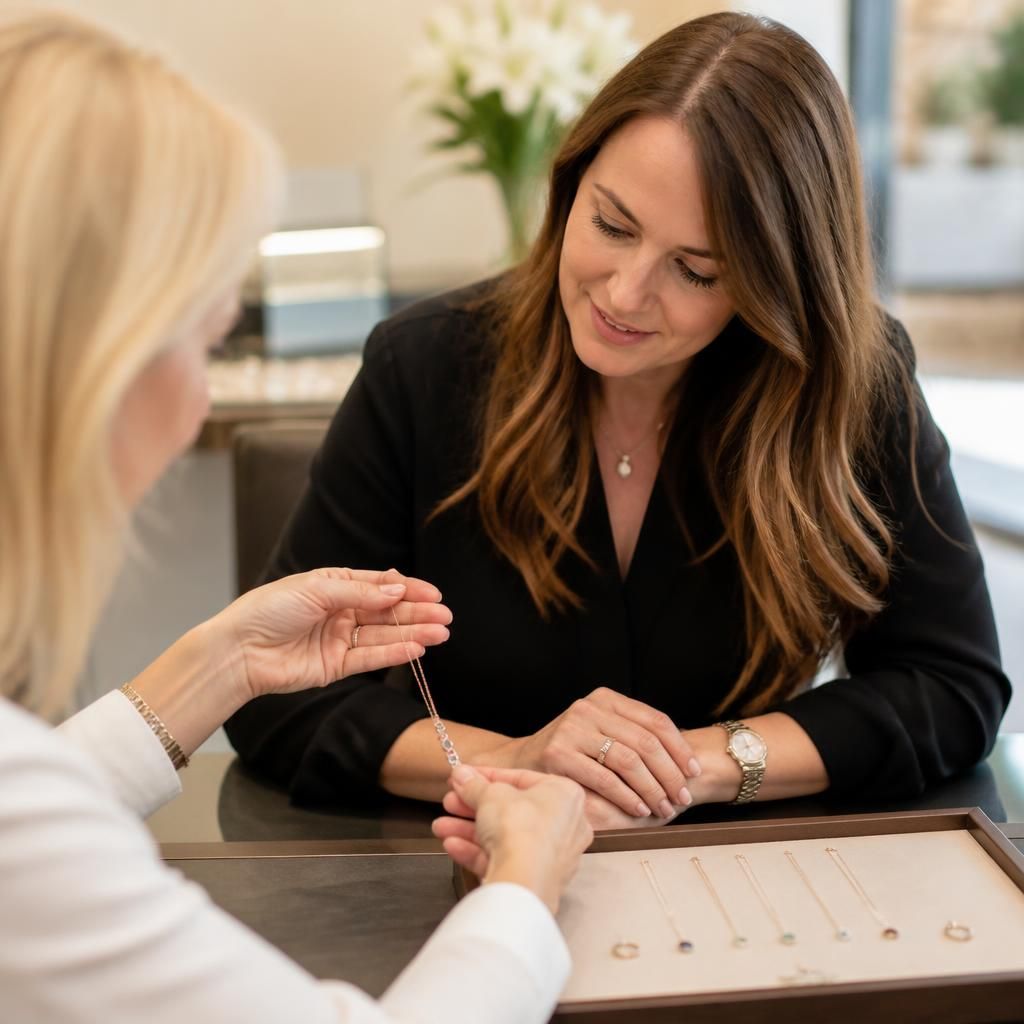
The gemstone’s durability is an important material choice in a personalised mum birthstone necklace, particularly when it will be worn regularly. Sapphire and ruby are generally well suited to everyday use, while opal, pearl, turquoise and some topaz varieties need greater protection from knocks, chemicals and heat.
The setting should reflect the stone’s characteristics. A bezel setting surrounds the gemstone with metal and offers useful protection, whereas claw or prong settings expose more of the stone to light and contact. Before commissioning the necklace, confirm whether each birthstone is natural, laboratory-created or treated, as this can affect suitable cleaning and aftercare.
Discuss the right materials for your personalised mum birthstone necklace
Discuss your preferred metal, birthstones, setting and chain with Steven Charles Quance before commissioning your personalised mum birthstone necklace. We can advise on suitable materials, durability and aftercare for the finished piece.