
Are there limitations on the design complexity for fine silver pendants?
Design complexity for fine silver pendants is influenced by the inherent properties of silver, which allow for intricate detailing but also impose certain limitations. While silver is a versatile metal that accommodates diverse designs, extremely intricate patterns or overly thin structures can compromise the integrity of the piece, affecting its durability and wearability. Understanding these constraints helps ensure the creation of a stunning yet enduring pendant.
Fine silver, appreciated for its lustrous appearance and remarkable malleability, supports a wide range of design possibilities in pendant crafting. However, unlike other metals, its softness can pose certain challenges, particularly when considering design complexity. While intricate detailing can be achieved, excessively complex designs or those incorporating very thin components may risk structural weaknesses, potentially affecting the durability of the pendant over time.
A key factor to consider is the balance between aesthetic appeal and practical functionality. For instance, a design with too many delicate filigree elements might be visually striking yet impractical for everyday wear, as these could easily snag or bend. It’s advisable to consult with design specialists, such as those at Steven Charles Quance, who can provide expert guidance on achieving an optimal compromise between complexity and robustness.
Phase transitions of design elements from a digital blueprint to a tactile piece also highlight potential limitations. During this transition, certain detailed effects may be lost or require adjustment to maintain the silver’s integrity. For those seeking particularly elaborate pieces, integrating supportive design elements, like thicker base structures or strategically placed reinforcements, can enhance strength without compromising the intended sophistication.
The ability to seamlessly integrate gemstones into the design adds another dimension to the creative process. While fine silver is an excellent medium for such embellishments, heavy or large stones demand a carefully considered setting to prevent damage or loss, as fine silver alone might not provide sufficient support.
Moreover, due to fine silver’s susceptibility to tarnish, a complex pendant design requires thoughtful consideration of surface finishes that can mitigate tarnishing while maintaining the design’s intricacy. Regular maintenance and professional aftercare services further help preserve these unique pieces, ensuring they remain as captivating as when first crafted.
Overall, while there are certainly limitations imposed by the inherent properties of fine silver, innovative approaches and expert craftsmanship allow for the creation of stunning, unique pendants that marry beauty with durability. Clients are encouraged to engage with skilled jewellers at Steven Charles Quance, who can provide detailed consultations tailored to both aesthetic wishes and practical needs, transforming imaginative visions into enduring reality.
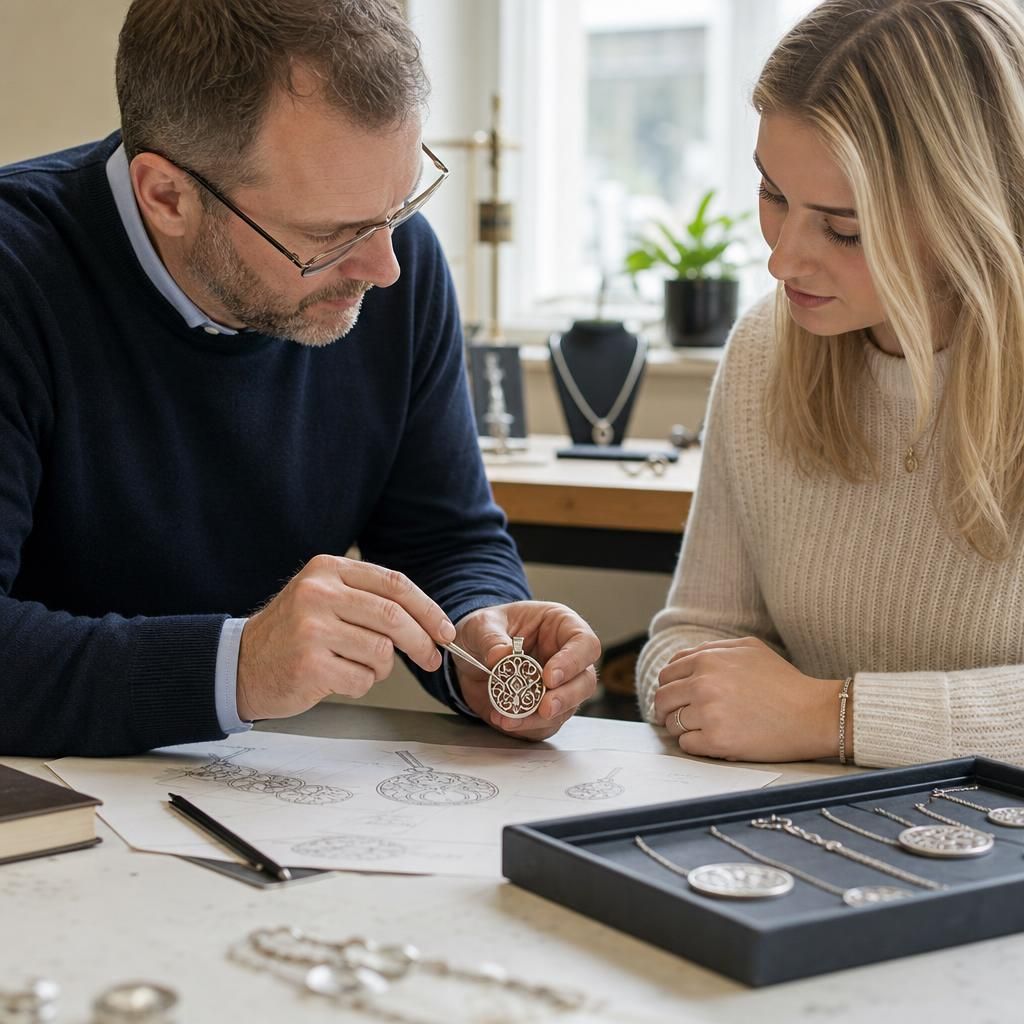
The design complexity of fine silver pendants is influenced by the metal’s physical characteristics, especially its softness and malleability. Because fine silver bends and shapes with relative ease, it can achieve a high degree of intricate detail, allowing for creative and customised designs. However, this same flexibility means that overly delicate structures or excessively thin areas in a design may lack the necessary strength for long-term durability. To mitigate these potential issues, designers often incorporate specific techniques such as reinforcing thin sections or adding structural elements that enhance durability without sacrificing elegance. For customers desiring intricate designs, collaboration with expert jewellers at Steven Charles Quance can help navigate these constraints, ensuring that the final piece is both aesthetically pleasing and robust enough for regular wear.