
Can personalised laser engraving be done on all types of jewellery?
Personalised laser engraving can be carried out on many types of jewellery, including suitable gold, platinum, silver and some steel pieces, but it is not appropriate for every material or design. The jewellery’s composition, surface shape, finish and condition should be assessed first to confirm that engraving will produce a clear, lasting result without affecting the piece.
Personalised laser engraving can be carried out on many jewellery materials, but it is not suitable for every piece. Gold, platinum, silver and some stainless-steel jewellery can often be engraved successfully, provided the item has a suitable surface, sufficient thickness and a finish that will not be damaged by the process. Each piece should be assessed individually before work begins.
Laser engraving uses a focused beam to mark the surface of the jewellery with controlled precision. The result depends on more than the metal alone. The composition of the item, its hardness, plating, shape, thickness, existing condition and the position of the engraving all affect whether a clear and durable finish can be achieved.
Materials that are often suitable
- Gold: yellow, white and rose gold can generally be engraved. The alloy, surface finish and colour may influence the contrast and appearance of the marking.
- Platinum: platinum is well suited to precise engraving and is commonly considered for wedding rings and other frequently worn pieces.
- Silver: sterling silver can usually be engraved clearly, although its softer surface may show wear more readily in areas exposed to regular friction.
- Stainless steel: some steel jewellery and watch components can be engraved, but the grade of steel and any protective coating must be checked first.
- Titanium and other modern metals: these may be possible to engrave, but results vary according to the specific alloy and surface treatment. A suitability assessment is essential.
Materials and finishes requiring particular care
Plated jewellery can present a limitation. Gold-plated, rhodium-plated, vermeil and other coated items may have only a thin decorative layer over a different base metal. Engraving can penetrate or disturb that layer, leaving an uneven colour or exposing the metal beneath. If the piece is intended to retain its original coating, laser engraving may not be the right option.
Blackened, oxidised, enamelled, lacquered or otherwise treated surfaces also need careful examination. The laser may alter the treatment around the engraved area, and the contrast may not be predictable. In some cases, the finish can be removed or restored, but this depends on the construction of the jewellery and the desired result.
Jewellery containing non-metal materials, such as resin, plastic, ceramic, wood or certain composite materials, cannot automatically be treated in the same way as precious metal. Some can be marked with specialist equipment, while others may melt, crack, discolour or release unwanted fumes. The exact material must be identified before any decision is made.
Gemstones and decorative details
Gemstones are not normally engraved as part of a standard jewellery personalisation service. Some stones can be marked by specialist methods, but this is a separate process and carries different risks. Heat, vibration and concentrated energy may affect certain stones, treatments or settings, so engraving should normally be positioned on a separate metal area.
Care is also required where the proposed inscription is close to a stone, setting, milgrain edge, piercing, fine shoulder or delicate decorative feature. The item may need to be secured in a particular position, and the available space may restrict the size, font or depth of the design.
Shape and construction are just as important as the material
A broad, smooth and reasonably flat surface generally provides the clearest result. Curved wedding bands can often be engraved, but the curvature affects the positioning and legibility of the inscription. Very narrow bands, heavily domed rings and pieces with an irregular profile may not provide enough room for a long message or intricate design.
Hollow jewellery, very thin sections and lightweight chains require particular caution. Engraving that is too deep could weaken the item or expose an internal cavity. Flexible links, articulated bracelets and components that move against one another may also be unsuitable for a prominent inscription because normal movement can affect the finish.
Existing damage should be considered before engraving. Deep scratches, dents, porosity, previous repairs or worn plating can interrupt the appearance of the lettering. In some cases, polishing or repair before engraving will improve the result; however, polishing can also remove an existing hallmark, engraving or intentional surface finish, so it should only be undertaken after the piece has been assessed.
Watches and watch components
Personalised engraving may be possible on a watch case back, clasp, buckle or other suitable component, depending on the metal and construction. The watch must be protected from dust, heat and movement during the process, and components such as glass, seals, mechanisms and water-resistance features must not be compromised. Engraving directly onto a watch may therefore require a more detailed assessment than engraving a plain ring or pendant.
It is also important to distinguish between engraving a removable component and engraving the main case. A clasp, case back or plaque may offer a suitable surface, while a highly curved case, coated finish or finely detailed design may not. The proposed position should be confirmed before the inscription is prepared.
How suitability is assessed
- The jewellery is examined to identify the metal, coating, construction and condition.
- The proposed engraving position is checked for usable space, curvature, thickness and proximity to stones or settings.
- The wording, lettering style, symbols and intended size are reviewed to confirm that they can be reproduced clearly.
- The likely contrast and appearance are considered in relation to the existing finish of the jewellery.
- Where appropriate, an alternative position, simpler design or different personalisation method is discussed before proceeding.
Laser engraving is often preferred because it can produce precise lettering and fine details with minimal physical contact. It is not, however, a way to engrave every material or overcome an unsuitable surface. A skilled assessment helps prevent blurred lettering, inconsistent depth, damage to a coating or an inscription that is too small to read comfortably.
If a piece is unsuitable for laser engraving, alternatives may include traditional hand engraving, machine engraving, a removable engraved plaque, engraving on a different component or creating a new bespoke item with a purpose-designed engraving area. The best option depends on the jewellery’s material, how it will be worn and the permanence and appearance required.
Before confirming personalised engraving, bring the item for inspection or provide clear details of its material, finish and intended engraving position. This allows the wording and layout to be checked properly and ensures that the chosen method is appropriate for the piece rather than relying on a general assumption that all jewellery can be engraved.
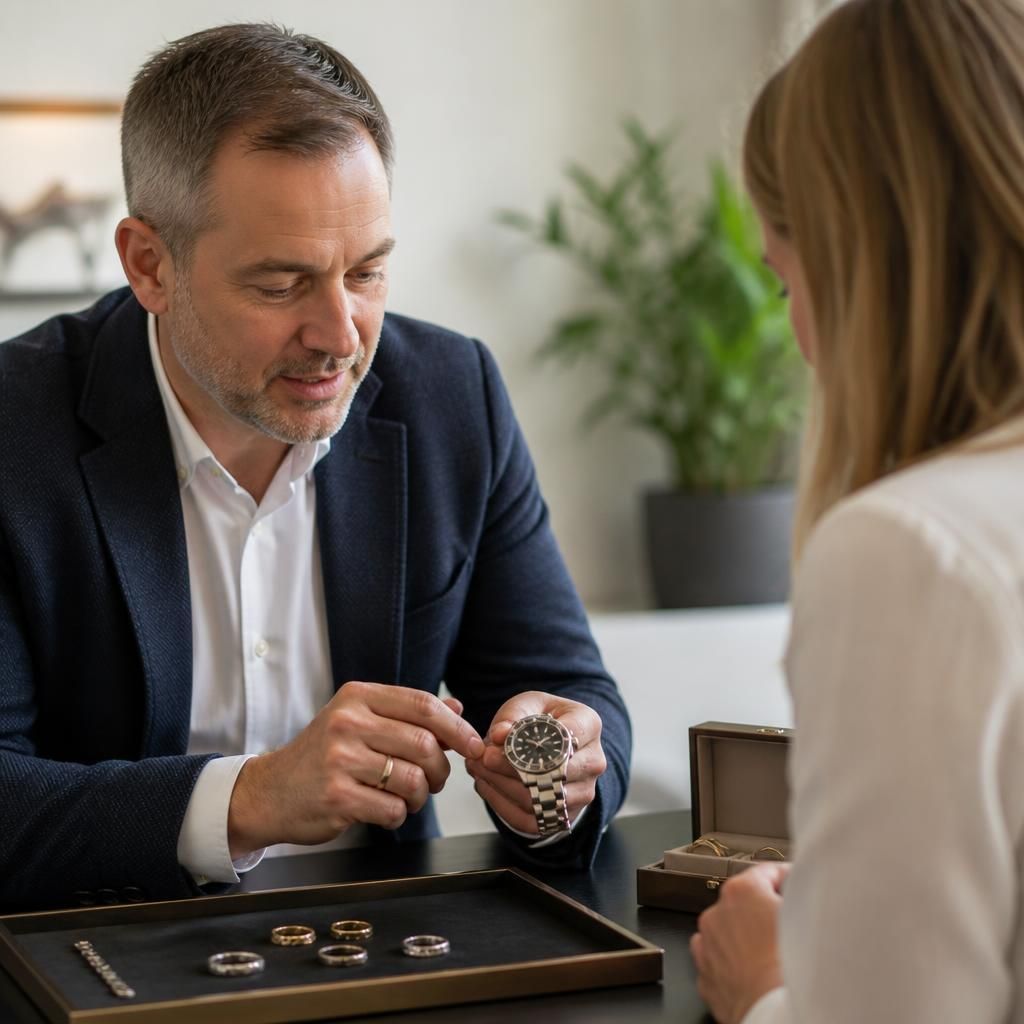
Personalised laser engraving is suitable for many solid-metal jewellery pieces, but not every item. The material, surface coating, thickness and shape must be checked first, as engraving can affect plated, enamelled, lacquered or heavily treated finishes.
Gold, platinum, sterling silver and some stainless-steel jewellery can often be engraved clearly when there is a smooth, stable surface. By contrast, thin plating may be pierced by the laser, while hollow or very delicate sections may not safely support engraving. Gemstones and decorative settings also need protection, so the inscription is normally placed on a separate area of metal.
Each item is assessed before the wording and layout are confirmed. If the proposed surface is unsuitable, an alternative position, removable plaque or traditional engraving method may provide a clearer and more durable result.