
Are sterling silver personalised bracelets suitable for people with sensitive skin?
Sterling silver personalised bracelets are generally suitable for sensitive skin, provided the silver alloy and any plating or fittings are nickel-free. However, people with a known metal allergy may react to trace metals, so choose a bracelet with clearly specified materials and stop wearing it if irritation develops.
Yes, sterling silver personalised bracelets are generally suitable for people with sensitive skin, provided the bracelet is made with a suitable alloy and does not contain nickel in the parts that touch the skin. Sterling silver is usually composed of mostly pure silver with a small amount of another metal, commonly copper, to improve strength. The silver itself is not normally the cause of irritation; reactions are more often linked to nickel, plating, solder, clasps or other fittings.
When choosing a bracelet, ask for the precise material specification rather than relying only on the description “silver”. A piece marked 925 has the recognised sterling silver standard, but the mark does not by itself confirm that every component is nickel-free. Clasps, jump rings, charms and engraved plates may be made or finished separately, so these details should also be checked. If you have a diagnosed nickel allergy, request nickel-free components and explain your requirements before the bracelet is made.
Surface treatments can also affect comfort. Rhodium or other plating may provide a barrier between the skin and the underlying alloy, but plating can wear through with regular contact, perspiration and friction. Once exposed, the base metal may cause a reaction if it contains an allergen. Gold plating should not automatically be assumed to be suitable either, as its underlying metal and the quality of the plating are both relevant.
Personalisation itself does not usually make sterling silver less suitable for sensitive skin. Engraving, stamping and other lettering methods alter the surface of the bracelet rather than introducing a different metal. However, deeply textured designs, sharp edges or poorly finished recesses can trap moisture, soap and residue, which may lead to irritation. A smooth, well-polished design with a comfortable clasp is generally easier to wear and clean.
For the most comfortable fit:
- Choose a bracelet with clearly stated sterling silver and nickel-free components.
- Ask which metal is used for the clasp, fittings, solder and any plating.
- Select a smooth finish and avoid edges that rub repeatedly against the wrist.
- Allow enough room for movement without making the bracelet loose enough to chafe.
- Remove the bracelet before bathing, swimming, exercising or applying creams and perfumes.
- Clean and dry it regularly with a soft, lint-free cloth, paying attention to the clasp and engraved areas.
Skin sensitivity can also be caused by trapped sweat, detergent, cosmetics or friction rather than a true metal allergy. If redness, itching, swelling, soreness or blistering develops, remove the bracelet and wash the area gently. Do not continue wearing it to test whether the reaction settles. Seek medical advice if symptoms are severe, persistent or recurring, particularly if you have a known contact allergy. A healthcare professional or dermatologist can help identify the cause through appropriate allergy assessment.
If a reaction occurs, the bracelet should be assessed rather than simply polished or replated. The offending component may be replaceable, although this depends on the design and construction. Where there is a strong allergy history, provide those details during the consultation so the metal choices, finish and fittings can be considered before personalisation begins.
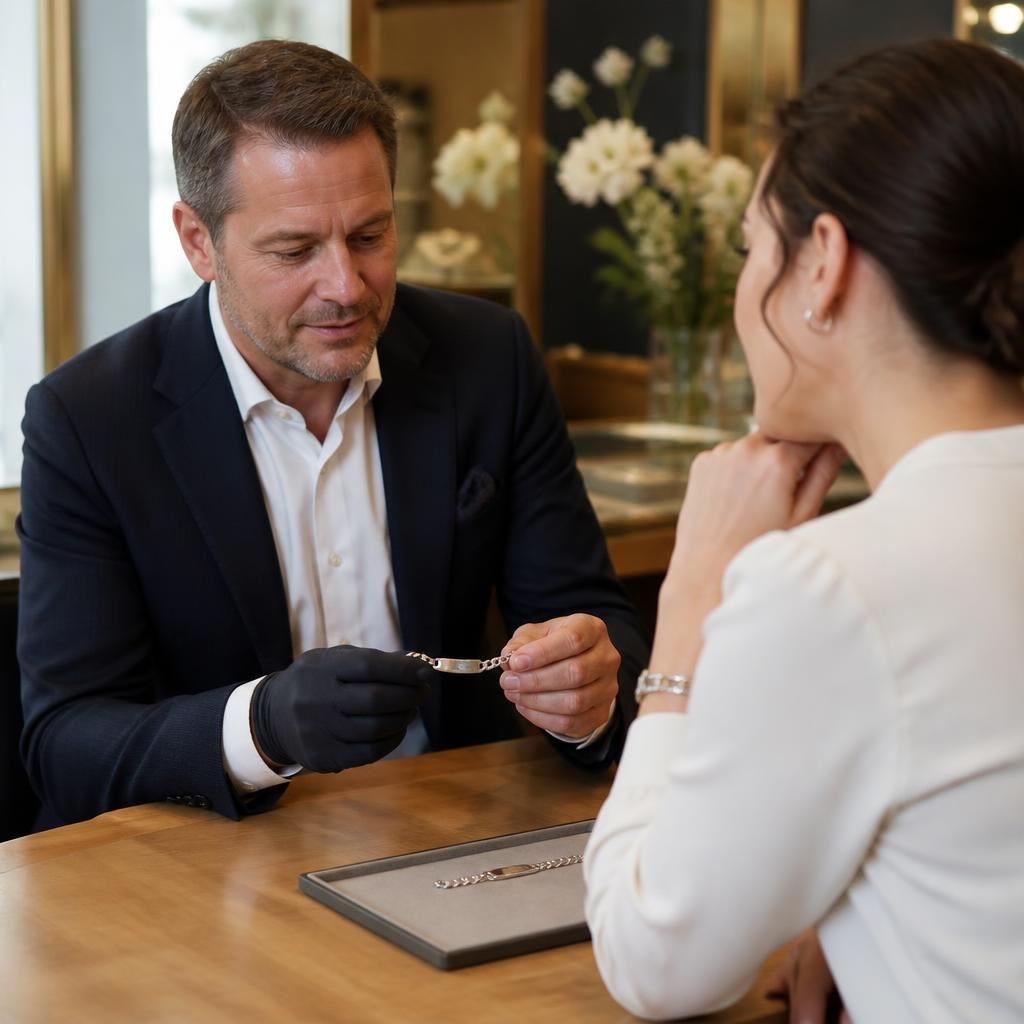
Sterling silver personalised bracelets are usually comfortable for sensitive skin when the bracelet and its fittings are nickel-free. Although a 925 hallmark confirms the silver standard, it does not necessarily confirm the composition of the clasp, jump rings, solder or other attached parts.
Before ordering, ask for the materials used throughout the bracelet, not just the engraved plate or chain. Smooth edges and a comfortable fit can also reduce irritation caused by friction, trapped moisture or residue. Remove the bracelet if redness, itching or soreness develops, and seek medical advice if the reaction persists.