
What are the differences between gold, white gold, and platinum wedding bands?
When selecting a wedding band, understanding the differences between gold, white gold, and platinum is crucial. Gold wedding bands are known for their classic yellow hue and malleability, making them a popular choice. White gold offers a contemporary look with added durability, achieved through alloying gold with metals like palladium and nickel. Platinum, on the other hand, is renowned for its remarkable strength, natural white finish, and hypoallergenic properties, often making it the premium option for those seeking long-lasting elegance.
When choosing a wedding band, it is essential to understand the distinct qualities and characteristics of gold, white gold, and platinum to make an informed decision that aligns with your preferences and lifestyle. Gold, particularly yellow gold, is appreciated for its timeless appeal and warm tones. It is composed of pure gold mixed with other metals like copper and zinc, which influence its strength and colour depth. This classic material is highly treasured for its historical significance and is often chosen for its symbolic value and classic appearance.
White gold, meanwhile, provides a modern twist to traditional gold bands. Created by alloying yellow gold with metals such as palladium or nickel, white gold showcases a bright, silvery sheen reminiscent of platinum. Its durability is slightly enhanced compared to yellow gold, but it does require periodic rhodium plating to maintain its luster. This metal is ideal for those who prefer a contemporary aesthetic without straying too far from the gold spectrum.
Platinum stands out for its unique attributes. As one of the rarest and most durable metals, platinum is renowned for its superior strength and weight, offering a reassuringly robust choice for wedding bands. Its naturally white colour ensures it retains its shiny finish without needing additional plating. Platinum is also hypoallergenic, making it an excellent choice for those with sensitive skin. However, it is worth noting that platinum bands tend to be more expensive than gold and white gold options due to their density and purity.
Ultimately, the decision between gold, white gold, and platinum wedding bands should take into account personal style, budget, and desired longevity. Each material offers distinct benefits and requires varying degrees of maintenance, so consider what aligns best with your lifestyle. At Steven Charles Quance, we are committed to helping you navigate these options with confidence, ensuring you select a wedding band that embodies both your personal taste and the shared life it represents.
Differences in Colour and Composition
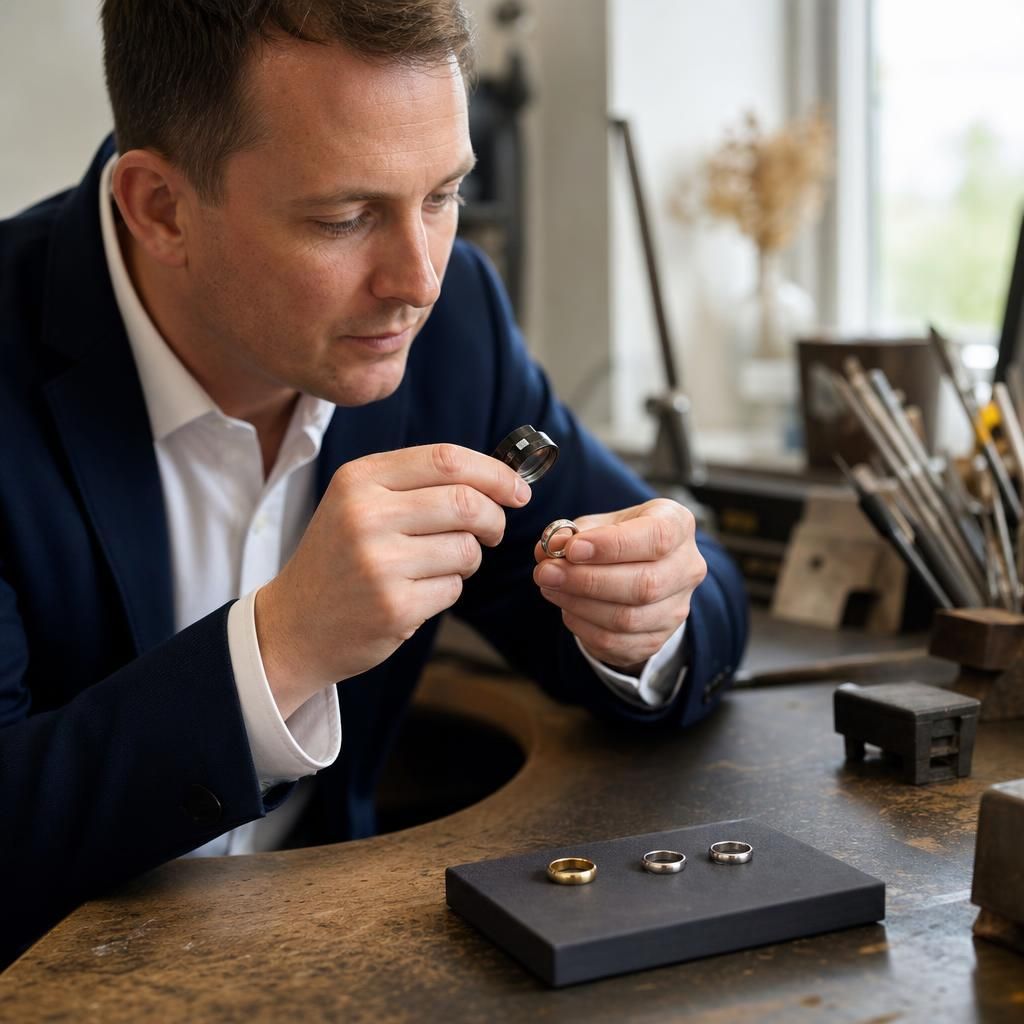
The primary differentiator between gold, white gold, and platinum wedding bands is their colour and composition. Gold, with its characteristic yellow hue, derives its colour from the pure gold content mixed with alloy metals like copper and zinc. The proportion of these metals determines the warmth and depth of the yellow tone. In contrast, white gold is achieved by alloying gold with palladium or nickel, giving it a silvery appearance. It mimics the look of platinum but typically requires rhodium plating to maintain its brightness over time. Platinum, distinctively, offers a naturally white colour that does not tarnish or require additional plating, due to its innate characteristics. This makes it a preferred choice for those seeking a low-maintenance but highly polished look.