
How does the carat weight of a diamond impact its overall value and appearance?
The carat weight of a diamond directly impacts both its value and appearance, largely because carat refers to the physical weight of the diamond. Typically, as a diamond’s carat weight increases, so does its price owing to its rarity. Larger diamonds are rarer and more sought after, leading to higher costs. Additionally, greater carat weight often enhances the visual impact of a diamond, making it a centrepiece in jewellery design. However, the appearance is also influenced by factors such as cut, clarity, and colour, which together with carat, determine the overall brilliance and appeal of the diamond.
The carat weight of a diamond significantly impacts its overall value and appearance, serving as a primary measure of its size rather than its quality. Carat weight is a unit of measurement that directly correlates with the physical heaviness of the diamond, and it is one of the ‘Four Cs’ that determine the gemstone’s worth. As carat weight increases, the rarity of compatible stones among natural diamonds also grows, consequently elevating the price. Larger diamonds are scarcer in nature, and this rarity contributes to their higher market value.
Beyond value, the carat weight affects the diamond’s physical appearance, contributing to its perceived grandeur and presence in a piece of jewellery. Often, customers seeking a diamond for an engagement ring may find that a heavier carat weight enhances the visual impact, making the diamond a focal point. It’s important, though, to understand that carat weight alone doesn’t determine the diamond’s brilliance or fire. Other crucial elements such as cut, clarity, and colour interact with carat weight to shape the diamond’s aesthetic appeal. For example, an exquisitely cut smaller diamond can exhibit greater brilliance than a larger stone with inferior cut quality.
When considering a diamond purchase, especially for bespoke engagement rings, it’s beneficial to balance carat weight with other quality factors to ensure maximum visual appeal and value for money. Bespoke designs allow you to plan based on your preferences and priorities, whether that’s a focus on size or a harmonious blend of size and quality. As part of your journey with a remarkable jeweller like Steven Charles Quance, you are afforded personalised guidance to decipher these complexities based on first-hand expert knowledge.
Ultimately, the right carat weight for your jewellery should align with your individual expectations and aesthetic desires, taking into account the interplay of the Four Cs. For a piece as significant as an engagement ring, where both emotion and investment converge, understanding these nuances aids in making an informed choice that resonates with your personal, stylistic, and ethical values.
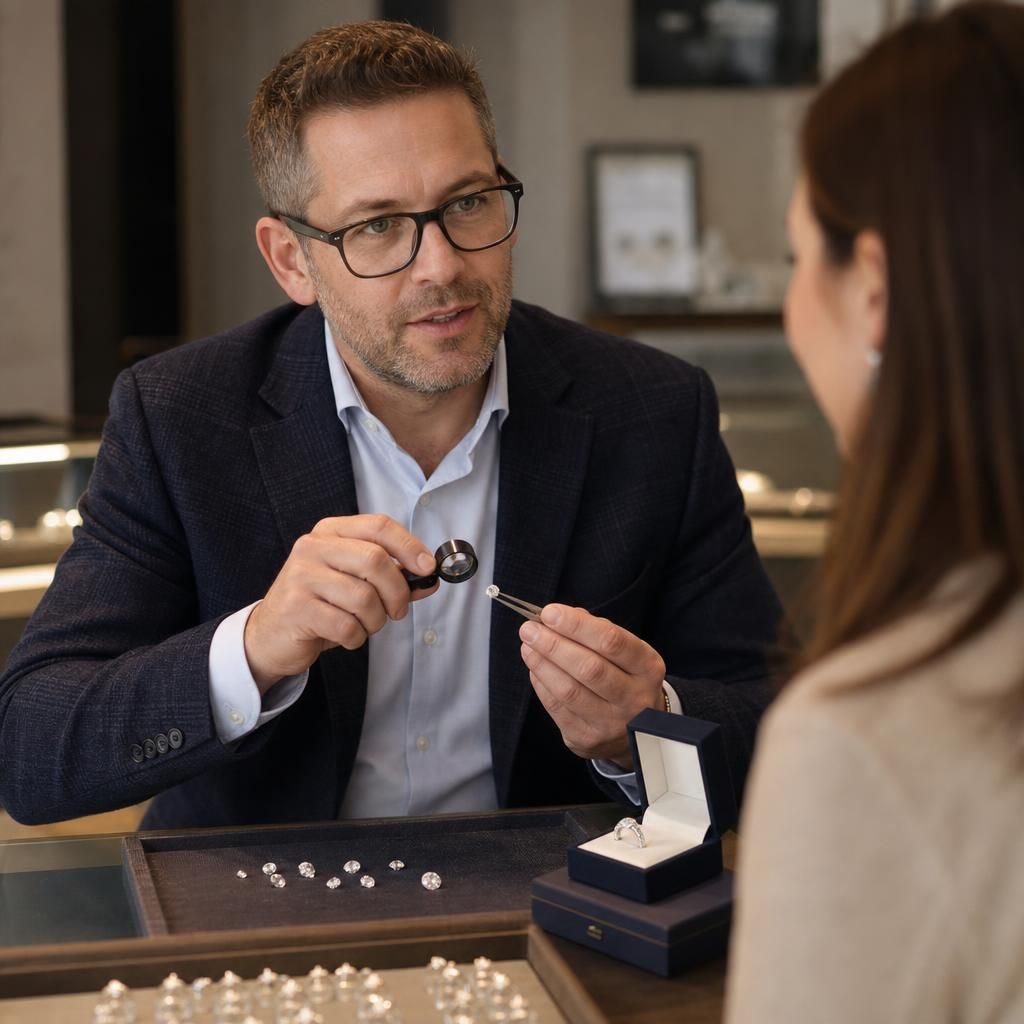
The carat weight of a diamond is a significant factor in its market value and aesthetic, but it works intricately with other aspects such as cut, clarity, and colour. Carat, as a unit, measures the physical mass of the diamond; however, it does not independently dictate the gemstone’s quality or beauty. For example, a well-cut diamond with a smaller carat weight may exhibit superior brilliance compared to a heavier diamond of lesser cut quality, impacting both appearance and perception of value.
When considering a purchase, especially for bespoke engagement rings, it is crucial to strike a balance between carat weight and the other ‘Four Cs.’ This balance ensures you receive a jewell that looks stunning and represents excellent value. Steven Charles Quance offers expert guidance to help you navigate these considerations, ensuring your decisions are informed by professional insight and tailored to your preferences and needs. This comprehensive approach supports the creation of bespoke pieces that not only captivate but also hold significant sentimental and intrinsic value.