
What factors should influence my choice of gemstones for a wedding band?
Choose gemstones for a wedding band by balancing durability, colour, personal meaning, style, setting and the level of care you are prepared to provide. The stone should suit your lifestyle and existing ring, while being securely set in a compatible metal for comfortable, lasting wear.
The best gemstones for a wedding band are chosen by balancing everyday durability, appearance, personal meaning, compatibility with the engagement ring and the level of care the wearer can provide. A wedding band is exposed to frequent contact, friction and impact, so the most attractive stone is not always the most practical choice for continuous wear.
Start with your lifestyle and wearing habits. If the ring will be worn every day, including during work, childcare, travel or household tasks, prioritise gemstones that resist scratching and are less likely to chip. Diamond, sapphire and ruby are generally well suited to regular wear when properly cut and set. Softer or more brittle stones can still be used, but they may be better reserved for occasional wear or protected in a setting that reduces exposure.
Hardness and toughness are different qualities. Hardness describes resistance to scratches, while toughness describes how well a gemstone withstands knocks or sudden impact. A stone may be difficult to scratch but still vulnerable to fracture if it has internal characteristics or a shape that leaves delicate edges exposed. The gemstone’s cut, proportions and setting therefore matter as much as its name.
Consider the colour in relation to the rest of the set. Colourless diamonds create a traditional, versatile appearance and can sit comfortably beside most engagement rings. Sapphires and rubies introduce stronger colour, while softer-toned stones can provide a more understated contrast. Look at the gemstone beside the engagement ring in the metal you intend to wear, as the surrounding metal can affect how the colour is perceived. A stone that appears subtle in isolation may look much stronger when placed alongside bright diamonds or a contrasting band.
Colour consistency is also important when a band contains several gemstones. Natural stones can vary in tone, saturation and clarity, so matching a row may require careful selection. If you prefer a uniform appearance, discuss whether the stones can be closely matched. Alternatively, deliberate variation can give a band a more individual character.
Give appropriate weight to personal meaning. Birthstones, anniversary colours, family connections and cultural associations can make a gemstone particularly significant. Meaning should not be treated as a compromise, but it should be considered alongside practical performance. If a meaningful stone is more vulnerable to damage, the design can be adapted with a protective setting, smaller accent stones or a band intended for less frequent wear.
Check how the gemstone will work with the engagement ring. The two rings should be considered as a single design if they are to be worn together. Compare their profiles, widths, stone arrangements and level of detail. A wedding band with prominent gemstones may sit neatly beside a raised engagement ring but rub against a low-set design. A curved, fitted or shaped band may improve the fit, although its form can influence the choice and placement of gemstones.
Pay particular attention to contact between stones and settings. Repeated rubbing can wear metal over time and may affect claws or edges. A jewellery consultation allows the fit to be assessed before the band is made, rather than relying only on a photograph or a general ring style.
Choose a setting that suits the gemstone and your routine. Secure settings are essential for any wedding band, but the best option depends on the stone’s shape, size and position. Bezel settings offer more protection around the edges, while channel settings can create a smooth surface across a row of stones. Claw settings allow more light into a gemstone but may require closer inspection and maintenance, particularly where the ring is worn every day.
The profile of the band also affects comfort. Raised stones, sharp edges or exposed corners may catch on clothing and can be more vulnerable to knocks. For a practical daily-wear design, consider smooth edges, a comfortable internal profile and a setting that does not extend further than the engagement ring or interfere with adjacent fingers.
Understand the care each gemstone requires. Some stones tolerate routine cleaning better than others. Warm water, mild washing-up liquid and a soft brush are suitable for many jewellery pieces, but heat, sudden temperature changes, harsh chemicals and ultrasonic cleaning are not appropriate for every gemstone. Treatments, inclusions and sensitivity to heat can affect the recommended cleaning method.
Remove a gemstone wedding band for activities involving chemicals, heavy lifting, gardening or repeated impact unless the design and stone have been specifically selected for those conditions. Regular professional checks are useful for identifying loose stones, worn claws and damaged settings before a gemstone is lost. Cleaning and inspection can form part of the ring’s ongoing aftercare.
Ask how the gemstone has been treated and sourced. Many coloured gemstones are routinely treated to improve colour or clarity. Treatments are not automatically a concern, but they should be disclosed because they can affect cleaning, repairs, durability and value. Ask whether a stone is natural, laboratory-grown or treated, and ensure that the information is recorded accurately for future insurance or valuation purposes.
Ethical sourcing is another relevant consideration. You may wish to ask about the gemstone’s origin, supply chain and available documentation. A reputable jeweller should explain what is known about the stone and distinguish confirmed information from assumptions, particularly where origin cannot be established with certainty.
Balance the gemstone choice with the metal and design. White metals can create a crisp contrast with coloured gemstones, while yellow or rose metals can make some colours appear warmer. The metal’s hardness, finish and setting style also influence how the ring wears. If the wedding band is intended to sit directly beside an engagement ring, choose compatible metals and discuss whether differences in hardness or movement could cause premature surface wear.
Budget should be considered across the complete ring rather than the centre stones alone. The gemstone type, size, colour quality, matching requirements, setting complexity, metal and level of hand-finishing all affect the final cost. A smaller, well-coloured gemstone in a secure setting may be a better long-term choice than a larger stone that requires more protection or maintenance.
Before making a decision, compare the stones in person where possible and ask to see the proposed wedding band alongside the engagement ring. Confirm the gemstone specification, treatment information, setting method, care instructions and aftercare available. The right choice is the one that combines the colour and meaning you want with a construction capable of fitting comfortably into your everyday life.
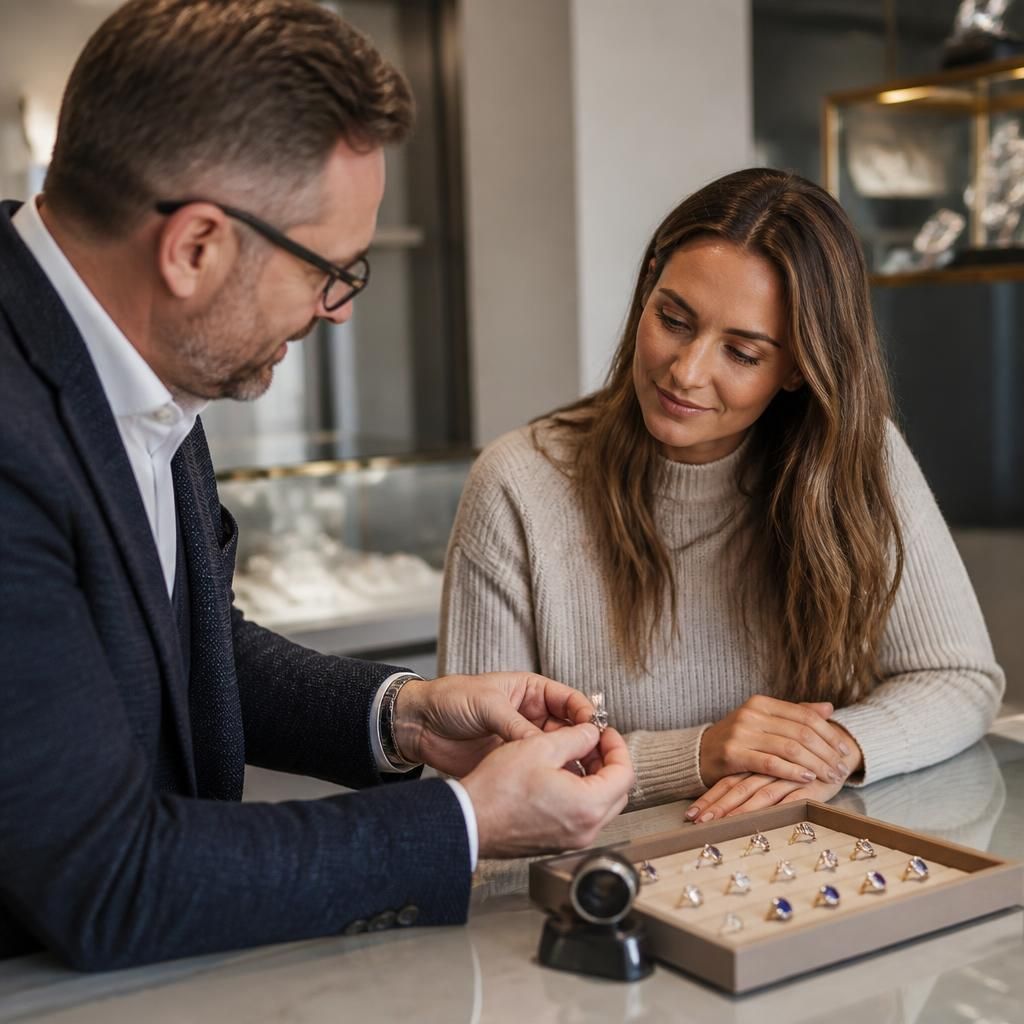
For a wedding band worn every day, gemstone durability should be assessed through both hardness and toughness. Hardness indicates resistance to scratching, while toughness describes how well a stone withstands knocks, pressure and sudden impact. These are different properties, so a gemstone that remains scratch-resistant may still be vulnerable if it has exposed corners, inclusions or a more brittle structure.
Diamond, sapphire and ruby are generally practical choices for regular wear when they are well cut and securely set. Other gemstones can also be suitable, but may need a protective bezel or channel setting, a rounded shape, or a design intended for occasional wear. The stone’s position matters too: gemstones on the outside edge of a band are more exposed to contact than those recessed within the setting.
When comparing designs, consider your work, household activities and whether you are prepared to remove the ring for heavy lifting, gardening or contact with chemicals. A consultation can assess the gemstone, setting and fit beside your engagement ring, helping to balance the colour and meaning you want with the protection needed for lasting wear.