
What types of metals are commonly used for wedding bands, and what are their unique characteristics?
Wedding bands are most commonly crafted from metals like gold, platinum, palladium, and titanium, each offering distinct characteristics. Gold, available in yellow, white, and rose, is prized for its classic elegance and malleability, allowing for intricate designs. Platinum is renowned for its durability and natural white sheen, making it an ideal choice for those seeking a long-lasting and lustrous finish. Palladium shares similar properties with platinum but is lighter in weight, providing comfort without sacrificing resilience. Titanium offers exceptional strength and a modern aesthetic while being hypoallergenic, beneficial for sensitive skin. Each of these metals provides unique benefits, helping you to select the ideal wedding band that resonates with your personal style and requirements.
When selecting a wedding band, choosing the right metal is crucial as it influences both the ring’s aesthetics and its practicality. The most commonly used metals for wedding bands include gold, platinum, palladium, and titanium, each featuring unique characteristics that cater to specific preferences and needs.
Gold remains a classic choice, available in yellow, white, and rose varieties. Renowned for its timeless elegance, gold’s malleable nature allows intricate detailing, making it ideal for those seeking refined and detailed designs. The alloy composition of gold rings can be adjusted for enhanced durability, with 18k gold being a popular choice for its balanced blend of purity and strength.
Platinum is prized for its exceptional durability and natural white lustre, which does not fade over time. Its dense nature offers a substantial feel, making it perfect for those wanting a long-lasting and luxurious metal. Platinum’s hypoallergenic properties are beneficial for individuals with sensitive skin, providing comfort along with its premium appearance.
Palladium shares many qualities with platinum but is notably lighter, offering similar benefits without the weight. This makes palladium rings particularly comfortable for everyday wear. Its increasing popularity is due to both its aesthetic similarity to platinum and its relative affordability, providing a cost-effective yet luxurious option.
Titanium stands out for its modern appeal and remarkable strength-to-weight ratio. Known for being incredibly durable and resistant to scratches, titanium is an excellent choice for those leading active lifestyles. Additionally, it is hypoallergenic, making it suitable for those prone to allergic reactions. The sleek, contemporary look of titanium rings caters to those favouring a minimalist aesthetic.
Each of these metals presents distinct benefits, enabling you to select a wedding band that aligns with both your stylistic tastes and functional requirements. Whether prioritising enduring elegance, hypoallergenic comfort, or modern design, choosing the right metal is a fundamental step in crafting a wedding band that complements your individual style and lifetime commitment.
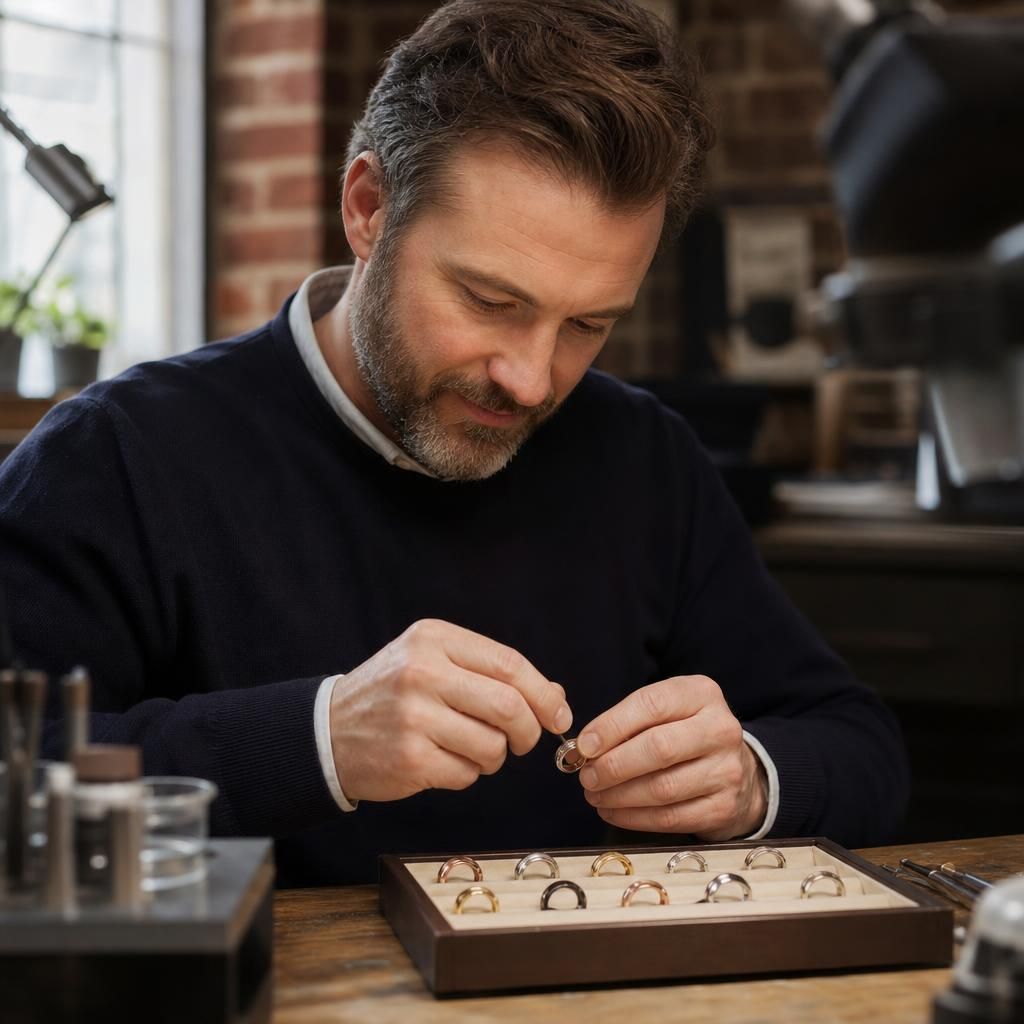
Gold remains a perennial favourite for wedding bands, largely due to its rich history and splendid versatility. It is typically alloyed with other metals to improve its strength and is available in several hues: yellow gold—for a classic, warm appearance; white gold—which is plated with rhodium to enhance its white sheen; and rose gold—valued for its trendy pink tint, achieved with copper alloys. These variations allow for a wide range of design possibilities, fitting for those who desire a personalised touch to their wedding jewellery. Furthermore, the karat purity of gold, such as 14k or 18k, balances hardness and lustre, allowing you to tailor your choice to your preference for either durability or a softer, richer look.